Early-Stage Hiring Foundations That Prevent Mishires
About this Episode
When hiring stalls or produces the wrong results at an early stage, the instinct is usually to source more. Cassie Leemans has spent her career pushing back on that instinct. As VP of Talent at Craft Ventures, she works across a portfolio of over 250 companies and sees the same patterns repeat. Roles open before outcomes are defined, interview panels evaluate candidates against criteria they've never agreed on, and teams end up in an endless loop of high volume and low conversion.
This episode gets into the structural reasons that happen, what founders and first recruiters can do to break the cycle, and what it looks like when a hiring process is genuinely working.
Topics
This Episode's Guest


Cassie Chao Leemans
Vice President, Talent @ Craft Ventures
Cassie Leemans is VP of Talent at Craft Ventures, where she partners with a portfolio of over 250 companies from Series A through growth stage. She scaled through Uber's hyper-growth phase and has joined companies as early as 15 people, bringing a practical, process-first perspective to early-stage hiring.
Takeaway 1
Start With the Business, Not the Job Description 📋
At early-stage companies, every hire is a disproportionate bet. A five-person company that brings in the wrong person hasn't just lost time and money, it's put 20% of its output at risk and created a morale problem that compounds. Cassie's framing is direct. Before a founder can evaluate anyone, they need to be able to articulate what this person will have built, sold, or solved in the 12 to 18 months after they start. Without that, the interview process has no anchor, onboarding has no direction, and performance has no baseline.
Why It Matters:
When a role doesn't have clear initiatives and outcomes attached to it, the process around it tends to become subjective and inconsistent. Interviewers rely on gut feel, debrief conversations stall, and the team ends up chasing a profile that nobody has actually agreed on.
Quick Tips
- Ask the hiring manager to map the role to a specific milestone on the product or business roadmap. Not a job description, not a level, but an actual output the company is trying to hit. That exercise tends to surface misalignment on the team before it shows up in the funnel.
- Before the role goes live, make sure the founder or hiring manager is prepared to be actively involved in selling the opportunity. Cassie was direct that candidates leaving a stable job to join a startup, often at a pay cut, are largely making that decision based on the founder's vision and involvement, not on recruiting alone.
- Don't let pedigree substitute for clarity on what the role actually requires. Cassie sees this pattern often: a founder hires someone from a well-regarded company, assumes the prior vetting did the work, and never defines what that person is supposed to accomplish. The hire looks right on paper and struggles in practice, not because of their talent, but because nobody agreed on what they were being asked to do.
Takeaway 2
Alignment Is a Team Exercise, Not a Gut Check 🤝
Cassie runs an exercise in interviewer training where she asks everyone in the room to define a word like "collaboration" and then shows them that no two answers match. How different people on a team interpret the same competency is where false negatives and false positives are born. Someone who asks a lot of questions in an interview might look uncertain to one interviewer and genuinely curious to another. If the team hasn't aligned on what the competency actually means for this role and this team, the debrief becomes a negotiation between personal preferences rather than a shared evaluation.
Why It Matters:
A hiring process can look rigorous on the outside while producing inconsistent outcomes on the inside. Without shared definitions, interviewers are essentially evaluating different jobs and trying to reach a consensus at the end.
Quick Tips
- Run a competency selection session with the full interview panel before the search launches. Ask each person to identify the two or three qualities that matter most for this specific role and compare answers. The point isn't consensus for its own sake, it's making sure the panel walks away with a shared understanding of what traits and competencies the role actually needs before anyone starts evaluating candidates against them.
- Once the competencies are selected, define what each one looks like in practice and how it will be evaluated. Cassie's point was that two interviewers can agree on a word like collaboration and mean completely different things by it. Getting alignment on the label isn't enough. The panel needs to agree on what it actually looks like in a candidate and what interview question or exercise will surface it.
- Document what you're looking for before you start seeing candidates, not after. When calibration happens during the debrief rather than before the first interview, you're pattern-matching to candidates you've already met rather than to the role you actually need.
Takeaway 3
When It Feels Like a Sourcing Problem, Check the Funnel First 🪣
The most common complaint Cassie hears across her portfolio is that the recruiting team isn't bringing enough candidates. Her pushback is consistent. If the team is processing candidates quickly and closing nobody, the problem isn't at the top of the funnel. It's in the clarity, confidence, and alignment underneath. She described the tell as over-reliance on back channels and external validation. Founders who've built an interview process but don't quite trust it reach outside to confirm what their own team has already seen, and that pattern signals something more fundamental than a pipeline gap.
Why It Matters:
Pouring more candidates into a broken process creates more noise without better outcomes. When sourcing is treated as the solution to a conversion problem, teams end up doing a lot of work that leads nowhere, and the people doing that work notice.
Quick Tips
- If candidates are coming through but not closing, audit the funnel before adjusting sourcing strategy. Look at where candidates are exiting and whether the interview team can articulate a consistent reason.
- Treat a pattern of back-channel requests as a signal worth examining. An occasional reference check is one thing, but routinely seeking external validation before making offers points to a confidence gap inside the process itself.
- Debrief within 24 hours of the final interview. Cassie made the point that the teams who move quickly through the debrief are the ones who built enough alignment going in that the decision isn't a surprise to anyone in the room.
What Hiring Excellence Means to Cassie
For Cassie, hiring excellence is what happens when a team has enough confidence in its own process that it doesn't need to outsource the judgment. Not relying on back channels, not waiting for external signals, not second-guessing what the interviewers surfaced. When the machine is working, the gears are turning, candidates move through quickly, and the team is making offers with conviction. That confidence comes from building a process the team actually believes in, not from increasing volume.
Cassie's Recruiting Hot Take 🔥
It's not a sourcing problem, and Cassie stands behind that even when it creates friction. If your team is turning away candidates who match the profile you asked for, recruiting isn't the place to look for answers. The team hasn't agreed on what right looks like, and no amount of pipeline is going to resolve that. Fix the alignment first and the sourcing conversation changes entirely.
Timestamps
(00:00) Introduction
(00:43) Meet Cassie Chao Leemans
(02:06) Why founder alignment matters early
(06:09) Connecting hiring plans to business goals
(11:09) Preparing recruiting teams before scale hits
(13:29) Why great hiring takes longer than founders expect
(16:41) How hiring needs change as companies grow
(20:38) Defining what success looks like in a role
(25:10) Aligning interviewers on values and competencies
(27:58) What happens when hiring alignment breaks
(33:20) Hiring excellence: Be confident in your own process
(34:58) Recruiting hot take: It is not always a sourcing problem
(39:57) Early career advice: Interviewer morale is important
(43:20) Where to connect with Cassie

Other Episodes

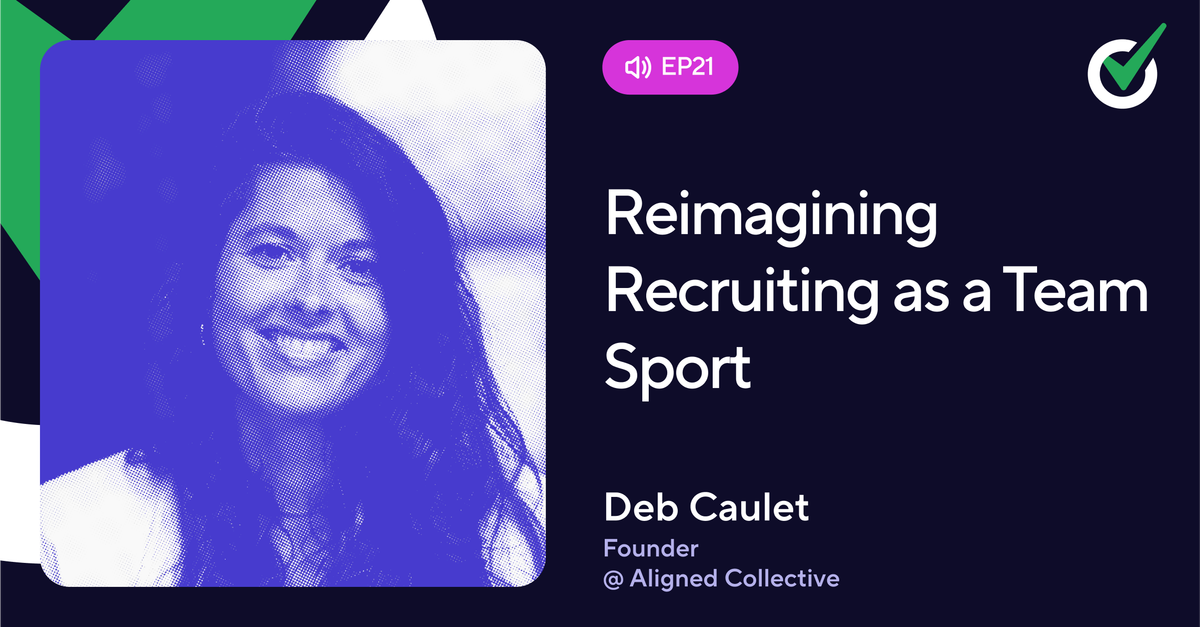
Reimagining Recruiting as a Team Sport
In this episode of Offer Accepted, Shannon Ogborn sits down with Deb Caulet, Founder of Aligned Collective. The conversation focuses on the RecOps model of Decentralized Autonomous Hiring (DAH) that Deb pioneered while at Blinkist.
Breaking the Traditional Model of Startup Hiring
In this episode, Abhik Pramanik shares how Ashby scaled its engineering team and overcame hiring obstacles by redefining recruitment. We discuss how transparent job descriptions and creative hiring strategies have allowed Ashby to thrive in a competitive talent market.

Join the Hiring Excellence movement
New episodes every month - subscribe here so you never miss out.