The Leadership Reset Behind a High-Performing Talent Team
About this Episode
In this episode, Mike Bettley, VP of Talent Acquisition at StackAdapt, walks through how he reset a team that was struggling under a recent leadership change. He started by building trust within his own team, sharing his own vulnerability and creating space for honest conversations, before turning his attention to hiring managers across the business who still saw recruiting as a service function rather than a strategic partner.
The conversation covers what it took to earn that trust internally, how Mike proved TA's value to hiring managers over roughly two years, and the operational investments, including a TA Ops hire and a new AI powered intake process, that let the team sustain the change at scale.
Topics
This Episode's Guest


Mike Bettley
VP, Talent Acquisition @ https://www.linkedin.com/in/michaelbettley/
Mike Bettley is VP of Talent Acquisition at StackAdapt, where he leads a 25 person team responsible for over 600 hires a year. His career spans agency recruiting in the UK, an in-house role at Google, and building TA functions at several Series A to C companies in Canada.
Takeaway 1
Trust Starts With Your Own Vulnerability 💬
When Mike joined StackAdapt, he inherited a team that had been through a leadership change and was still finding stable footing, reporting into different managers with no consistent direction. People were quick to ask for permission and slow to take any risk on their own. Mike started by proving, person by person, that he could be trusted with what they were actually feeling, long before he touched anything on the org chart.
Why It Matters:
When a leader becomes the default answer for every decision, the team's growth stalls right along with the leader's bandwidth. Establishing that safety early is what eventually let Mike's team operate with real independence and take intelligent risks instead of waiting on him for every call.
Quick Tips
- Run a full moratorium week before changing anything. A "stop, start, continue" format, one full day dedicated to each, with explicit permission to air every grievance without repercussions, is how Mike surfaced the real themes before deciding what to prioritize.
- Tell your team exactly why you'd fire them. Mike lays out a short, specific list for every new hire on his direct team, covering things like not breaking the law and owning what's within your control. Everything else becomes a solvable outcome, which removes the fear that keeps people from taking risks.
- Share your own gaps out loud. Talking openly about what he doesn't know and what's going on in his own life is how Mike treats disclosure as the offer that makes reciprocal trust possible.
Takeaway 2
Hiring Managers Follow What You Prove 🤝
With his own team steadier, Mike ran into a second challenge that team trust alone couldn't solve. Hiring managers across the business were used to treating recruiting as an execution function, someone to hand a job description to and wait on. Mike had lived that dynamic himself earlier in his career, coming out of agency recruiting feeling like a service provider rather than an expert in the room, and he recognized the same pattern playing out with hiring managers at StackAdapt. Changing that perception meant proving, again and again, that his team understood the business well enough to be trusted.
Why It Matters:
A hiring manager who doesn't see TA as a strategic partner keeps decisions close and loops recruiters in late, no matter how strong the team behind the scenes has become. It took Mike roughly two years of consistent behavior to shift that dynamic across the business, not a single conversation or campaign.
Quick Tips
- Start every intake call with the business problem, not the job description. Every conversation begins with identifying what the hire is meant to solve, a habit that often reveals a role needs to be split into two instead of filled as one.
- Educate stakeholders on what your team can offer instead of assuming they already know. When Mike heard that his APAC leaders preferred to deliver offers themselves, he assumed it was preference. It turned out to be a gap in exposure. They'd never had someone from People Ops do it with them before, so neither side expected anything different. Mike closed that gap by making his team's role something stakeholders understood, not something they inferred.
- Protect your say-do ratio. Every time you say you'll do something and don't follow through, you chip away at the trust you're trying to build. Consistency, more than any other factor, is what changed how hiring managers interacted with Mike's team over time.
Takeaway 3
Systems Buy Back Time for the Human Work ⚙️
The final piece for Mike was operational, and it turned out to be more foundational than expected. StackAdapt had scaled from roughly 170 people to nearly 1,800 in six years, but the operational side of TA hadn't kept pace. When he joined, recruiters were writing offer letters in Word, converting them to PDF, emailing them out, and waiting on wet signatures, all while the company had no documented hiring plan to work from. Fixing that layer established the trust and business alignment Mike had spent two years building, translating into actually consistent output.
Why It Matters:
Recruiters that spend their days formatting offer letters and chasing signatures don't have bandwidth left for debriefs or for pushing back on a hiring manager's assumptions. Fixing the operational layer is what turns trust and business alignment into something a team can actually sustain at scale, rather than something that depends entirely on the leader modeling it every day.
Quick Tips
- Hire for operations before you hire for headcount. Mike's first leadership hire was a dedicated TA Ops lead, someone who could see the operational gaps clearly and start fixing them immediately, before adding more recruiters to the team.
- Pace new systems to what the team can absorb. Mike's leadership team told him outright that rolling out fifteen new KPIs at once at the start of 2025 was too much too fast. He launched them anyway, and because he'd already built that trust, they felt safe enough to say so instead of just absorbing it. Mike refined the rollout from there.
- Let AI handle the thinking hiring managers tend to skip. StackAdapt built a pre-intake agent that asks hiring managers to define the business problem before they ever reach a recruiter, producing a draft job description, scorecard, and interview plan the team can refine from there.
What Hiring Excellence Means to Mike
For Mike, hiring excellence comes down to an uncompromising commitment to building the business, not just filling roles. That means trusting his team's perspective enough to let a junior recruiter challenge a VP in a debrief, because TA runs through far more conversations than any single hiring manager gets the chance to have.
Mike's Recruiting Hot Take 🔥
TA undervalues its own point of view. Recruiters and TA partners talk to far more candidates in a year than any hiring manager does, which means they see patterns and contradictions the business often can't see for itself. Mike's advice is to say so, even when the person across the table outranks you.
Timestamps
(00:00) Introduction
(00:35) Meet Mike Bettley
(01:30) Why recruiter confidence drives business impact
(03:33) Rebuilding a fragmented talent acquisition team
(06:11) Creating trust through vulnerability and transparency
(11:00) Earning hiring manager trust across the organization
(12:00) Shifting from job descriptions to business problems
(15:30) Teaching stakeholders what great TA partnership looks like
(18:30) Fixing operational bottlenecks through TA Ops investment
(21:00) Lessons learned from launching recruiting KPIs
(24:00) Measuring success through consistency and hiring quality
(28:00) Using AI to improve hiring planning and intake processes
(30:05) Hiring excellence: We’re here to build a business
(32:40) Hot take: Trust your opinion
(36:24) Early Career Advice: Appreciate all opportunities
(39:19) Where to connect with Mike

Other Episodes

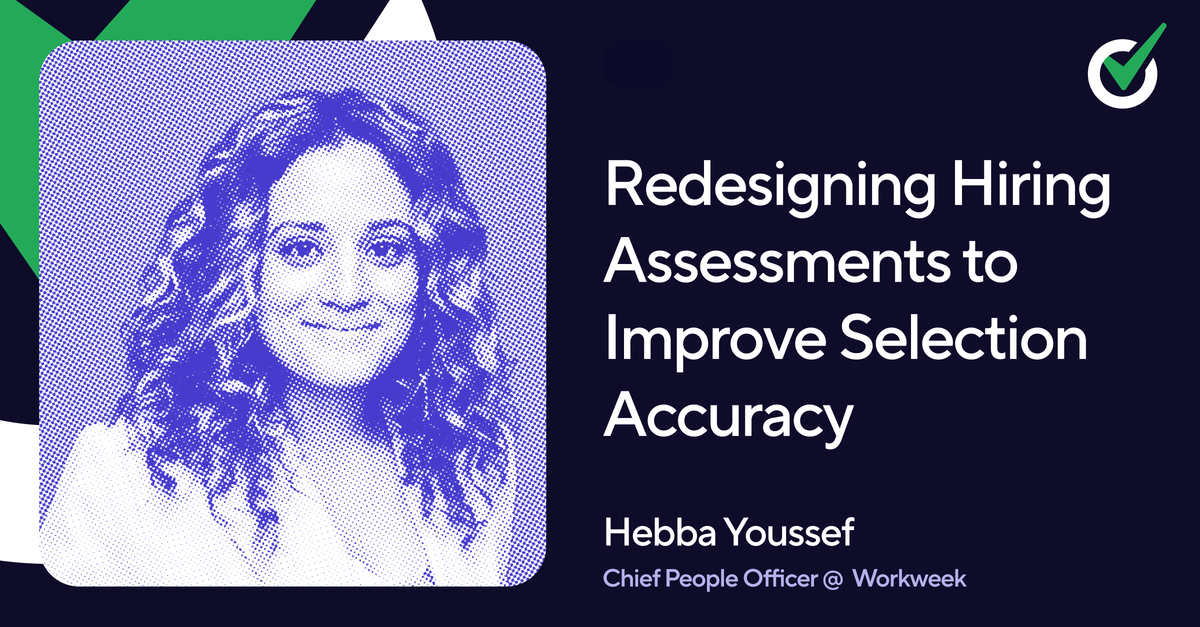
Redesigning Hiring Assessments to Improve Selection Accuracy
In this episode of Offer Accepted, Hebba Youssef, Chief People Officer at Workweek and creator of I Hate It Here, shares how realistic, role-relevant hiring projects can lead to more confident and accurate hiring decisions. Shannon and Hebba explore why assessments should test for day-one skills (not teachable ones), how rubrics drive fairness, and why introducing projects early in the process saves time and prevents bias. Whether you're rethinking your assessment strategy or just starting to use projects in your hiring process, this conversation offers tactical guidance and a refreshing dose of clarity.
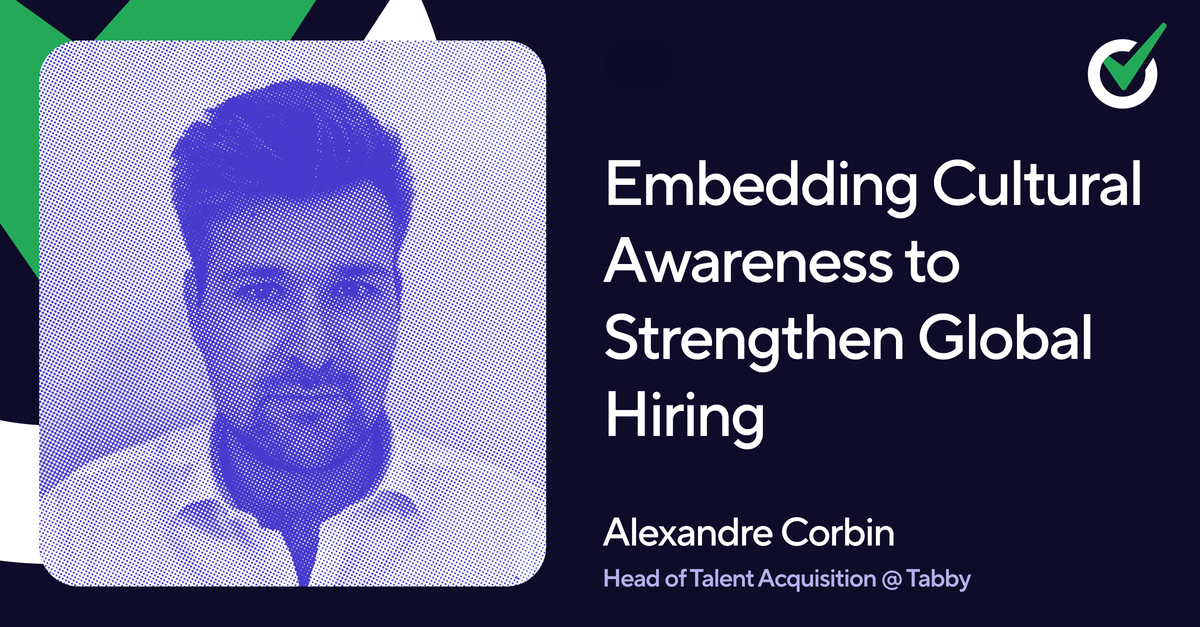
Embedding Cultural Awareness to Strengthen Global Hiring
In this episode of Offer Accepted, Alex Corbin, Head of Talent Acquisition at Tabby, shares how cultural awareness, adaptability, and data-backed decisions have shaped the company’s global hiring success. He explains how building local expertise early, balancing flexibility with structure, and translating data into action have allowed Tabby to create an inclusive, scalable, and high-performing hiring engine across regions.

Join the Hiring Excellence movement
New episodes every month - subscribe here so you never miss out.