The Executive Interview Format That Reduces Mishire Risk
About this Episode
If your executive hiring process relies on a Q&A format or a presentation deck, you're likely learning more about how well a candidate interviews than how well they'd actually lead.
Cristina Navarro, Senior Director of Global Talent Acquisition at Tubi, built a leadership assessment for executive candidates that functions as a realistic job preview, gives both sides of the table something they can actually act on, and produces the kind of signal that a traditional format tends to obscure. In this episode, she walks through how it was built, how both candidates and panelists are prepared to get the most out of it, and how the debrief is structured to end in a decision.
Topics
This Episode's Guest


Cristina Navarro
Senior Director, Talent Acquisition @ Tubi
Cristina Navarro is Senior Director of Global Talent Acquisition at Tubi, where she oversees hiring across all levels from early career programs to executive search. She brings over 15 years of experience building strategic TA capabilities across technology, media, and enterprise environments.
Takeaway 1
Senior Leaders Have Optimized for Your Interview Format 🎯
Executive candidates have spent years presenting their experience in structured settings. They have been in rooms with other leaders long enough to know how those rooms work, and a traditional Q&A interview tends to reward exactly that fluency. Senior leaders aren't gaming the process so much as they've simply had years to get very good at it, and a format built around questions and answers may be giving you a picture of how well someone interviews rather than how well they'd actually lead. At Tubi, Cristina's team built an assessment designed to surface how someone actually thinks under pressure, how they respond to pushback, and how they show up in the kind of active discussion that defines what the job looks like day to day.
Why It Matters:
When your final-round process is one that experienced leaders have spent a career becoming comfortable with, the signal you're getting may reflect interview capability more than actual leadership capability. For a hire with serious downstream impact across an entire organization, that gap is exactly where mis-hire risk lives.
Quick Tips
- Design around working style, not work history. Tubi's assessment uses a narrative-style prompt tied to a real, role-specific scenario rather than a case study or presentation deck. Cristina described the format as active discussion, which puts candidates in conditions that more closely resemble the environment they'd actually be stepping into.
- Treat the assessment format as part of how you attract candidates. Executive candidates are often navigating multiple searches at once. A thoughtfully designed process that respects their time and reflects how the company actually operates can be what makes Tubi worth choosing over another offer.
- Build the prompt with the hiring leader and circulate it to panelists before the session. Cristina and her team partner with the hiring leader to develop the prompt and then share it with everyone involved in the assessment to make sure all the right evaluation lenses are covered before the day arrives.
Takeaway 2
The Candidate Isn't the Only One Who Needs Prep Materials 📋
Most executive hiring processes put real thought into candidate prep and less into what it means to prepare the people evaluating them. At Tubi, both the candidate and the interviewers receive their own preparation materials before the assessment, each built around what that specific group needs going into the conversation. The assessment itself is designed to feel less like a formal interview and more like the kind of working session the candidate would actually be walking into on the job, with a room full of people they've already met, discussing a prompt that reflects the real demands of the role.
Why It Matters:
How a company prepares people for a high-stakes assessment communicates something about how the company operates before a single question gets asked. When both sides arrive ready, the quality of what happens in the room and in the debrief that follows tends to reflect that.
Quick Tips
- Give the candidate a full run of show before they arrive. The candidate doc covers the prompt, the sequencing, Tubi's values, and what's being evaluated. Cristina mentioned she has not had anyone turn down the offer to prepare in advance, which speaks to how much candidates at this level appreciate knowing what they're actually walking into rather than relying on a deck or a case study.
- Build the panelist document around what they uniquely need going into the session. Rather than restating everything the candidate received, the panelist document captures any themes that surfaced across earlier rounds and clarifies each person's specific role in the evaluation. That context shapes the quality of feedback in the debrief.
- Keep the room full of familiar faces. With the exception of potentially the CEO, everyone in the assessment should be someone the candidate has already met one-on-one. That familiarity gives the candidate enough comfort to show up as themselves rather than performing for a room full of strangers.
Takeaway 3
Structure the Debrief Like You Structure the Process 🔍
The assessment is only part of what Tubi built. The debrief is where the hiring decision actually gets made, and Cristina approaches it with the same level of rigor as the assessment itself. The goal of the conversation is a hiring decision reached before anyone leaves the room, and the structure of the debrief is designed to make that possible rather than leaving it to chance.
Why It Matters:
Individual confidence in a hiring decision can obscure the fact that a decision at this level needs to be a collective one. Without structure, a debrief tends to reflect whoever spoke most confidently or most recently rather than the full picture the room actually has. Cristina structures the debrief at Tubi to make sure that doesn't happen, and that the conversation ends with a hiring decision before anyone leaves.
Quick Tips
- Anchor the debrief in the full picture, not just what happened that day. Cristina uses a calibration document built from themes collected across the entire interview process as the foundation for the conversation, so the room is working from the complete arc of the candidate's evaluation rather than whatever impression is freshest.
- Have the most senior voices go last. Cristina structures the feedback sequence so the hiring manager and most senior leader share after everyone else, which protects the integrity of what the rest of the panel actually thinks. The order matters more than it sounds like it should.
- Frame the debrief around reaching a decision. Cristina's goal is to make a hiring decision before the room clears so offer work can begin immediately. Framing the conversation around that outcome keeps the group focused on evaluation rather than open-ended discussion.
What Hiring Excellence Means to Cristina
For Cristina, hiring excellence doesn't live in any one part of the process. It's the recruiter building a strategy that moves a search forward thoughtfully. It's the hiring manager making a decision with conviction rather than doubt. It's interviewers who feel well calibrated and prepared to give meaningful feedback. And it's every candidate who goes through the process feeling like it was worth their time, regardless of how it ends.
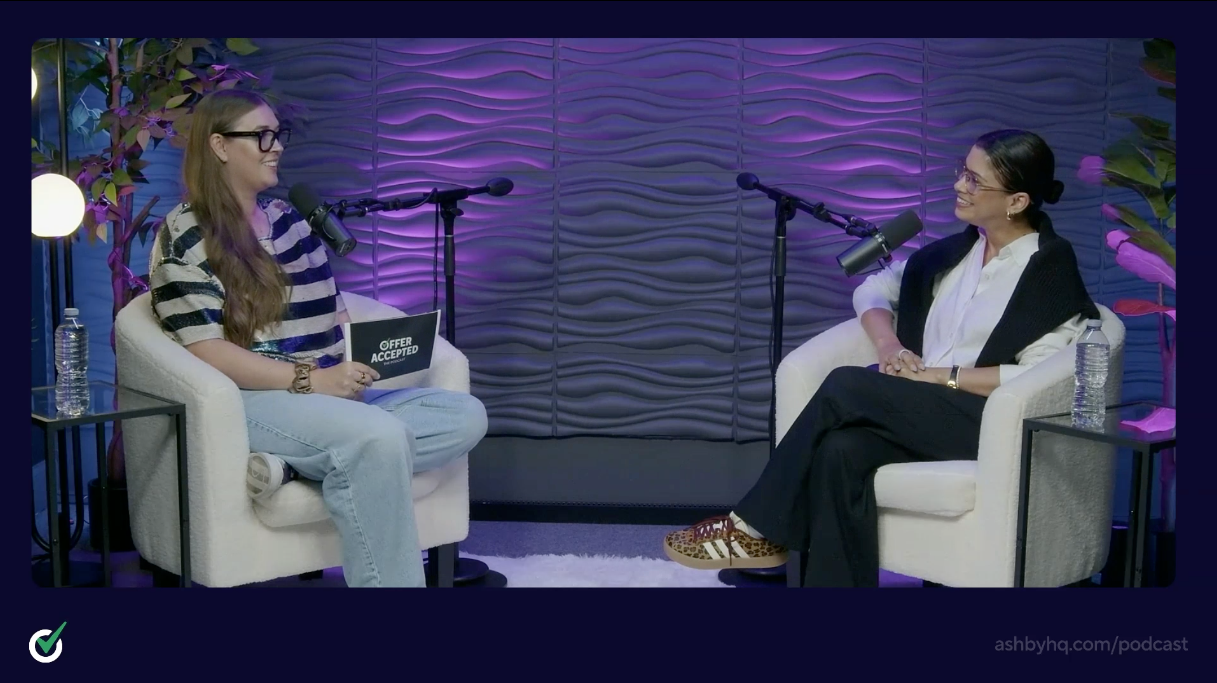
Cristina's Recruiting Hot Take 🔥
More steps in a hiring process do not make it a higher bar. Cristina pointed to research showing diminishing returns after roughly five steps, and her challenge to any team adding stages is to ask what signal they didn't get earlier and why. If the answer isn't clear, the step probably shouldn't be there.
Timestamps
(00:43) Meet Cristina Navarro
(02:08) Why executive hiring carries more risk than any other level
(03:49) What Tubi does differently in senior leader hiring
(05:20) How the leadership assessment was built and who was involved
(07:14) Preparing both candidates and interviewers for the assessment
(10:25) Why no new faces in the room is an intentional design choice
(11:42) How debriefs are structured to reach a confident hiring decision
(12:55) What candidates say after going through the process
(15:37) Plans to expand the assessment beyond VP-level roles
(17:07) Using recruiting findings to inform executive onboarding
(19:25) Hiring excellence: Build a thoughtful strategy
(22:34) Recruiting hot take: Lengthy interview processes
(24:01) Early career advice: Let go of life
(26:02) Where to connect with Cristina

Other Episodes


The North Star Metric Every Hiring Team Needs
In this episode of Offer Accepted, Liz Woodfield, Head of Talent at Sentilink, shares how her team nearly doubled its hiring output with the same team size by anchoring around a single north star metric, and how a framework of volume, velocity, and calibration turned an ambitious goal into consistent weekly progress.

Upskilling with AI in TA
In this episode of Offer Accepted, Jan Tegze, Director of Talent Acquisition and a multi-time published author, shares how AI is reshaping the recruiting landscape. He explains how AI tools enable efficiency by automating repetitive tasks while highlighting the critical role of human elements like trust and empathy. Jan shares why upskilling in AI is now a core competency for recruiters and how strategic experimentation with these tools can lead to long-term success.

Join the Hiring Excellence movement
New episodes every month - subscribe here so you never miss out.