Halving Attrition With a Connected Career Framework
About this Episode
In this episode of Offer Accepted, Nic Weatherhead, VP of People at The Stepstone Group, shares what she found when she set out to redesign hiring at a recruitment tech company that had grown by acquiring businesses in 32 countries, each still hiring its own way. As her team worked to solve attrition in a critical part of the business, Nic realized a better recruiting process would only go so far if new hires couldn't see what success looked like once they arrived, and that the answer sat across the whole talent ecosystem.
Nic and her team built a career framework grounded in what scope, knowledge, autonomy, and complexity mean at Stepstone, ran it on the recruiting team before anyone else, and brought in total rewards, people partners, and business leaders to shape it. With AI changing how her own team works, she's now rethinking some of the framework's fundamentals, and the early results are showing up in attrition and in how clearly people can see their path forward.
Topics
This Episode's Guest


Nic Weatherhead
Global VP of People @ The Stepstone Group
Nic Weatherhead is VP of People at The Stepstone Group, where she brings over 20 years of experience helping leaders across EMEA and APAC build high-performing teams. Formerly a longtime talent leader at Google, she's known for cutting through ambiguity to create organizational clarity during periods of rapid scale and change.
Takeaway 1
Define Success Before the Offer Goes Out 🗺️
Nic's original plan at Stepstone was to build one global recruitment process. A critical part of the business was also running hot on attrition, and solving for it meant getting clear on the DNA of a hire and carrying that definition through the handoff to onboarding. A strong recruiting process could bring great candidates in the door, but without a shared picture of success after day one, those hires would still be set up to struggle.
Why It Matters:
Nic points out that every hire is a plus or a minus for an organization's culture and success, and that weight grows as companies hire with more focus and less volume. A clear framework gives employees a way to see what's expected of them, how to succeed, and how to grow within the business. Nic is especially excited about the common language for skills the framework creates, which helps the company develop what she calls general athletes who can carry transferable skills into new teams.
Quick Tips
- Ask leaders about the org they need next year. Conversations about future structure surface the gap between the skills a team has now and the ones it will need. Nic sat with business leaders to map that out at 12 and 18 months, and she counts those conversations as the most fun part of the project.
- Bring total rewards in from the start. Leveling decisions ripple into compensation, so the people building pay structures belong in the room early. Stepstone's working group included total rewards, people partners, recruiting, and the wider talent team, which helped it account for the EU Pay Transparency Act alongside the framework.
- Stress test with peers a step ahead. Outside perspective helps pressure test a framework before it rolls out more widely. Nic's team leaned on its network, especially organizations a little further along in their own career framework maturity, to check its thinking.
Takeaway 2
Shape the Framework Around Your Own Organization 🧩
When it came to structure, Nic's team started with dimensions most career frameworks share, including scope, knowledge, autonomy, and complexity. The bigger challenges came in defining each one for Stepstone specifically. As Nic put it, "What was important to us was to really look at what that meant for us as an organization." Her team chose to push through that translation on themselves first.
Why It Matters:
Standard dimensions give a framework its shape, and the definitions underneath them help people understand what they're being measured against. Job analysis is deep, complex work, especially for a smaller organization, and the list of skills and criteria for each role can grow quickly once a team gets excited about the project. Nic's team felt that pull too, and reining it in is part of what kept the framework focused enough for people to use.
Quick Tips
- Pilot it on your own team. Running a new framework on the team that built it surfaces friction before anyone else feels it. Nic's recruiting team dogfooded the framework first, and recruiters were already asking what it would take to move from mid-level to senior.
- Start with what's true today. Anchor each role to how the job responsibilities happen right now, and build in future skills as roles evolve. Nic's team separated core business skills from specific domain skills to set that baseline.
- Map roles first, then people. Defining roles and levels before placing anyone keeps the framework from bending around individuals. Most of Stepstone's recruiting team mapped closely, and where someone landed in a role smaller than expected, Nic's team kept compensation the same and built a pathway to the right level.
Takeaway 3
Redefine Scope, Autonomy, and Complexity for AI 🔀
Nic's team was building AI into parts of its function at the same time the framework was taking shape, and the two efforts started informing each other. As AI took on more coordination tasks and changed how the team sourced, the skills needed in recruiting roles shifted alongside those changes. That pushed Nic to look again at the fundamentals underneath the framework.
Why It Matters:
Roles are changing fast enough that a definition written a year ago may no longer describe the job someone is doing today. Nic found that signals about those changes came in from two directions, through recruiting and from teams inside the business. She calls cutting through the noise to act on those signals one of her biggest learnings from the project.
Quick Tips
- Look past headcount when measuring scope. Team size has long been a stand-in for scope, and it starts to undercount people whose impact grows without adding reports. Nic points to super IC roles where someone runs agents and their team may not grow at all.
- Rewrite autonomy for AI-assisted work. As more of a role involves reviewing what AI produces, autonomy starts to show up in how well someone checks that output and judges whether it holds up. Nic describes autonomy shifting toward verifying information, with less of it tied to supervising others.
- Define complexity by how new the problem is. A problem's difficulty can come from novelty or missing information as much as from its size. Nic's team is looking at whether a problem is brand new, whether there's clarity on how to solve it, and whether information is missing.
What Hiring Excellence Means to Nic
For Nic, hiring excellence reflects how future-focused recruiting is as a function, always looking at how the next hire adds to where an organization is headed. She sees it as a craft that blends art and science, with the art living in relationships with leaders and candidates, and the science in data, process rigor, and predictive analytics. The commitment to keep improving that craft is what excellence comes down to for her.
Nic's Recruiting Hot Take 🔥
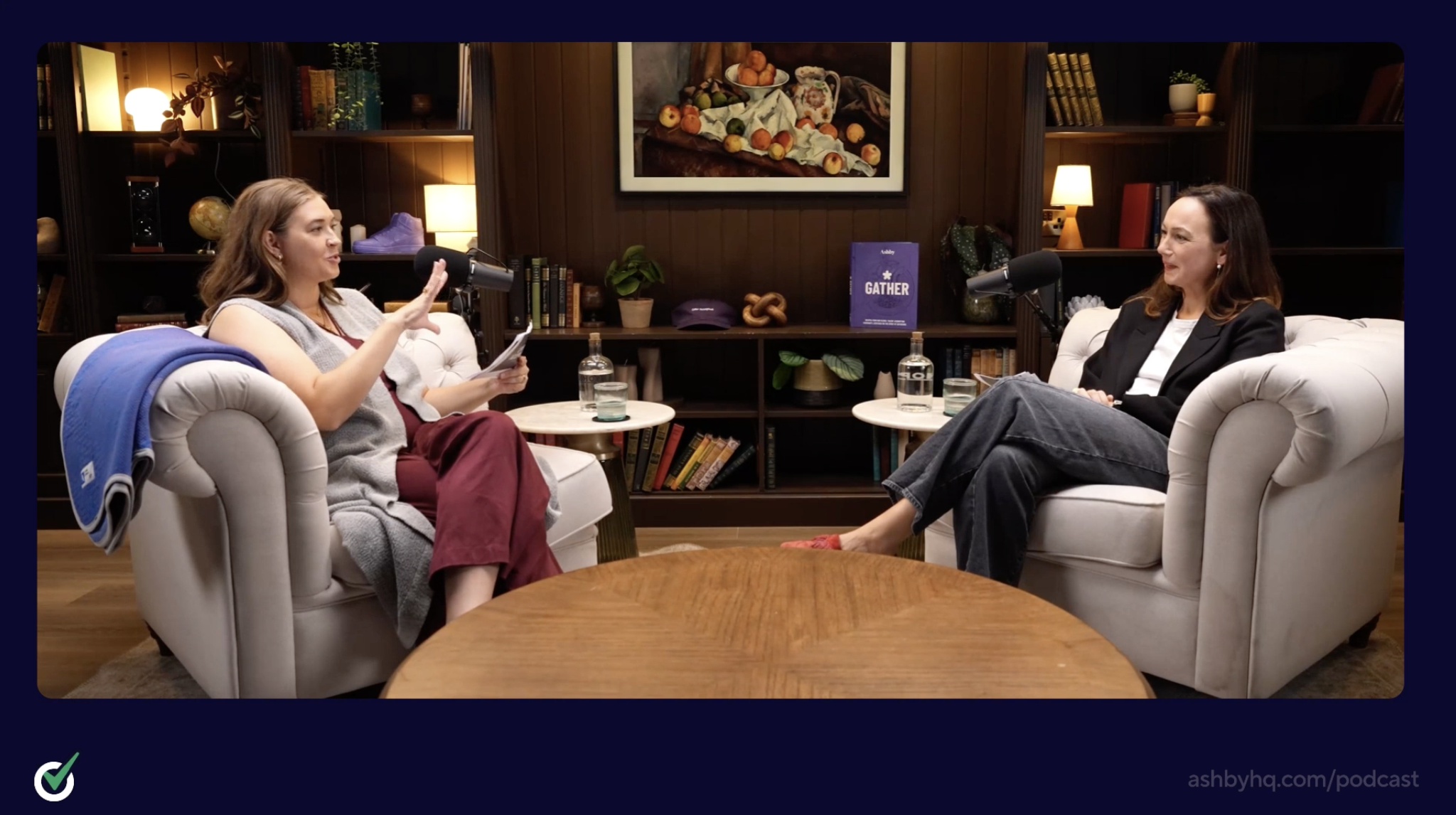
Interviews are broken, and in Nic's view, a tweak won't be enough to fix them. Many teams still lean on the same formats they always have, like "tell me about a time when" questions, even as the work being asked of people changes dramatically. She'd like to see interviews move toward live collaboration, where an interviewer brings a novel problem, shares information as the conversation unfolds, and works through it alongside the candidate. Some companies are already experimenting with this, and Nic sees it as the direction the rest of the industry needs to head.
Timestamps
(00:00) Introduction
(00:42) Meet Nicola Weatherhead
(01:43) Why hiring success extends beyond the offer
(04:26) Connecting recruiting to the wider talent system
(05:28) 3 focus areas of a career framework
(09:54) Diagnosing attrition and hiring challenges
(10:59) Goal of a focused career framework
(14:56) Partnering with leaders on future skill needs
(15:42) Testing the career framework within recruiting
(19:55) How AI is changing scope, autonomy, and complexity
(22:58) Cutting attrition by more than half
(24:10) Applying progress that keeps the whole team's connection intact
(26:53) Hiring excellence: Continuing to improve and move forward
(28:20) Recruiting hot take: Interviews are broken and need to be rethought
(31:40) Early career advice: Advocating for your team and yourself
(33:53) Where to connect with Nicola

Other Episodes

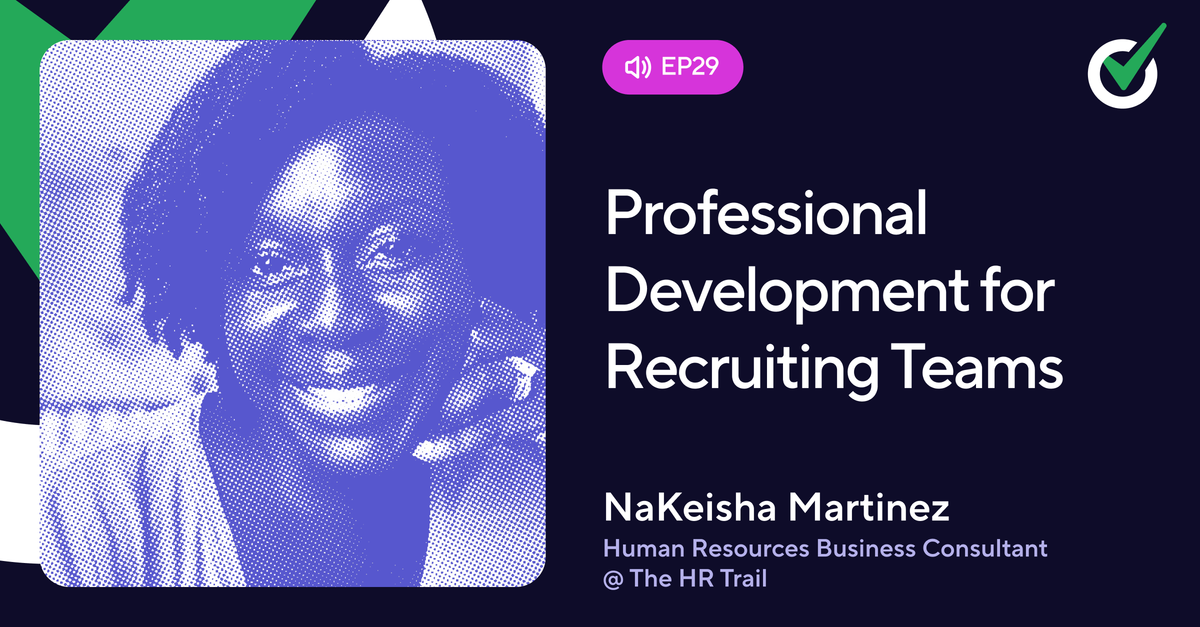
Professional Development for Recruiting Teams
In this episode of Offer Accepted, Shannon Ogborn sits down with Nakeisha Martinez, a nearly two-decade veteran in the talent space. They discuss the importance of professional development for recruiting teams, structuring 1:1s for development, and the concept of teach-backs to enhance skillsets amongst the recruiting team.
The Five Cs of Closing Candidates
In this episode of Offer Accepted, Harriet Walker, Head of Talent at Superseed VC, shares her 5 Cs of Closing: clarity, credibility, connection, continuity, and commitment. She explains why closing is not just an offer-stage event but a practice that should run through the entire hiring process. Harriet also shares practical strategies like checking in on compensation early, giving candidates a clear roadmap of the process, and treating reference calls as both diligence and closing opportunities.

Join the Hiring Excellence movement
New episodes every month - subscribe here so you never miss out.