Turning Internal Mobility Into a Durable Capability
About this Episode
In this episode of Offer Accepted, Angie Peterson, RecOps Manager at Coursera shares how her team approached internal mobility by listening first and resisting the urge to build something new too quickly.
She reflects on how engagement signals led to deeper listening, how clarity and shared understanding became the real unlock, and why most of the final internal mobility model relied on work that already existed. Angie’s perspective centers on building systems employees can navigate with confidence and that continue to work as organizations scale.
Topics
This Episode's Guest


Angie Peterson
Manager, Talent Operations & Programs @ Coursera
Angie Peterson is the Manager of Talent Operations and Programs at Coursera, where she focuses on building scalable systems that support internal mobility, career growth, and consistent hiring practices. Her work centers on creating clear, accessible operating models that help employees, managers, and hiring teams navigate opportunity with confidence as the company scales.
Takeaway 1
Jumping to Assumptions Solves the Wrong Problem 🛑
When Coursera’s engagement survey surfaced concerns tied to career opportunity, ownership of development, and recognition, Angie described how tempting it was to jump straight into solution mode. The signals felt familiar, and the team initially believed they understood what was driving the scores.
Instead of acting on that assumption, they slowed down. The survey results became a starting point, not a conclusion. Angie’s team followed up with a structured internal survey and then hosted listening circles to understand how internal mobility actually felt to navigate. Managers and individual contributors were separated intentionally to create space for honest conversation, and around 50 to 60 employees participated.
As people talked, it became obvious this wasn’t about a lack of opportunity, but employees didn’t feel equipped to move. They didn’t know how the system worked, when it was safe to raise their hand, or what would happen once they did. That uncertainty made internal movement feel risky, even when roles existed.
Taking the time to listen gave the team the confidence to narrow their focus and move forward without second-guessing whether they were solving the right problem.
Why It Matters:
Engagement data can surface where something feels off, but it rarely captures how people experience a system in practice. When teams act on signals without understanding the experience underneath them, the work can look responsive while the friction employees are navigating stays in place. Angie’s approach created clarity early, which made everything that followed more focused and more durable.
Quick Tips
- Use engagement survey results to decide where to listen more closely. Angie’s team treated specific EES questions as prompts to slow down and investigate, not instructions to build.
- Be explicit that listening is about experience, not solutions. Angie’s team was clear they were there to understand how internal mobility felt to navigate, not to collect a list of feature requests.
- Design listening for honesty, not efficiency. Separating managers and individual contributors created space for more candid feedback about where confidence broke down.
Takeaway 2
Don’t Reinvent the Wheel 🧩
Once the problem was clear, Angie’s team stepped back to assess what already existed. What surprised them most was how much of Coursera’s final internal mobility model relied on work that was already in place. In the end, roughly 60 to 70 percent of what they shipped was built using existing strategies, resources, and programs.
That wasn’t obvious at the start. While the components existed, they weren’t connected or easy to navigate, even for people close to the work. Guidance lived in different places, resources felt fragmented, and employees struggled to understand how everything fit together.
With that clarity, the work shifted toward consolidation and visibility. Knowledge was pulled into a centralized internal hub and learning systems employees already used. Storytelling became a deliberate tactic, with employees sharing real examples of how they navigated internal moves. Mentorship surfaced repeatedly through listening, and instead of launching a heavy program the team couldn’t sustain, they focused on guidance that helped employees pursue those relationships on their own.
Why It Matters:
Internal mobility often feels heavier than it needs to be because teams assume they’re starting from zero. Angie’s experience shows how much momentum comes from recognizing what already exists and making it easier for people to find and use. When clarity replaces fragmentation, the system becomes more usable for employees and more sustainable for the teams supporting it.
Quick Tips
- Take inventory before committing to a build. Angie’s team evaluated what already existed and where it was underutilized or hard to access.
- Reduce fragmentation by centralizing guidance. Pulling mobility resources into a single internal hub and learning systems Courserians already used made it easier to understand where to start and what to do next.
- Address needs in proportion to your capacity. Mentorship feedback was real, and the response focused on guidance and education rather than a program that would have been difficult to maintain.
Takeaway 3
Internal Mobility is an Operating Model, not a Program 🧠
To put it simply, internal mobility had historically been under-utilized by Courserians because it was difficult to navigate and lacked a shared understanding of how it worked across the organization.
Angie’s team stopped treating mobility like a missing program and started treating it as an operating model problem. They defined what internal mobility meant at Coursera and documented how it worked, with guidance tailored to employees exploring roles, managers supporting development conversations, and hiring managers and recruiters evaluating internal candidates.
Two questions anchored the work throughout the process: Could people find what they needed? And once they found it, could they move forward without friction? Those questions shaped how resources were organized and how guidance was written, grounding the system in accessibility and visibility from the start.
Why It Matters:
When internal mobility relies on informal explanations and institutional knowledge, access becomes uneven as organizations grow. Treating mobility as an operating model creates shared expectations, clearer ownership, and a more consistent experience for employees, managers, and recruiters. It also makes the system easier to maintain as teams, leaders, and priorities change.
Quick Tips
- Clarify roles and expectations for every participant. Guidance at Coursera was tailored to employees, managers, hiring managers, and recruiters so no one was guessing how they fit into the process.
- Design for independent navigation from the beginning. The system was built so employees could explore and move with confidence without relying on backchannel explanations, while remaining sustainable for the teams running it.
- Anchor decisions in accessibility and visibility. Angie’s team continually evaluated whether people could find what they needed and act on it without friction.
What Hiring Excellence Means to Angie
For Angie, Hiring Excellence shows up in how clearly people can grow and move inside the company over time. Filling roles matters, but so does whether employees understand how opportunity works and feel confident navigating it.
She views internal mobility as a signal of organizational discipline. When expectations are clear and processes are easy to follow, people trust the system and are more willing to raise their hand, whether they are exploring a move, supporting someone else’s growth, or making a hiring decision.
Hiring excellence, in her view, comes from building systems that hold up as the business scales and continue to work even when the original builders are no longer there
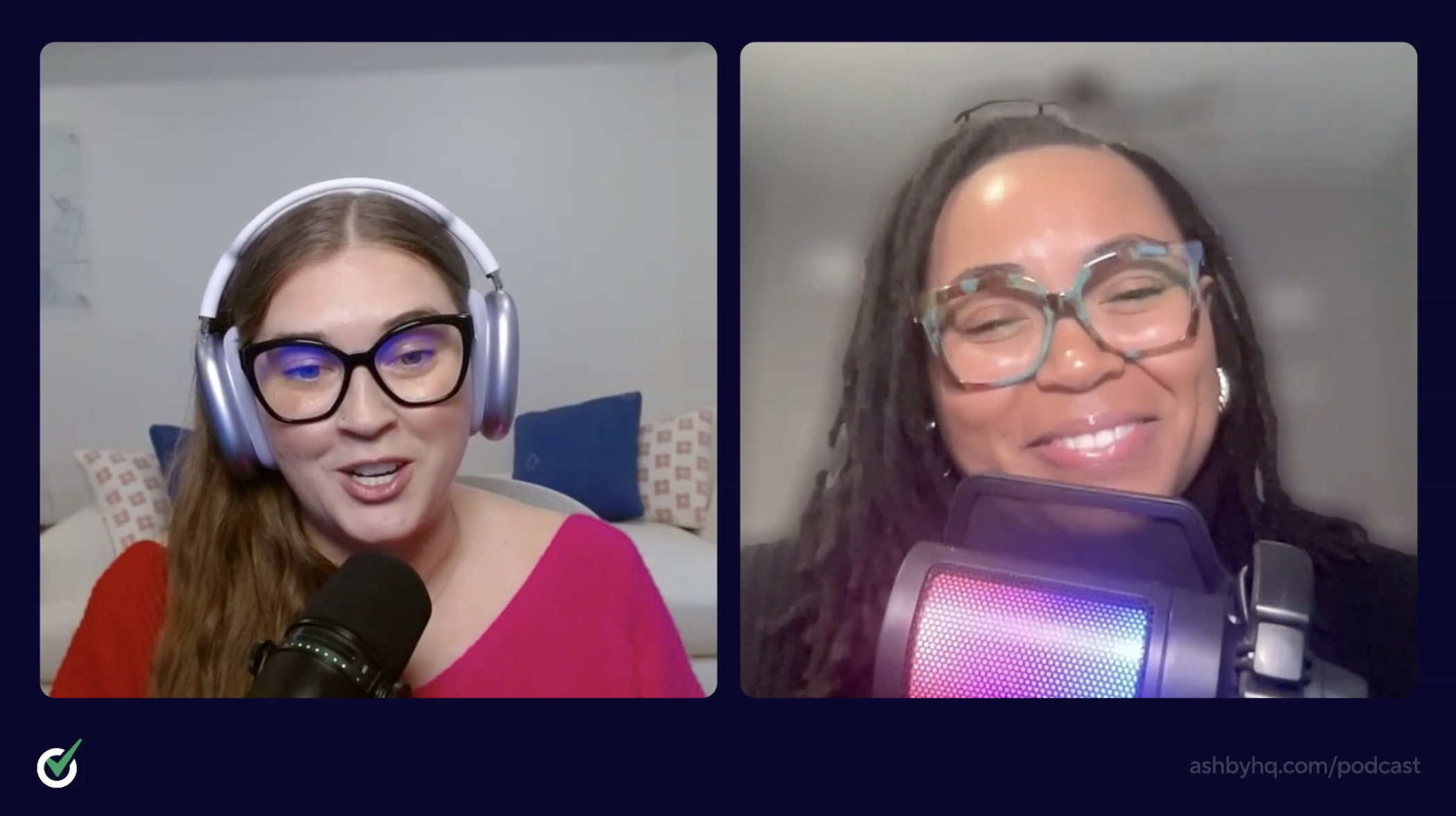
Angie's Recruiting Hot Take 🔥
Angie’s recruiting hot take is that recruiting isn’t just a collection of open roles. It’s a program. Requisitions are simply the projects that live within it.
When hiring feels chaotic or overly political, it’s often because there’s no program design behind the work. As AI automates more of the transactional pieces of recruiting, the teams that remain competitive will be the ones that treat hiring as a program and invest in the skills required to manage complexity, from sequencing work and managing dependencies to navigating stakeholders and risk.
In Angie’s view, recruiting has always been relational, but it’s also deeply programmatic. The functions that scale and endure will be the ones that name that reality and build for it.
Timestamps
(00:00) Introduction
(02:13) Why internal mobility is often underutilized
(03:53) What Coursera learned from its employee engagement survey
(06:52) How listening circles revealed the real blockers
(10:28) Why internal mobility is an operating model, not a perk
(13:42) What Coursera kept, repackaged, and rebuilt from their existing program
(15:18) Launching the internal mobility hub and resources
(17:50) The unexpected value of a career chatbot
(19:58) Addressing mentorship without building a full program
(21:16) How Coursera enabled hiring managers and recruiters
(24:28) Measuring early signals of program impact
(28:01) Making internal mobility a durable business system
(30:13) What hiring excellence means to Angie
(32:46) Angie’s recruiting hot take on treating hiring like a program
(35:18) Angie’s advice to her earlier career self
(38:58) Where to connect with Angie

Other Episodes

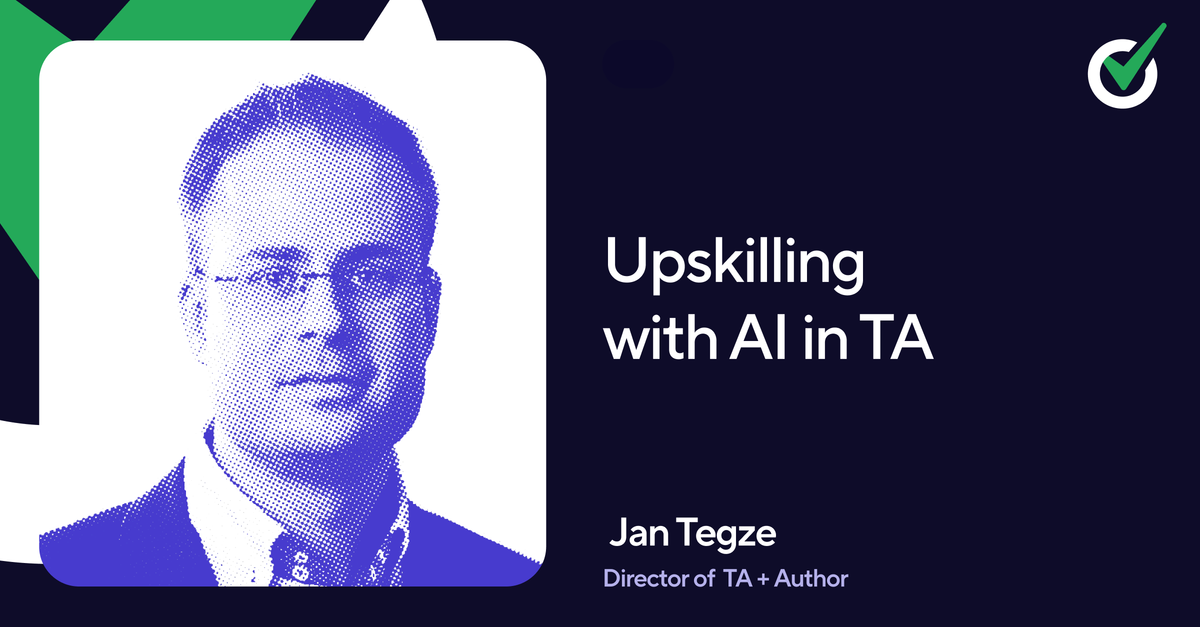
Upskilling with AI in TA
In this episode of Offer Accepted, Jan Tegze, Director of Talent Acquisition and a multi-time published author, shares how AI is reshaping the recruiting landscape. He explains how AI tools enable efficiency by automating repetitive tasks while highlighting the critical role of human elements like trust and empathy. Jan shares why upskilling in AI is now a core competency for recruiters and how strategic experimentation with these tools can lead to long-term success.
Cohort Hiring to Reduce Time to Fill
In this episode of Offer Accepted, Anna Hall, GTM Recruiter at Ashby, shares how cohort hiring streamlines recruiting efforts, creates a more equitable hiring process, and improves efficiency for both recruiters and hiring managers. She breaks down the inputs needed for a successful cohort model, common misconceptions, and how to use data to optimize hiring outcomes. Anna also dives into the measurable impact of this approach, including a major reduction in time-to-fill and increased hiring efficiency.

Join the Hiring Excellence movement
New episodes every month - subscribe here so you never miss out.