3 Steps to Make Skills-Based Hiring Predictable
About this Episode
In this episode, Alessandra Pegnim, Head of Global Talent Acquisition and Employer Brand at Udemy, walks through the three-step framework her team built to make skills-based hiring genuinely predictable. Drawing on her experience scaling global talent at Udemy over the past four and a half years, Alessandra shares why the search should start with your top performers rather than a job description, how her team discovered that industry background and education were weaker predictors of success than expected, and what it took to get hiring managers to trust a process that felt unfamiliar at first.
She also gets into what happens after the offer, why Udemy's own team regularly hires people with 70% of the required skills and how they built the infrastructure to close that gap starting at onboarding rather than waiting for it to show up in performance conversations six months later.
Topics
This Episode's Guest


Alessandra Pegnim
Head of Global Talent Acquisition and Employer Brand @ Udemy
Alessandra Pegnim is the Head of Global Talent Acquisition and Employer Brand at Udemy, where she leads talent strategy for a rapidly evolving global workforce. With over 20 years of experience in recruiting and 15 years leading teams, she has built and scaled talent organizations from Fortune 50 companies and high growth startups.
Takeaway 1
Your Top Performers Are the Most Accurate Skills Benchmark You Have 🔍
When a role opens, the instinct is to define what you want in a candidate and build a job description around it. Alessandra's argument is that starting there anchors the search to an assumption rather than evidence, and the evidence already exists inside the organization. Top performers can be up to 8x more productive than the average employee, and understanding what makes them successful is a more reliable starting point than a list of requirements built from scratch. Starting with a persona built around the people already succeeding in similar functions changes not just who you're looking for, but how confidently everyone involved can evaluate candidates once the process begins.
Why It Matters:
When the search is grounded in what your best people actually do, every downstream decision gets easier. The rubric reflects something real, the interview questions point somewhere specific, and the team spends less time second-guessing because the bar was set before the first candidate came in.
Quick Tips
- Start where you have buy-in. High volume roles like sales and CS are a natural place to begin because they have quantifiable performance metrics once someone joins, making it easier to validate whether the skills you hired for actually predicted success.
- Keep the skills list focused. Alessandra's team works with around ten skills per job function but identifies the top four needed for that specific role right now and builds the interview process around those.
- Validate the skills before you post. At Udemy, that meant bringing in a third party data validator alongside manager input to pressure-test which skills actually predicted performance rather than just felt right.
Takeaway 2
You're Screening Out the Right Candidates With the Wrong Criteria 🧩
One of the more critical findings when Alessandra's team actually looked at the data was that industry background, specifically experience in learning or ed tech, wasn't necessarily a predictor of whether someone would perform well. Education had the same problem. Research from LinkedIn and the Harvard Business Review found that hiring for skills is 5x more predictive of performance than looking at education and experience alone, which means the filters teams feel most confident about are often the ones doing the least useful work. The practical result at Udemy was a wider net, and that shift showed up across functions.
Why It Matters:
When the bar for entry is built around credentials rather than capability, the people raising their hand saying they can do the job are getting screened out before anyone has tested whether they actually can. Dropping those filters doesn't mean lowering standards — it tends to surface candidates who wouldn't have made it through otherwise.
Quick Tips
- Audit your current filters against your actual performance data. If the people succeeding in a role don't share the attributes you've been requiring, that's a signal worth acting on.
- Create a rubric with defined answer criteria before the process begins. When the candidate pool gets wider, interviewers are hearing more varied backgrounds and experiences, which makes it easier for bias to creep back in. A rubric that defines what a strong, average, and weak answer looks like for each skill keeps the evaluation anchored to capability rather than familiarity.
- Track what changes after you hire more broadly. Alessandra's team found that hiring for skills over background also increased internal mobility, because knowing what skills someone has makes it easier to see where else they can contribute inside the organization.
Takeaway 3
Skills-Based Hiring Doesn't Work If It Stops at the Offer 🔄
At Udemy, the skills-based hiring process doesn't end at the offer. Alessandra's team often hires people with 70% of the required skills, and the remaining 30% gets ignored for a long time, which means the gap doesn't disappear once someone accepts. Building the infrastructure to address that starting at onboarding is what separates a skills-based hiring process from a skills-based talent strategy. That infrastructure has to keep evolving too — Alessandra's team is currently going back and adding a layer of AI proficiency into sales and CS roles because the role has changed and the criteria needs to reflect what the job actually demands right now.
Why It Matters:
Most hiring processes treat the offer as the finish line, but the skills gap a team carries into onboarding is the same one that shows up in performance conversations six months later. Getting specific about where a new hire is starting from and building toward the full picture from day one is what makes the investment in a rigorous hiring process worth it.
Quick Tips
- Identify the skills gap at the offer stage, not after. Knowing where a new hire is starting from day one gives managers something concrete to work with rather than discovering gaps once they're already affecting performance.
- Make development measurable, not aspirational. The goal isn't to assign learning and move on — it's to see whether there's real output and business impact from the development happening.
- Stay close to what the role actually demands day to day. The criteria that predicted success when a role was opened may not reflect what the job requires six months later, and with how quickly roles are evolving right now, the gap between what you're hiring for and what you actually need can close faster than expected.
What Hiring Excellence Means to Alessandra
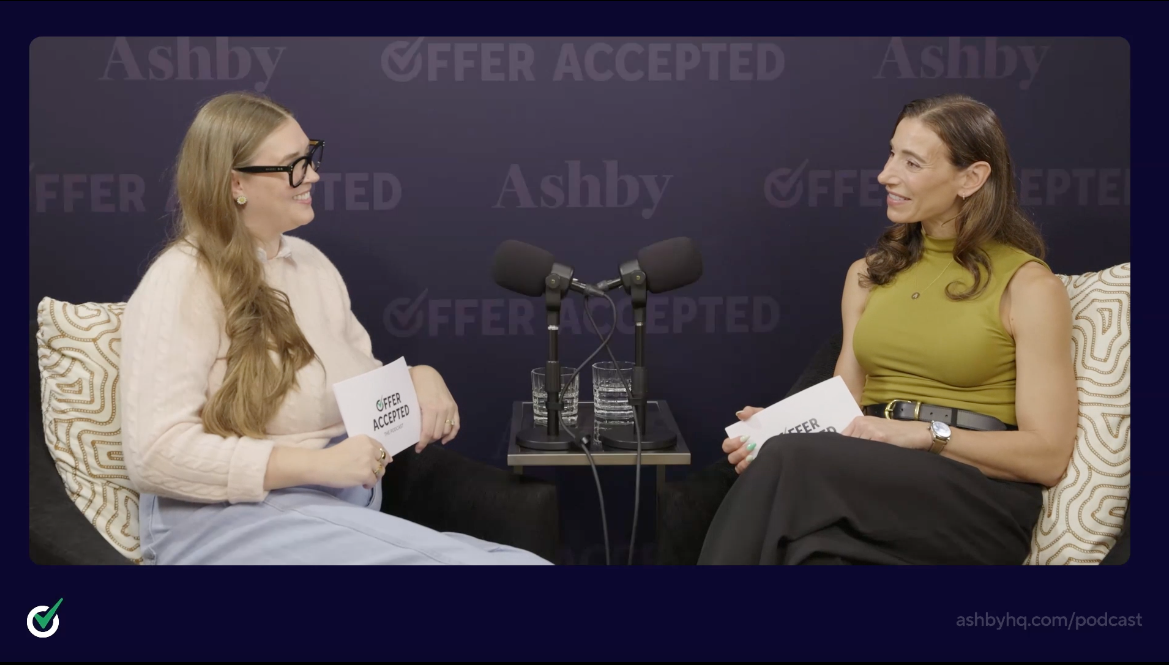
For Alessandra, hiring excellence starts with the work that needs to get done rather than the role itself. Before going to market, the question should be whether the work can be automated, whether the skills can be built internally, and whether there is capacity somewhere else on the team to do it. Only once those questions are answered does it make sense to define exactly what you need, which by that point is a much more precise target than most job descriptions start with.
Alessandra's Recruiting Hot Take 🔥
Skills-based hiring isn't a new idea and it isn't a revolution — we've always been hiring for skills. The difference now is that we've finally built the infrastructure to do it in a way that is repeatable and predictable, and the teams that haven't yet are still relying on pedigrees and credentials to make decisions that the data doesn't support.
Timestamps
(00:00) Introduction
(00:54) Meet Alessandra Pegnim
(02:25) Why skills-based hiring matters right now
(04:04) What skills-based hiring actually looks like
(04:58) Building job descriptions around validated skills
(05:57) Three steps for skills-based hiring
(07:57) How to validate skills for hiring
(09:48) Turning skills into structured interview rubrics
(12:21) Training interviewers with AI role play
(16:33) Widening the talent pool through skills-first hiring
(18:19) How skills visibility supports internal mobility
(19:54) Adding AI proficiency to hiring criteria
(21:31) Using onboarding to close skill gaps faster
(22:32) Hiring excellence: Start with the work that needs to get done
(24:11) Recruiting hot take: Look for the skills needed for the job
(26:51) Advice to her earlier-career self: Never stop learning
(29:43) Where to connect with Alessandra

Other Episodes


The Leadership Reset Behind a High-Performing Talent Team
In this episode of Offer Accepted, Mike Bettley, VP of Talent Acquisition at StackAdapt, shares how he reset a fragmented talent team by rebuilding trust from the inside out, first with his own team, then with hiring managers across the business, and finally through the operational systems that let it all hold at scale.
Managing Objections to DEI Initiatives
In this episode of Offer Accepted, Shannon Ogborn sits down with Ashley King, Founder + Chief Instructor @ DEI Labs. The conversation focuses on how to manage objections to your DEI initiatives and TA's role in creating systemic change.

Join the Hiring Excellence movement
New episodes every month - subscribe here so you never miss out.