Making Interviews an Accurate Job Preview
About this Episode
In this episode of Offer Accepted, Tianna Johnson, founder of People Culture Talent, reflects on her experience building and evolving interview processes at Notion, GitHub, and Lyft.
She shares how intentionally infusing product into hiring gives candidates a real sense of the company’s vision, how designing interviews around unsolved problems creates stronger signal, and why being honest about what is still in progress builds trust on both sides of the table. Tianna’s approach centers on alignment, transparency, and creating interview experiences that reflect the reality of the work and the culture companies want to build.
Topics
This Episode's Guest


Tianna Johnson
Founder + Fractional People + Talent @ People Culture Talent
Tianna Johnson is the founder of People Culture Talent and a talent leader with experience building and scaling teams at Notion, GitHub, and Lyft. She specializes in designing interview processes that reflect how companies actually operate, helping teams create alignment through product-led hiring, transparency, and intentional candidate experiences.
Takeaway 1
Your Interview Process Tells the Truth 🪞
Before Tianna ever thinks about adding product exercises or redesigning interviews, there is a grounding question she asks founders, hiring managers, and teams: What do you want to be known for?
She uses that question as a lens. When a company says it values one thing, but the interview experience sends a different message, candidates feel the disconnect quickly. Interviews become one of the earliest signals of what a company actually prioritizes, whether intentionally or not.
As companies grow and evolve, interview questions that once made sense can quietly drift out of alignment. Tianna sees interviews as something that should evolve alongside the business, not remain frozen in a past version of the company.
Why It Matters:
Interviews shape expectations early. When the interview experience does not align with the culture, priorities, or direction candidates encounter after joining, mismatches become more likely and trust erodes quickly.
Starting with what a company wants to be known for as a North Star helps teams spot where their interview process has drifted. It keeps hiring aligned with the future the business is building toward, not just the habits it has carried forward.
Quick Tips
- Start with the future, not the past. Tianna spends time with leaders understanding where the company is headed next, then evaluates whether interview questions reflect that direction.
- Retire questions that no longer reflect reality. At Lyft, Tianna helped teams move away from interview questions that still worked on paper but no longer matched how teams were operating or what they were trying to solve.
- Use interviews to clarify priorities. Revisiting interview questions created space for hiring teams to align on what actually mattered in the role instead of defaulting to habit.
Takeaway 2
Show, Not Tell, Is a More Compelling Sell ✨
When it comes to helping candidates understand the value of a product, Tianna believes showing is far more effective than telling.
Rather than relying on explanations or feature walkthroughs, she looks for ways to bring a company’s product into the interview process so candidates can experience the vision behind it and see the value of what the company is actually selling.
At Notion, candidates completed take-home work directly in the product, giving both sides a clearer sense of how ideas were organized and communicated using the same tool they would rely on in the role.
At GitHub, the approach was louder and more public. The team created an open-source challenge and promoted it through billboards and external campaigns. Candidates who discovered the challenge and passed it were fast-tracked into interviews, creating excitement and offering a hands-on introduction to GitHub at a time when the company was still relatively unknown.
Why It Matters:
When candidates interact with the product during interviews, conversations shift from abstract explanations to concrete understanding. Candidates form their own point of view about the product and the vision behind it, and interviewers gain shared context for deeper conversations.
Even candidates who were not hired often left with a stronger connection to the product and a clearer understanding of what the company was building, becoming strong advocates.
Quick Tips
- Bring the product in where it creates real understanding. Tianna is intentional about when product shows up in interviews, focusing on moments where it helps candidates grasp value rather than inserting it everywhere.
- Use the product as proof, not polish. Seeing how candidates engage with the product helps teams understand judgment and decision-making, not just presentation.
- Create space for candidates to buy in early. Product exposure gives candidates time to decide whether they want to be part of what the company is building instead of being persuaded late in the process.
Takeaway 3
Use Your Mess to Your Advantage 🧠
No company has everything figured out. Tianna believes being open about what is still a work in progress creates space for more honest conversations, clearer expectations, and stronger alignment from the start.
At Lyft, this showed up in interviews built around real, unsolved problems the company was actively thinking through. One example focused on how Lyft could better support parents, including scenarios around traveling with children and car seats. Instead of searching for perfect answers, interviews explored tradeoffs and constraints together.
Why It Matters:
Strong candidates want to work on meaningful problems. By surfacing what is still hard during interviews, both sides can better assess whether there is a true match.
This transparency leads to better decisions, stronger engagement throughout the process, and fewer surprises after someone joins.
Quick Tips
- Anchor interviews in problems the company is actively working through. Tianna intentionally uses challenges without clean answers to surface how candidates think.
- Run interviews like working sessions. Talking through ideas together creates stronger signal and increases engagement on both sides.
- Be explicit about what is still evolving. Naming what is unfinished helps candidates understand what they are stepping into and whether they want to help shape it.
What Hiring Excellence Means to Tianna
For Tianna, Hiring Excellence ihas two inseparable parts. Every hire shapes culture, and recruiting done well is an art of matchmaking.
She sees hiring as an open dialogue. The way interviews are designed, the questions that are asked, and the experience candidates move through should all reflect a clear North Star of what the company wants to be known for. The feelings candidates walk away with, and how they remember the process, matter just as much as the outcomes.
Hiring excellence, in her view, comes from being intentional and mindful about building with that in mind from the very beginning.

Tianna's Recruiting Hot Take 🔥
Tianna’s hot take is straightforward: your candidate experience is your product marketing.
Recruiters are uniquely positioned to tell the full story of a company. They need to understand the product deeply, how teams work together, and how leaders think across the business. When recruiters are equipped to tell that story, candidates are not just evaluating the product itself, but also the people, the culture, and how the company shows up during the hiring process.
You can have a strong product, but without a great culture and a compelling candidate experience, hiring the people you want becomes much harder.

Timestamps
(00:00) Introduction
(00:43) Meet Tianna Johnson
(02:17) Why product touch points matter in hiring
(03:47) Defining your north star for talent decisions
(05:00) Mapping the candidate journey for product moments
(06:14) How Notion used product-led takeaways
(06:26) How GitHub created a challenge to spark interest
(10:40) How Lyft built interviews around real product problems
(13:52) Turning unsolved challenges into strong conversations
(16:04) How product-infused hiring shaped brand advocacy
(18:11) How deeper final-stage dialogue improved acceptance
(20:34) Why interviewer energy influences candidate trust
(21:15) The candidate questions that reveal authentic culture
(21:42) Hiring excellence shapes your culture
(23:25) Why candidate experience is product marketing
(26:23) Leading with “aloha” throughout the hiring journey
(29:28) Where to connect with Tianna

Other Episodes

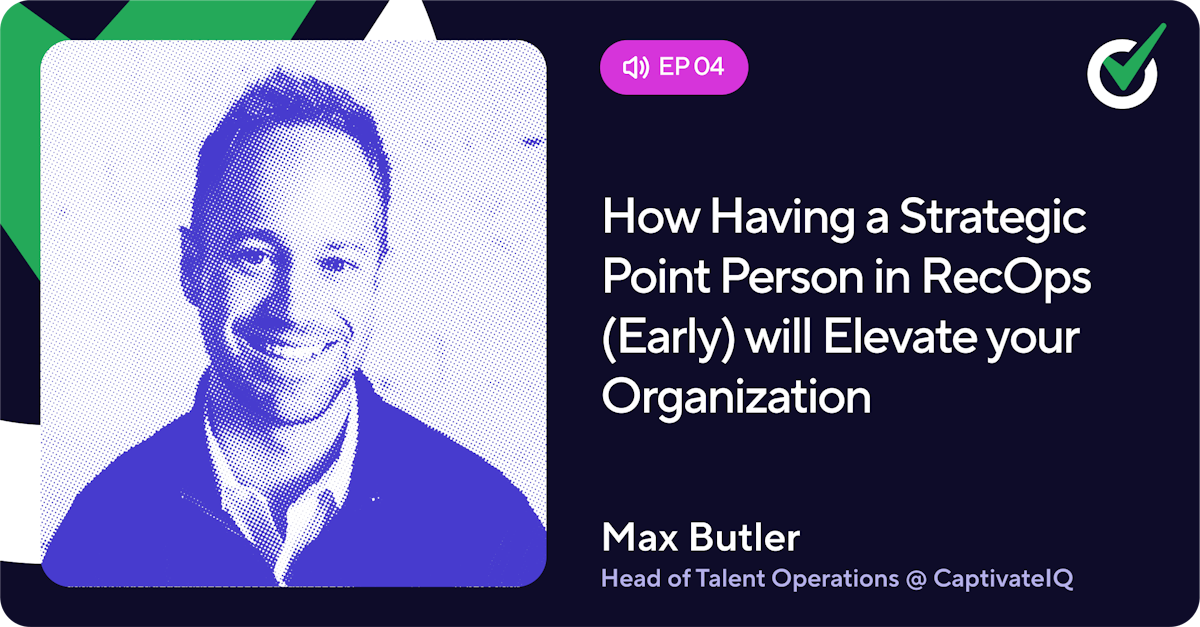
How a Strategic Point Person in RecOps (Early) Elevates your Organization
In this episode of Offer Accepted, your host Shannon Ogborn sits down with Max Butler, Head of Talent Operations at CaptivateIQ, to discuss the benefits of hiring a Recruiting Operations person early in your company’s life.
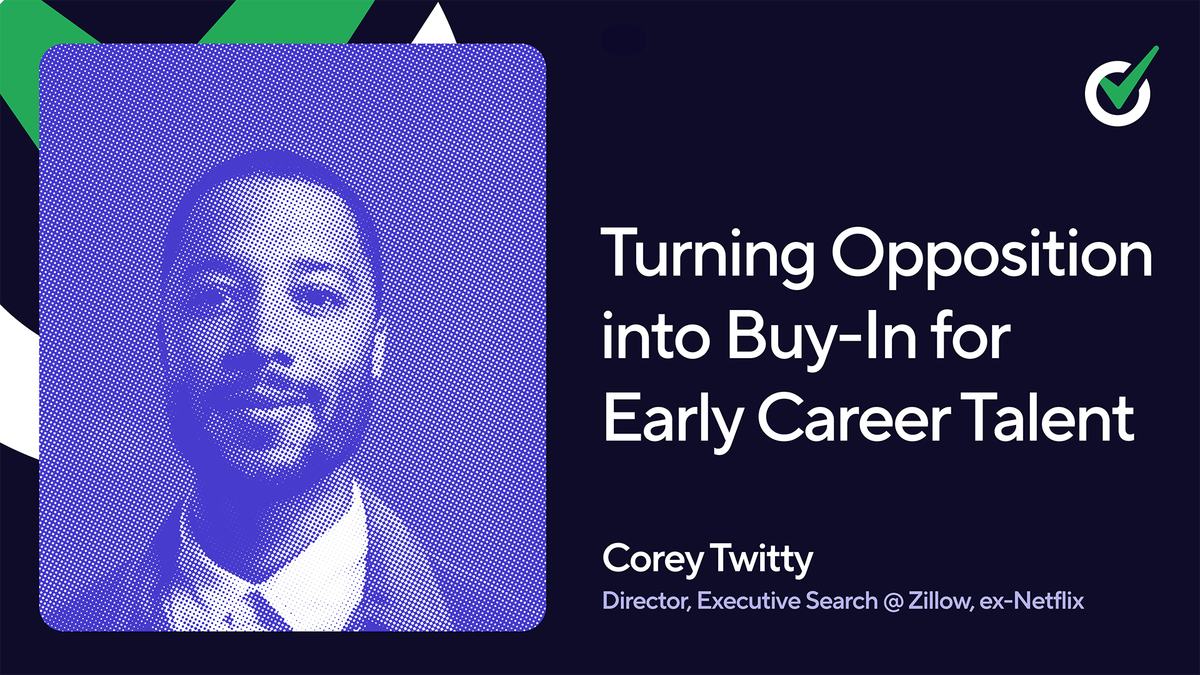
Turning Opposition into Buy-In for Early Career Talent
In this episode of Offer Accepted, Corey Twitty, Head of Executive Recruiting at Zillow, shares how he built Netflix’s first emerging talent program and shifted the company’s long-standing senior-only hiring culture. He explains how curiosity, dissent, and collaboration turned skepticism into shared ownership, and how designing with the business, not beside it, created a scalable, enduring program that redefined what “great hiring” looks like.
Join the Hiring Excellence movement
New episodes every month - subscribe here so you never miss out.