The Recruiter's Guide to Selling Pre-IPO Equity
About this Episode
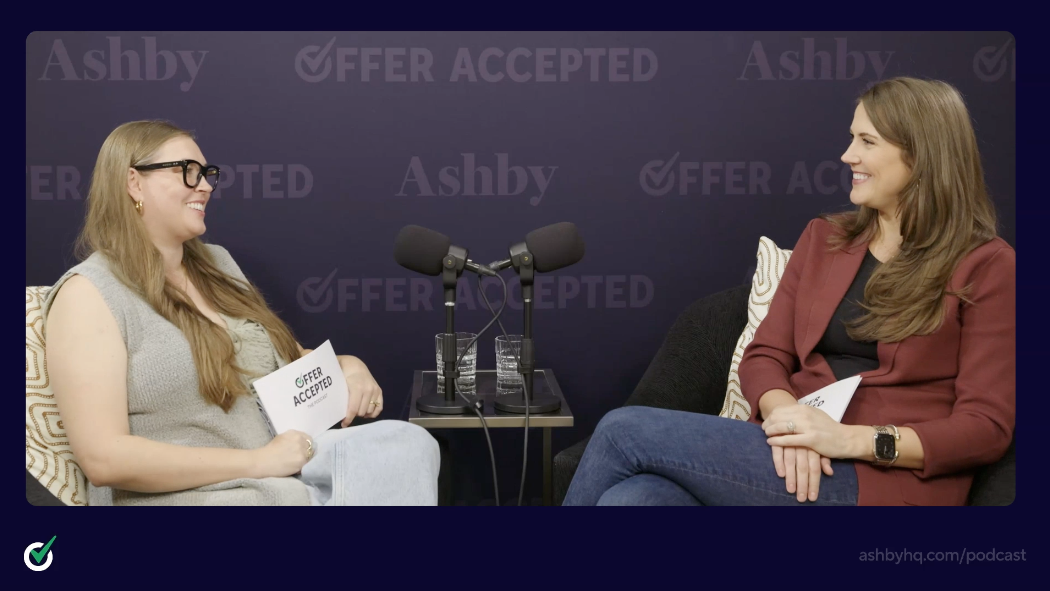
In this episode, Hannah Spellmeyer, Chief People Officer at Slingshot Aerospace, makes the case that equity is not a consolation prize for candidates who can't get a big tech salary. It is the most powerful lever a pre-IPO company has, and the gap between recruiters who can sell it well and those who can't is costing companies the exact caliber of talent that changes their trajectory.
Drawing on her experience as a founding recruiter who helped scale a startup from 80 to 800 people in four years, Hannah shares what it actually takes to close candidates above your fighting weight, how to counter the "monopoly money" objection with a specific and informed conversation about liquidity, and what three data points every recruiter should know cold before walking into an offer call. She also gets into why giving equity away indiscriminately is one of the most expensive mistakes an early stage company can make, and how to build a recruiting team that can hold its own in any equity conversation.
Topics
This Episode's Guest


Hannah Spellmeyer
Chief People Officer @ Slingshot Aerospace
Hannah Spellmeyer is the Chief People Officer at Slingshot Aerospace, a space operations, intelligence, and autonomy company. She began her career in agency recruiting before moving into startup talent, where she served as founding recruiter at a company she helped scale from 80 to 800 people in four years and to an $8 billion valuation.
Takeaway 1
Using Equity as a Lever to Punch Above Your Weight 🥊
Early stage companies are not going to compete on cash, and the sooner a recruiting team internalizes that, the sooner they can start winning on the thing that actually differentiates them. That differentiator is equity, and knowing how to use it well opens up a completely different conversation about who you can realistically go after. The goal should be to hire candidates who make the company look better, not the other way around. That shift in standard changes who you're targeting, how you're selling, and ultimately what kind of company you're building.
Why It Matters:
When the bar moves up and recruiters can close at that level, the downstream effects are real. People who have navigated certain inflection points before move faster, build credibility with enterprise customers sooner, and contribute to a business's trajectory in ways that take longer to develop from scratch. Getting those candidates across the finish line requires a compelling reason to take the leap, and at an early stage company that reason is rarely the base salary.
Quick Tips
- Understand where the candidate is in their career before making the equity case. For earlier-stage candidates the conversation tends to land around wealth creation and upside potential. For senior candidates already earning strong total comp, the more compelling frame is total compensation math: when you factor in the intrinsic value of the equity, they may not be giving up as much as they think, and they gain far more direct influence over where that value goes.
- Identify who the startup path actually appeals to and concentrate energy there. Joining an early stage company is the closest most people will get to being an entrepreneur without taking on the full weight of the risk. The ability to point to something and say "I built that, and it generated real revenue" is not available to most people at large companies. For the candidates that framing resonates with, it is the most powerful selling point in tandem with equity upside.
- Treat equity as the finite and valuable resource it is. Giving options away indiscriminately will catch up with a company fast since that equity will become the most valuable asset the company has. Spend high on the critical roles early and build discipline into the philosophy from the start, knowing that how you structure offers at Series A is not how you'll structure them at Series D.
Takeaway 2
Pre-IPO Equity Is More Than "Monopoly Money" 💰
The objection recruiters run into constantly is that pre-IPO equity feels intangible. Non-liquid, years away from any potential outcome, easy to wave off as "monopoly money" next to the immediate vesting of RSUs at a public company. The argument worth knowing before walking into a competitive offer situation is that this framing is more outdated than most candidates realize.
The idea that RSUs from a public company are inherently more equipped to generate wealth than pre-IPO options is a misnomer. There are roughly 1,500 private companies with billion-dollar-plus valuations, the same number as publicly traded companies at that threshold. More importantly, the assumption that equity has to sit untouched until IPO no longer reflects how things actually work.
Why It Matters:
Candidates who have spent their careers at public companies often carry a mental model about equity that was formed in a different era. If recruiters can't speak to the liquidity mechanisms that exist today, they're leaving a genuinely compelling part of the offer unaddressed and likely losing candidates to companies whose recruiters can. The counterargument to "monopoly money" is not a vague promise of future upside. It's a specific, informed conversation about how and when that value can be realized.
Quick Tips
- Know the two liquidity paths that exist before any exit and be ready to speak to both. Secondary markets allow employees who have exercised their shares to sell pre-IPO stock to outside investors before the company ever goes public. Tender offers are the other path, where the company itself buys shares back from employees at an agreed price, giving people a way to see real value from their equity without waiting for a liquidity event. Neither requires waiting years for an IPO.
- Ground the conversation in lived experience of equity outcomes where you can. The most convincing data point is not theoretical upside but something a colleague actually experienced. One concrete story, like a teammate who received a secondary market offer at $30 a share on stock that originally cost 15 cents, is far more persuasive than a projected number. That requires staying networked internally and knowing what the people around you are actually seeing.
- Use timing as a lever for conversations on the secondary market. Activity tends to spike right after a fundraise, when outside interest is highest and the most current data on what the market is willing to pay is available to reference. That is the moment when the secondary market argument is easiest to make and most credible.
Takeaway 3
Getting Confident with the Equity Data Points That Close Candidates 📊
Selling equity feels abstract until a recruiter has either lived through a real outcome or spent enough time around people who have. Until then, confidence comes from knowing the specific numbers cold and having the right tools to make them tangible for candidates who are trying to process too much at once.
The discomfort recruiters feel going into this conversation is real and worth acknowledging. It is never going to feel comfortable the first time and that is okay. There is actually something that builds trust with candidates when a recruiter admits they don't know something and looks it up in real time rather than bluffing through it.
Why It Matters:
Candidates evaluating a startup offer are often doing so alongside a competing offer from a larger company with a familiar comp structure. If the recruiter on the other side of that conversation can't clearly explain the value of what's on the table, the safer and more legible option wins by default. The goal isn't to oversell. It's to make sure the candidate has what they need to make a genuinely informed decision, and that starts with the recruiter having it first.
Quick Tips
- Walk into every offer call knowing three things: your strike price, your preferred price from the last round, and the delta between them. That delta is the actual intrinsic value of the grant. If the strike price is $1 and the preferred price is $5, the intrinsic value is $4 per potential share, not $5. Candidates who have never held ISOs or NSOs before need that explained clearly and upfront or it becomes a bait and switch the moment they realize options have to be purchased.
- Work with your finance team to build an equity calculator candidates can actually interact with. Keep it simple, let candidates adjust the preferred price to see what different scenarios could mean for their potential outcome, and make sure it is clearly labeled as not a guarantee. The goal is to give candidates something concrete to reason with rather than asking them to mentally juggle a series of abstract numbers.
- Build peer knowledge internally and make it part of recruiting enablement. Recruiters who haven't been at a company long enough to have experienced secondary offers themselves need to stay networked with colleagues who have. Record your strongest people talking through equity conversations and share those recordings with the team so everyone is drawing from real experience rather than theory.
What Hiring Excellence Means to Hannah
For Hannah, hiring excellence is a predictable process. Knowing what hires will cost because they sit inside a defined compensation architecture, knowing how long hiring will take so headcount doesn't drift above or below plan quarter over quarter, and being able to put data in and understand what comes out on the other side in terms of payroll and operating costs.
Hannah's Recruiting Hot Take 🔥
Companies should deliver rejections live whenever possible, a position that makes every general counsel squirm. If a candidate has invested three, four, or ten hours with a company, they deserve the opportunity to talk to a recruiter about why they weren't selected. That requires a structured interview process and clear competency-based reasons for the decision, but when those things are in place the conversation is far less risky than most people fear and more valuable for everyone involved.
Timestamps
(00:00) Introduction
(00:52) Meet Hannah Spellmeyer
(01:39) Why recruiting teams need to get good at selling equity?
(04:55) The key inputs recruiters must know to close
(06:49) When to share equity details with candidates
(08:58) Handling “equity is fake money” objections
(11:49) How secondary markets create early liquidity
(13:22) Using equity calculators to enable teams
(17:52) What great equity selling unlocks for hiring teams
(21:09) Advice for recruiters
(23:10) Hiring excellence: Predictable processes
(24:35) Recruiting hot take: Deliver rejections live
(28:45) Career advice: Don’t take things personally
(30:44) Where to connect with Hannah

Other Episodes

Building Capacity Models
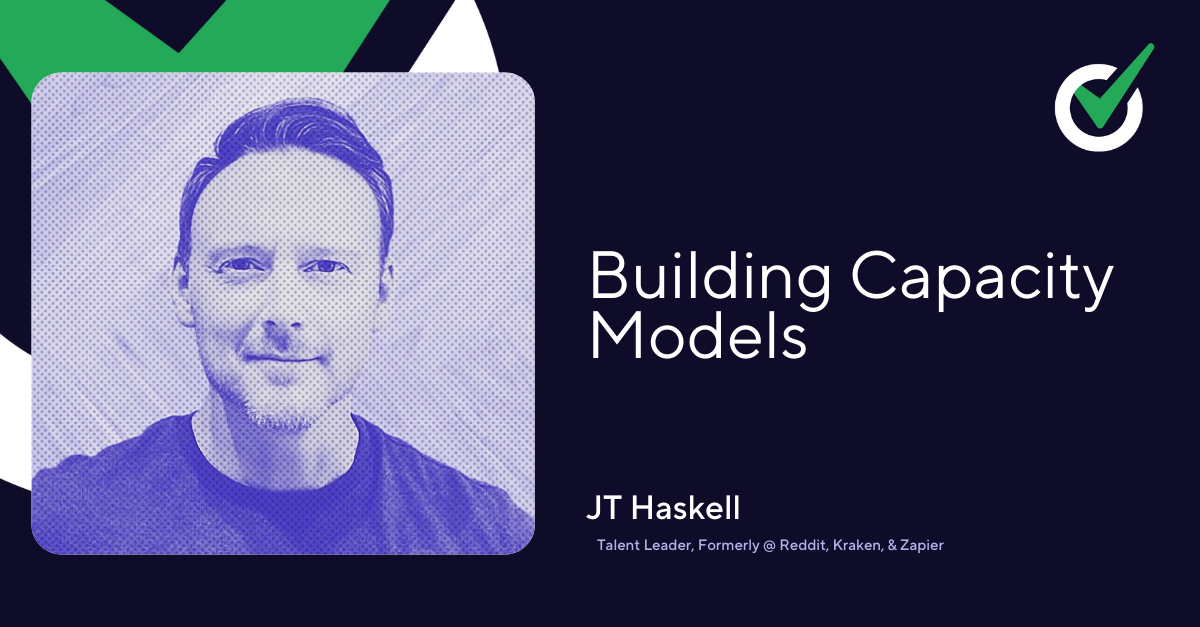
In this episode, JT Haskell, with 15+ years of TA experience at companies like Reddit and Zapier, shares how strategic capacity planning helps TA teams exceed hiring goals, avoid burnout, and streamline recruiting. We discuss forecasting, project integration, and exec buy-in.

Measuring Recruiter Feedback to Drive Process Improvement
In this episode of Offer Accepted, Will Ducey, Head of Recruiting Operations at Ashby, shares how quarterly recruiter surveys transform recruiting from a reactive function into a strategic one built on trust and continuous improvement. He explains how structured feedback neutralizes bias, reveals where recruiters are actually struggling, and creates a cycle where teams see their input lead to real change. Will walks through the one-to-four scale he uses to measure time allocation, how qualitative feedback becomes collaborative problem-solving, and how one team moved their recruiting process NPS from 33 to 82 in nine months.

Join the Hiring Excellence movement
New episodes every month - subscribe here so you never miss out.