Scaling Hiring Expertise Company Wide Through AI Agents
About this Episode
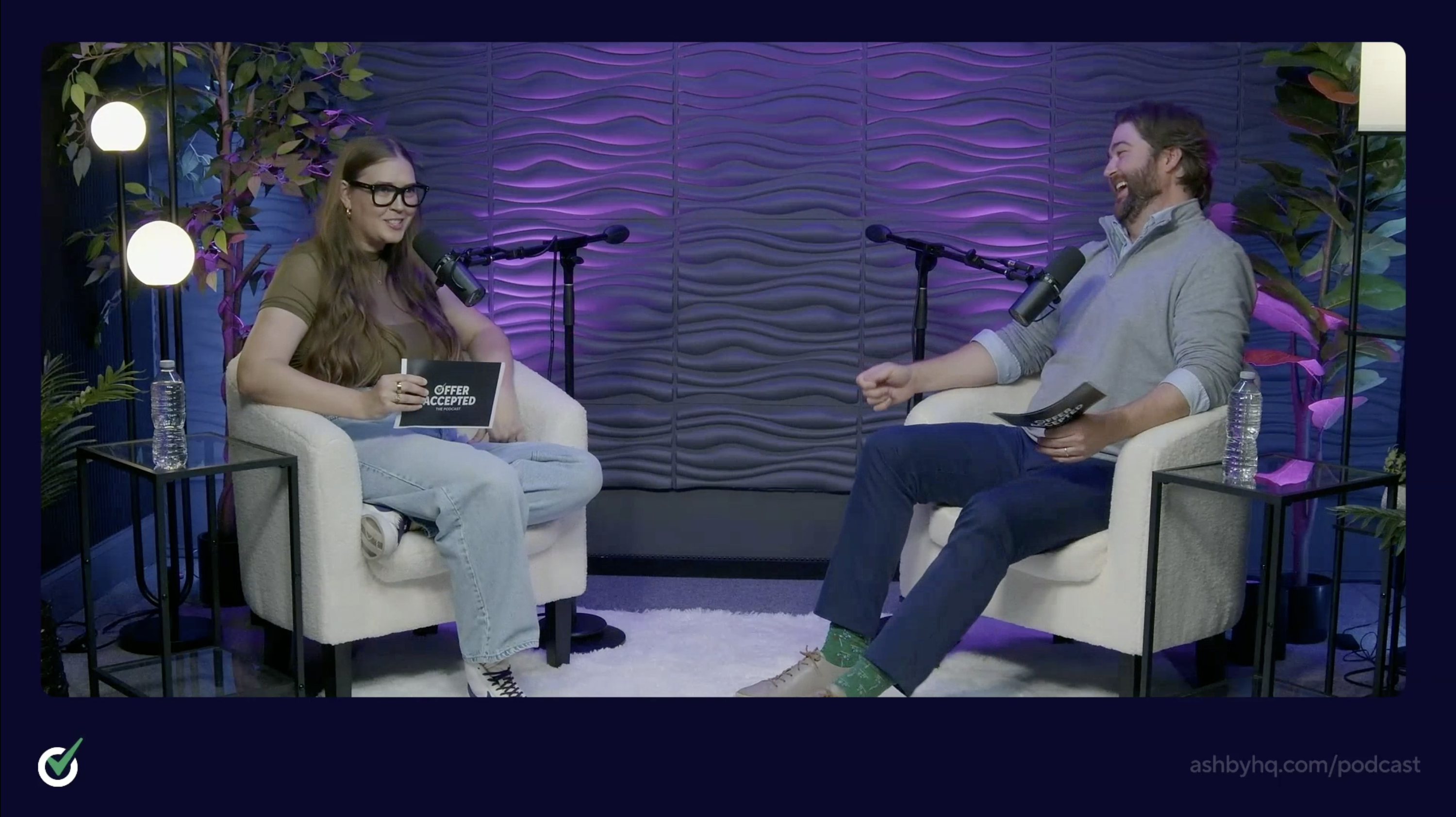
In this episode, Kyle Gatlin, Head of Global Talent Acquisition at Arrive, shares the thinking behind one of the more practical AI applications in talent acquisition right now. After building a comprehensive hiring philosophy document grounded in peer-reviewed research, skills-based interviewing frameworks, and input from stakeholders across the organization, he recognized that the document itself was never going to reach the people who needed it most.So he turned it into an AI agent instead, one that hiring managers across 70 countries can query at any hour, in any language, without waiting on a recruiter to be available. The conversation covers what went into building the foundation, how he got internal buy-in, what testing revealed about what people actually needed, and what the first month of results has looked like.
Topics
This Episode's Guest


Kyle Gatlin
Global Head of Talent @ Arrive
Kyle Gatlin leads global talent acquisition at Arrive, overseeing hiring across more than 70 countries for a portfolio of mobility brands including ParkMobile and EasyPark. Before moving into talent, he spent the first chapter of his career as a high school teacher, an experience that still shapes how he thinks about making information accessible at scale.
Takeaway 1
Make Expertise Accessible on Demand 💡
The hard truth is that hiring managers are not recruiters. Alongside their hiring responsibilities, they're carrying the full weight of managing a team, doing IC work, and keeping up with the demands of a job where hiring is important but rarely the only priority. Expecting them to read a dense hiring document, navigate a Google Drive, or remember process steps they use once every couple of years is a friction point that compounds across an entire organization. Kyle built the AI agent with a primary goal in mind: making the expertise his team had already built available to anyone who needed it, exactly when they needed it.
Why It Matters:
When hiring knowledge lives in a document or in a recruiter's head, it's only as useful as someone's ability to find the right piece of it at the right time. A document doesn't answer questions, it makes you hunt for answers, and most hiring managers don't have the time or context to hunt effectively. An agent removes that barrier by meeting people at the question they actually have rather than asking them to consume everything to find what they need.
Quick Tips
- Redirect inbound questions toward the agent rather than just answering them. Kyle and his team actively respond to hiring manager questions by pointing them to the agent first and making clear the recruiter will jump in on anything it can't handle. This builds the habit of self-service without making people feel abandoned.
- Push the agent into the channels where hiring managers already are. Kyle shared the agent directly into their people leaders Slack channel and continued to surface it for new faces joining the organization. Getting the tool in front of people in the places they already spend time is what drives actual usage.
- Pair the agent launch with a short awareness campaign. Kyle built a five-minute training for people managers that was less about instruction and more about awareness: this resource exists, here is how we hire, here is where to go with questions. Awareness is often the more significant blocker than adoption.
Takeaway 2
Foundations Before Tools 📐
Many teams reach for tools as solutions before they understand the inputs needed to make them successful. Before the agent could exist, Kyle knew he needed something worth feeding it, and building that took about two months of work with stakeholders across the organization. It covered the structure of a good hiring process, skills-based interview rubrics, what strong questions look like, what strong answers look like, and how Arrive's company values showed up at every stage rather than sitting as a side note at the end. The depth of that foundation is what determines whether an agent gives useful, specific, grounded guidance or something generic that hiring managers learn to ignore.
Why It Matters:
An agent reflects exactly what you put into it. If the underlying document is vague, inconsistent, or missing the why behind each step, the agent will be, too. Getting the foundation right before building the tool is what makes the difference between something people trust and something they stop using.
Quick Tips
- Define the why behind each step in your process, not just the what. Kyle pulled from peer-reviewed research and sources like Harvard Business Review alongside his own team's experience because he wanted hiring managers to understand the reasoning behind the rubrics and questions, not just follow instructions. For people with a data-oriented mindset, that context is what makes the guidance credible.
- Build the rubric before you build the agent. Kyle was specific about including what good questions look like and what strong answers look like, so the agent could give hiring managers something concrete to work with rather than general direction. Specificity in the foundation produces specificity in the output.
- Test with people who represent your actual users, not your most experienced ones. Kyle's team tested with people across career stages, including those who had never hired before, and discovered gaps they hadn't anticipated, like needing to add instructions on how to open a job record in the system. Real user testing surfaces what the document assumed people already knew.
Takeaway 3
Build Small, Then Build Out 🔨
When Kyle first started thinking about building an AI agent, the ambition of what was possible was almost the thing that stopped him from starting. Advice he got early on from product managers at Arrive reframed the approach: build small and then build out. The agent launched focused on the hiring framework. Then, based on what hiring managers were actually asking, it expanded to cover the full hiring journey. Kyle expects it to keep growing from there, with team-specific addendums and eventually a candidate-facing version on his roadmap.
Why It Matters:
The instinct to build something comprehensive before launching tends to produce things that never launch. Starting with a defined, useful scope and expanding based on real feedback produces something that compounds over time and stays grounded in what people actually need.
Quick Tips
- Start with the highest-frequency questions your team already fields. Kyle shared that the most common questions coming in were about how to initiate a hire at Arrive, where to fill out a request form, what information to include, what happens after submission. That is where the agent needed to start, even if it wasn't where Kyle expected.
- Invest in getting the tone right before you launch. Kyle was deliberate about prompting the agent to avoid patterns that sound robotic or generic, including telling it explicitly what not to do. If the agent defaults to a tone that feels cold or impersonal, people will stop using it. Aligned tone is a feature.
- Make one update in one place and let it scale. One of Kyle's core reasons for building centralized was maintainability. When the document or the agent needs to be updated, that change happens once and reaches everyone, across every market, every language, and every time zone, immediately.
What Hiring Excellence Means to Kyle
For Kyle, hiring excellence is a mix of operations and instinct, using data and real situations to constantly refine the process. He's mindful that what works for a tech team doesn't translate directly to go-to-market, and what works in the US doesn't automatically apply in the UK or Sweden. At its best, hiring excellence means reaching the end of a process where no one has a lingering question, the hiring manager has a clear yes or no, and the candidate understands the culture and the expectations.

Kyle's Recruiting Hot Take 🔥
The biggest ROI a company can get from talent acquisition is a recruiting team so embedded in the business that they can spot opportunities a system never would, such as a candidate who almost fell out of the process, or a role that's two months out but perfectly matched to someone they already know. Those moments are the ones that compound, and they're the hardest to measure, which is exactly why they don't get enough credit. When a recruiting team is truly embedded in the business, the wins they create are the ones that never show up in a time-to-fill report, and Kyle's view is that those are the most valuable ones of all.
Timestamps

Other Episodes

Reimagining Recruiting as a Team Sport
In this episode of Offer Accepted, Shannon Ogborn sits down with Deb Caulet, Founder of Aligned Collective. The conversation focuses on the RecOps model of Decentralized Autonomous Hiring (DAH) that Deb pioneered while at Blinkist.
Taking your Sourcing Strategy Outside the "Office"
In this episode of Offer Accepted, Shannon Ogborn sits down with Kristi Kennebrew, Talent Attraction at Get Me Hired Kristi. The conversation focuses on how to leverage conferences, and other IRL events in your sourcing strategy.

Join the Hiring Excellence movement
New episodes every month - subscribe here so you never miss out.