2025 Ashby One Product Keynote
Ashby co-founders Benji Encz and Abhik Pramanik lead the Ashby One product keynote, unveiling our latest releases and sharing what’s next for the all-in-one recruiting platform.
Speakers






Transcript
Note: transcript is auto-generated, there may be typos.
[00:00:00] Welcome. Welcome everyone. Thank you. Good morning San Francisco and welcome to everyone who's tuning in remotely. I hope the live feed is working 'cause we had an internet issue earlier today, but it's really incredible to be up here in front of hundreds of you. The team has been looking forward to this for months now, and thank you so much for being here and making this possible.
Now, some of you may already know this, but this is our third product unit, but it's the first one we're doing live in person. And the last year we started with a little bit more look at a macro, what is happening in the TA world, which things were changing, how is Ashby supporting you in doing that? And we have a good amount of that today as well.
[00:01:00] But I thought we were gonna use this special occasion today to open a little bit differently and go through Ashby history and how y'all helped us get here. And so that history starts naturally when I was about five years old. And decided when I grow up, I want to be a founder of a next generation applicant tracking system.
I'm glad everyone worked early in the morning. Thank you. But no, actually it started when, uh, be and I decided to start this company in 2018. Uh, we had been working together, we had been hiring managers. We had a lot of pain points of hiring ourselves, and we talked about a hundred TA teams and we found a lot of overlapping pain points, and we felt there's a good opportunity to build something new, ambitious in the space.
And so we had about three key trends that we identified. One was data was getting more and more important for TA teams. Two, recruiting operations was really growing as a function and changed the, the way TA teams were operating. And then three, we saw more and more point solutions come to the market because what an a TS was offering and what TA teams needed, there was a big gap between these two.
[00:02:00] And so then we spent a number of years with design partners. Really working on getting the product right. And many of you in the room today, you were customers before, we had a website, before we had anything live, and we really appreciate you helping us along the way. Thank you. And then finally in 2022, we had our public launch, and that was our very first product unit.
Um, and you can see this here, this is pretty well produced, but it's actually recorded in a small conference room in, uh, San Diego as part of our company offsite. And then in 2023, we grew the company and we went to Cancun for our company offsite. And we again, decided to record just in front of the company and broadcasted afterwards.
And this time the stage setup was amazing, but the air conditioning, this room was not good. And so it got a little bit of a wheel spinning of like, when is the time to turn this into a real customer facing event? When are we big enough to do that? And so last year we went back to Cancun and as an even bigger company, we decided we're just gonna not do this again.
[00:03:00] Uh, we are just gonna bring it here, live in front of customers. So again, thanks so much for being here. Whether you've been with us for five years or just recently became a customer, you have had a huge impact on our trajectory to date, and that trajectory has been pretty exciting over the last few years.
Again, look at a chart in just a second. This looks at a number of interviews scheduled for Ashby and that volume since this keynote in 2022 has grown by 15 x and it's really all of you here. Thank you. All of you here that with your feedback, your ongoing referrals, your ongoing support that have driven that growth, we now serve over 2,500 customers globally and across different stages.
Large enterprises like Shopify, exciting growth stage, companies like RAMP and Vanta and exciting startups like Linear. And what is really important to me is we're not taking any of that success to date for granted. We are continuing to work hard to make Ashby better, both the product and your experience of it.
[00:04:00] And this LinkedIn post that recently showed up on my feed really sums up how we want customers to feel. We just entered our third year using ASH V in one solution, and we're just as pumped about it now as we were on day one, the demo felt too good to be true, but it consistently delivers for our team even as our needs evolve.
Every year, I take the time to explore other options in the A ts Solomon space, but have yet to find a solution that even comes close. A heartfelt thank you to dash B team for creating such an exceptional product and for fostering positive customer experiences. Thank you, Ariana. We really appreciate the shoutout and we know that your loyalty to us needs to be earned over and over, and that we need to keep pushing the boundary of the product responding to your needs.
But we also want to want you to know that we're focusing on building a product that really redefines what an a TS should be. And a big ingredient for that over the years has been product velocity, so really focused on shipping changes quickly, being able to respond to your needs and change the definition of what an A TS could be.
So that's also the theme of our keynote today. Here's what you can expect. In a moment, I'm gonna invite Abbi up to the stage, who's my co-founder and heads up our engineering team, and he is gonna speak about our product philosophy. And then after, after that, we're gonna have a bunch of product updates from across the team.
[00:05:00] I'll be coming back on stage for our updates on AI and automation, and then finally, also to close us out. Thank you so much again for making this possible. We're super excited to have all of you here. I'm excited to welcome Abhik to the stage.
Thanks, Benji. Hi everyone. I'm Abhik and the co-founder and VP of engineering. We started Ashby because you all put an incredible level of strategy and craft into your work, and what we saw was that your tools weren't keeping up. So Benji and I love hiring, but we're also engineers who are used to software that makes us better at what we do.
[00:06:00] Um, when we were hiring managers and we worked with our TA partners to build a better candidate experience, be more efficient and find great talent, we were surprised at how little software helped us do that. Um, you know, our belief is TA is a very critical function and you deserve the best. Ashby being slightly better than the status quo or slightly better than last year isn't good enough for us.
Uh, you deserve software that challenges what you're capable of doing and keeps up with your ideas, your innovation, and your growth. So we build and continue to build Ashby to the highest standard of tooling so you can be truly exceptional. At what we do, we establish, uh, the standard, uh, through our product roadmap.
It has three key inputs, uh, our tenure product vision changes in the market, and your suggestions. We fulfill it through two operational goals in building with an incredibly high product philosophy and investing across all areas that use Ashby for today. This comes together define ashby's product philosophy.
[00:07:00] So let's dive into the details. Our 10 year product vision serves as our guide. It outlines our goals and the values and the value we aim to provide customers over many years. We aim to build the most powerful tooling out there for modern talent teams, and we have strong customer informed opinions about what that looks like.
That being said, that being said, we don't pre-commit to a long-term roadmap that could quickly become dated. Instead, our product commitments are only a couple of months out. This allows us to take market changes into account. Something that you and us have seen every year since we started Ash P. What that has allowed us to do is adjust our near term roadmap and be the first to market to do things like adjust for legislative changes, like pay transparency or build new features to take advantage of new technology like ai.
[00:08:00] This empowers you to navigate the ever-changing TA landscape. And of course, we're always listening to our customers and we take the time to understand your pain points and prioritize enhancements to address them. Our amazing customer, Natalie echoes this sentiment on LinkedIn. She's been quote, impressed with the continual product updates.
Ashby truly listens to our customers and understands the market better than any a TS out there. Thank you, Natalie. It's customers like you to help us stay ahead of the curve.
[00:09:00] We're now six years in. Um, while I'm proud of what we've delivered to Benji is right, we need to earn your loyalty day in and day out, and that means delivering high quality product at a rapid pace year after year. Since our last keynote, our goal has been to deliver you more of everything, more features, more uh, higher quality and faster performance.
And you'll see that we've done that by doubling our product engineering and design team every year while maintaining culture focused on high product velocity. For example, our reports run 10 times faster than they did just two months ago, and we've done that across all our customers.
We've also led the industry in ai. And we've delivered features that are actually useful and actually compliant,
[00:10:00] but we can't just move on to the next new thing. We need to invest in each of the workflows that you use Ashby for, and you'll see that we've delivered on that across a TS analytics CRM, and scheduling. We also can't forget about the early stage customers that got us here. While boats, enterprises, and startups have a high bar for the products they use, enterprises oftentimes are forced to compromise on product and design for software that handles the complexity of their scale.
We believe great software can grow with you, and neither startups nor enterprises have to compromise. We accomplish this by listening to all our customers delivering on the beautiful UX that startups expect. While also partnering with our largest ones to ensure that they have the power and customization that they need.
[00:11:00] You'll see this come through in the new features that we've built for enterprises as well as the workflows that we've simplified to make Ashby even easier to use for startups. What you end up with is a true all in one solution that scales with your ambition. Whether you are a founder, a head of TA in recruiting or recruiting ops, or even a hiring manager, you and our broader community have taken note.
So let's hear from Tiana, who's been an incredible design partner on Ashby Analytics and a customer with over 15 years of experience scaling companies like GitHub, Lyft, and Notion.
We've led more than 40 implementations from startups to VCs and Ashby scales at every stage. I'm Tiana Johnson. Um, I'm founder of People Culture. Talent. We're a small boutique firm that helps early stage startups and VCs build all things people, culture, talent from the ground up. Prior to that, I was an operator for about 15 years building out people and talent teams at Notion Lyft and GitHub, and we were one of Ashby's early design partners at Notion and we're an early customer starting back in early 2021.
[00:12:00] Being an early design partner with Ashby was great. I got to work directly with Benji and Kevin on actually building things out pretty regularly and it was just a really collaborative partnership and they really listened to some of the problems that we were trying to solve and immediately they would help us solve those problems.
I think a lot of the reason why companies don't scale out of Ashby is because your product team actually listens to the problems that we're trying to solve. Ashby is constantly releasing new features. They're constantly listening to their customers. It's just something where the, the tool is ever revolving.
[00:13:00] Honestly, I think Ashby is the only system for founders who wanna leverage AI because it's the only all in one that I've actually found that leverages AI in the right way. So I think there's a lot of talent tools out there that try to leverage AI to do things that a human should actually be doing. The way that Ashby has been building there, AI is to actually be a partner to talent team.
So it's letting recruiters do that relationship building and it's helping them do the stuff that is really monotonous. When I think about implementations, I'm trying to balance not only hiring velocity, but also setting the company up for success. And that's a big reason why we choose Ashby.
Thank you, Tiana. Okay, so I've talked about our product philosophy and a lot about our incredible, uh, product philosophy. So let's show you what we've even been building to illustrate that. We'll now jump into our recent and upcoming product releases. I'm gonna hand it over to Kelsey, who leads our customer success function to talk about how Ashby can deliver on higher talent density.
[00:14:00] Thank you. All right, welcome. Hello. Really excited to be here. Today we are going to shift a little bit from product philosophy to product in action. As Abi mentioned, I'm on our customer success team here at Ashby. So today we're going to cover some of our most recent product updates and announce for the first time a few brand new features.
As Abi had mentioned, changes in the broader market are an important input into our product roadmap. It's no surprise that a strong focus on talent density has been a big priority over the last couple of years. This topic continues to come up in our conversations with each of you and broader industry data recognizes it as a focal point for many teams.
[00:15:00] In a poll by Hung Lee who runs a major newsletter recruiting brain food, we can see that 88% of respondents noted that they wanted to be tracking quality of hire, but less than half know how. And a McKinsey study shared that top performing talent in critical roles performs 800% more productively than average performers.
So given its importance, we released quality of hire functionality in Ashby early last year. Over the years, a key question for teams has been how to effectively measure the qualitative outcome of their hiring process. However, we know that many programs stall out. How come? Well, in large part, due to the complexity of tying together multiple disparate systems, so we just decided, you know what?
[00:16:00] Let's start simple. Our view is that hiring manager sentiment alone, while admittedly imperfect, does deliver the vast majority of the value. So we built this functionality natively into Ashby to make it easy to set up and to begin collecting data. Let's take a quick look at how this feature works. After that, we'll jump into a customer's story from Flock Safety, a company that in many ways is leading the charge and measuring quality of hire.
Okay, so quality of hire surveys are designed to be simple to set up. You can start with a single survey for the entire business, or you can customize the survey questions for different audiences. Now the survey intervals are also fully customizable. Most of our customers follow something similar to a 30, 60, 90 day structure, but we also have customers running survey intervals at six months or even the one year mark.
[00:17:00] Okay, now let's take a look at the hiring manager experience when submitting quality of hire surveys. Surveys are delivered over Slack or email and designed to be lightweight for hiring managers to complete. They submit a one to five rating for new hires, along with answers to the questions you've set up.
By automatically delivering these surveys where hiring managers spend most of their time, we can help ensure that we're driving adoption. Okay, now let's see. One more view for hiring managers shown directly in Ashby. So here we see a list of employees and their enrollment status. This gives hiring managers a centralized place to track.
[00:18:00] Which quality of hire surveys still need their input. This is yet another way to make sure your quality of hire initiatives are easily adopted. So with survey setup and data capture streamlined, we're now going to look at how we can analyze trends to improve our recruiting efforts. Here I am now on a custom built quality of hire dashboard.
You'll notice reports we've been able to generate like quality of hire trends over the past 12 months, average quality of hire by source type, and quality of hire scores by hiring manager and recruiter. So when we're reviewing the data in this way, we can start to look for outliers and opportunities that can lead to strategic discussions and decision making.
[00:19:00] On the left here, I can see that Andrea is sourcing high scoring quality of higher employees. I have to ask, is there something here that we can replicate across the sourcing team, or is there an entire system we can impact? Now on the right here, we see a heat map showing feedback scores for low quality of hire employees across interview stages.
In this quick view, it looks like high feedback scores on recruiter screens and technical evaluations are actually not good predictors of success when an employee is hired. So from here we can continue to slice and dice the data and have a strategic conversation across the business to systematically create a talent dense organization.
So we just demonstrated how we've designed quality of hire to be easy to set up, and we've made participation lightweight for hiring managers. Ultimately, we've made it easy for you to connect and analyze quality of hire with the rest of your recruiting data. So when we decided to launch this feature, we were super eager to look back, you know, 12, 18 months and see how have customers put this into practice.
Shortly you'll be hearing from flock safety. They have leaned heavily into measuring quality of hire in Ashby. You might know that they recently announced a new round of funding at a $7.5 billion valuation, and they continue to grow so quickly while paying a lot of attention to talent density. Okay, that's enough for me.
Let's hear from them.
Quality of hire in Ashby automatically sends surveys to our hiring managers, allowing my team to focus on what actually matters. Analyzing the data and being able to report that back to our executive team. My name is Laura Barnes. I am the vice president of Recruiting for Flock Safety. And we use Ashby as our a TS.
[00:20:00] We weren't really thinking of quality of hire before Ashby. We were getting to a point where time to fill was something we were so hyper fixated on, and for good reason, right? You're scaling so quick, you need to get people in as fast as possible. You're not gonna hit these aggressive goals. And so I kind of started to get like frustrated about it 'cause I was like, damn, we're like complacent.
Like we're, we're bringing in great people, but we're not challenging ourselves. And so I kind of started realizing, are we incentivizing them correctly? What if we actually incentivize them on quality? Right, and we started like actually measuring what's the quality of hire by recruiter? Does it actually get them to think about who are you putting in the seat versus how fast can you get a random human in the seat?
[00:21:00] And that goes back to that theory of right do more with less. So Ashby's functionality and their quality of hire survey has been 10 outta 10 tremendous because we're able to automate all of it. We have actual like reporting back that we can compare back to like our performance data, our employee engagement data and really start creating this cohesive heat map of like what's actually happening in the employee life cycle.
I love it. I'm Monash Be stand. I'm like, I'm here for it.
Thanks so much. It's incredible to see our novel features put to work by customers and thanks so much to, for, to the flock safety team for being such remarkable partners to us. So a focus on talent density is much easier said than done. Measuring quality is certainly one part, but how can we make sure that we're able to increase the talent bar while also meeting the demands of the business?
[00:22:00] And did I mention making hires on time? So at Ashby we have a principle to be frustratingly patient with hiring, and I should say I have some firsthand experience with the tensions between quality and speed. So I'd like to briefly touch on two other tools in the Ashby tool belt that we think are useful in your talent density pursuit.
First, we're gonna take a look at our new candidate review functionality. One of the biggest bottlenecks in a hiring process appears when the overall hiring team gets to the very end of an interview loop and realizes that they're not calibrated on the right candidate profile. Does that sound familiar?
Yeah. With the shifts we're seeing in the market, we're also seeing ideal candidate profiles changing faster than they have in the past. So for example, some managers may need to be player coaches. And the required skillset may change when a role involves leveraging AI or automation. For another example, we know that some companies are seeking candidates who have successfully managed AI assistance.
[00:23:00] Kind of makes it tricky to ask them, Hey, what would your direct report say if we ask them about your leadership? This is what we mean. Aligning on the ideal profile upfront helps with both the quality and the speed of your hiring outcomes. So let's take a look at how we can help you do that with candidate review functionality.
Candidate reviews align your hiring team on what good looks like early in your process, and they help strengthen your foundation for building talent density. You can generate custom lists of candidates from the various candidate views in Ashby, which you can then send to hiring managers for review. So you'll select whom you'd like to send the review to, along with any additional context needed for the review.
This will automatically send a notification and give the request a status so that you can track progress. So now that we've created this request, let's take a look at what the review experience looks like on their homepage. Reviewers will see a new task for them to start a review from here, they'll be taken to a new page in Ashby with all of the relevant information to complete the review.
[00:24:00] Here we show the candidate resume. You can see some profile details in this case, work history, education, and there's a lightweight scoring system designed for providing feedback on the profile. So as a reviewer, you can provide a one to four score along with positive or constructive comments that help further calibrate on profiles for future reviews.
Now, you'll then see these results listed in a summary for your list and themes pulled out from reviewer comments. This is another area where we've introduced AI to help you summarize and augment reviewer workflows. With this review complete, you can take actions like adding the profiles to a job, enrolling candidates into a sequence or other bulk actions to quickly follow up.
[00:25:00] These options make it easy to move from review to next steps without losing momentum, whether that's engaging candidates in outreach or slotting them into the right opportunities. So now you have a calibration workflow that's built for speed and embedded directly into your a TS to help avoid mismatched expectations downstream.
Of course, we know that aligning on profiles is actually just one part of a much bigger puzzle. We're excited about additional releases in the future that will help improve this critical part of your hiring process. Now, the last tool I would like to highlight for this section is the recruiting planner.
While this is actually a feature we released a while ago, it continues to receive frequent updates as we learn about our customers' usage, goals, and intended business outcomes. With the shift to talent density, companies still care about making critical hires on time. The focus on quality and the evolving candidate profiles may mean that you need to do more work per hire than you have in the past, and our recruiting planner can help model these changes and ensure that you stay on track to hit your hiring numbers.
[00:26:00] So let's take a look.
The recruiting planner is designed to help you plan your recruiting activities based on historical performance, head headcount goals, and a target hiring date range. When you're tracking your plan in Ashby, we make sure you can visualize your data in a digestible and compelling way. So we'll automatically calculate metrics like your time remaining, stage by stage activity goals, forecast based on current progress, and we offer a clear view to help you stay on track.
With this in mind, let's take a look at a number of visual updates to the recruiting planner to help you track and act on what your plan is telling you. In the table view, you'll see we've added color coded formatting, a bar for tracking plan progress, and we've added a new forecasting column. Our stage progress chart shows where candidates are getting stuck and where your volume is strong.
[00:27:00] You can view the plan progress chart to get a sense of expected hires and deficits. Now, the progress over time chart gives you a clear view of how your hiring plan is taking shape, and how removing bottlenecks or adding resources impacts your progress. Finally, the pace to goal visualization offers a clear, time aware view of progress, highlighting what's on track, what's at risk, and projected outcomes, all at a glance.
So whether you're in ta, finance or leadership, the recruiting planner gives you visibility and control to align hiring with your business goals and to adapt quickly as those goals so often change. We've seen a brief overview of the recruiting planner, but let's hear directly from JT Haskell, A three time Ashby customer and strategic recruiting leader is he shares a bit about how the recruiting planner has improved collaboration with leadership, finance, and his hiring teams.
[00:28:00] I like to call Ashby data the watchtower over the forest, and that I can see where the smoke is prior to it becoming ablaze. My name is JT Haskell. I'm the director of recruiting at Flock Safety, and I've been an Ashby customer across three different companies since 2021. Teams that are leveraging recruiting data are leaving a lot on the table for their leadership just to understand when they're gonna deliver their hiring plan on time.
Also, uh, managing the performance and metrics of their team. Tell 'em what good looks like in a, at a minimum standard so that we've gotta perform at this level in order to achieve the goals that we need to achieve. Recruiting planner tool is kind of my go-to for where I start. Most of the strategic planning for our team, your historical pass through rates.
And apply against a timeline. So I wanna fill 10 roles in the next four months. I can take our passer rates for the last six months or the last year and apply it against that timeline to understand how many people we need to recruit or screen interview for however many stages you have, all the way to offer in order to hit that deadline on time.
[00:29:00] And once you have that in place, you can go to your hiring teams and say, can you conduct eight interviews a week for me? And if they can't, the we extend out the timeline. And it also holds your recruiting team accountable to say, we gotta have this passthrough rate for this stage and this many people every week.
And are we trending in the right direction to do so? So it creates 360 degrees of accountability to execute just one role. And you can do this across all of your roles simultaneously.
Woo. Awesome. So we hope this section effectively highlighted how both new and existing functionality in Ashby can help you adapt to the demands of talent density while also ensuring you are hitting your critical hiring goals on time. Of course, one of the most important ingredients to actually delivering on that promise is the quality of your candidate pipeline.
The ways to engage with top talent have continued to evolve over these last few years. I'm now excited to hand it over to Ravan on the product team to go into detail regarding how Ashby can help you manage new ways of engaging top talent.
[00:30:00] Thanks so much, Kelsey. Good morning everyone. My name's Ravan and I'm on ashby's product team. Today I'm excited to help share how attributes is helping teams both grow and engage your candidate pipelines using our CRM features. We'll talk about how the talent landscape has changed over the past few years and the features Ashby has built to support your evolving needs.
So over the past few years, we've seen major shifts in where your candidates are coming from. Inbound applications per hire tripled from 2021 to 2024 and have sustained at those levels. So for a long time, outbound sourcing was the go-to strategy for filling roles. Outbound sourcing is of course still important, but what the increase in inbound applications, we're seeing more roles being filled by candidates who are finding you.
[00:31:00] So there are obvious benefits, right? Hiring is more efficient and talent teams can spend more time with people they already know are interested. But this efficiency comes with a trade off application review has become overwhelming, and as there are more applications, there's even less time to spend with candidates.
So last September we took this challenge to turn it into pro, uh, to turn it into a product opportunity. We launched AI assisted application review to enable thorough and efficient review regardless of how, how many applications there are. This is done by having AI evaluate applications using criteria you define on the job.
Let's take a look at how this works.
[00:32:00] So here we see a familiar view of a hiring pipeline with dozens and sometimes hundreds of candidates sitting in an application review. How can we use AI and Ashby to adjust this common scenario? Well, in your job settings page, we can create custom prompts for the AI to use to help review or see if applicants meet your criteria.
On the sales role, we've added criteria including proficient in value selling and B2B SaaS experience. We can also direct the AI to tell us of candidates have actually answered certain questions. This helps flag zero effort responses
when creating criteria. We have access to built-in tools to ensure what we're creating is objective. We can use suggestions generated based on the job and reuse related criteria from other jobs. We've also taken multiple steps to help avoid unintentionally introducing bias. The system will validate flag and present warnings for any criteria that is too vague, subjective, or could lead to bias.
[00:33:00] So now that our criteria is set up, let's see, AI assisted application review in action existing and new candidates are being analyzed right now based on the criteria we've defined.
So as a reviewer, I'm gonna do a quick first pass for candidates that meet all of the criteria. Using these filters to group similar applications enables much faster review. We'll use the same application review interface we're all familiar with now enhanced with a detailed report of our AI generated criteria evaluation here on the left.
We can click into these citations to see the reasoning behind the AI's determination to give us confidence to validate and run our review process. If we ever disagree with the AI output, we can easily flag the evaluation to help note and improve the model over time. So while AI surfaces key information to support decision making, it's still the qualified people on your team making those advanced and reject decisions.
[00:34:00] Finding new ways to engage talent quickly and efficiently is more important than ever. As the shift to increasing inbound application continues responsibly, adopting AI to unlock efficiency gains is just one way. Teams are addressing the shift. Now take a look at the, now let's take a look at how this is impacting some of our customers.
Customers like Zapier are decreasing the time candidates spend an application review by 48%. Join Casey from Zapier later today to learn more about how her team has thoughtfully integrated AI into the recruiting process.
So we've seen incredibly exciting adoption of AI assisted application review from early on back in February. We increased free credit limits across all plans, allowing customers to get even more value from this feature. As we find those cost efficiencies, we're eager to find ways to pass that value along to all of you.
[00:35:00] Now, there are even bigger shifts happening inside of high performance teams. These teams aren't relying solely on just in time hiring. They're building relationships with their top candidates, curating talent networks, and staying connected until the timing is right. And as these shifts have emerged.
Over the past few years we've kept up, we've introduced new ways to capture interest across a range of candidate intents and added more ways to keep those connections warm. So let's take a quick look at what's new. First, we have sourcing forms that let people express interest even if they aren't O or there aren't any open roles at the moment.
Events enable running, hiring, and brand building activities directly in Ashby. Newsletters help you nurture your talent networks with branded targeted outreach and texting helps you reach candidates where they are with timely personalized messages. All of this is a part of our broader all in one vision.
[00:36:00] We're continuing to expand ASH VCRM capabilities to make it easier to build and stay connected with your talent community. And we're super excited to see the impact some of these recent releases have had.
Here's Daniel from Cruso Energy discussing their rollout of native texting in Ashby. Our recruiters were largely communicating with candidates using their personal cell phones because it was the only tool they had. Email was so much slower, in many cases, not usable at all for the candidates. We've turned on texting in Ashby and within four hours I was getting messages from the recruiter saying, this is life changing.
I don't think I've ever turned on anything in an A TS that was as big as this, where the adoption was as fast and the impact was as big. Thanks so much, Daniel.
[00:37:00] So Ashby was built on the belief that software should be doing more of the heavy lifting. Over the past six years, we've worked to deliver on that idea, and with the latest advances in ai, this is now more achievable than ever. So with that, I'm gonna hand it back over to Benji, who's gonna walk you through what's SNU and AI and automation at Ashby.
Awesome. Thank you so much, Ravan, and I'm really excited for this section of the keynote. Doing More with Less has been another huge theme for TA teams over the last few years, and at Ashby we've always viewed automation as a critical ingredient to freeing up more time for your teams to do strategic work.
Now, as as, as AI has entered the scene, we've really found new ways to enable your teams to be more productive on Ashby, and we're excited to cover a number of new releases in just a second. But before we jump into these announcements, I wanna briefly talk about our AI design philosophy.
[00:38:00] Okay. So maybe rolling out AI features. At Ashby, we are focused on first building things that actually work with current models, so things that aren't gimmicks but actually are useful, reliable, and can be woven into your day to day and immediately improve productivity. And then secondly, we're focused on delivering AI responsibly by focusing on five pillars of responsible development.
And we're gonna look at two pillars in particular. The first one is transparency. We make sure that the features we ship are explainable and human in the loop. And that means you can review the output that AI is generating and you can understand it instead of operating with a black box. And the second key one is fairness.
We put guardrails in place and we audit ourselves to ensure that our AI is tested for bias. And we've observed that if developed and deployed thoughtfully, AI can actually help reduce human bias. That is present a lot of hiring processes. We have a lot more about our AI design philosophy on our website, and I'd encourage you to check that out.
[00:39:00] But I'm excited to jump into product updates.
So as we're integrating AI capabilities into Ash B, we're trying to create both these larger features like you saw just now, AI assisted app review. But we're also looking at smaller opportunities that can increase the day-to-day productivity of your teams. And a recent example for that is AI generated feedback tokens, which we launched just a few weeks ago.
This is a great example of an area where LMS today are really good. You have all this internal feedback and you may not wanna share a directive of a candidate, but LM is great at translating it into something that you're comfortable sharing outside of your business. And we saw that sharing feedback with candidates can greatly enhance their experience, and that's why we try to make that as easy as possible.
So let's take a look at a quick demo. So here I'm on a candid profile and I'm gonna move forward with a rejection email. And in this one here, we can see the AI generated feedback summary token embedded. When I select the email, we'll generate the feedback, and here we're looking at all the interview feedback that we collected throughout the process.
[00:40:00] And we also understand the context of the email. So you can use this if you're rejecting candidate or if you're deciding to provide feedback, maybe mid-process. I can always review the output. And again, this is a step where we have a human in the loop step. In this case we're saying this person had good experience of transactional selling and achieving sales targets, but had some gaps around strategic selling and managing large complex accounts.
If I feel good about what was generated, then I can accept the suggestion and send off this email. And basically just three clicks. And we've been using this internally for a couple of months now, and results have been really incredible. Candice are really grateful to get personalized feedback and we're able to add really quickly and efficiently maybe.
Yeah.
Now, as I just talked about, we really focus on what, what can AI actually do really well today? And so another key strength is retrieving information. And today, if you're an Ashby on a candid profile, we have a lot of rich data points. We have emails, texts, interview feedback notes, but it can be hard to find information.
[00:41:00] And today it was a little bit clunky, you have to go to a feed and scroll through dozens or hundreds of entries. And we're excited that we're making that a lot easier. With feature recalling AI candidate assistant with ai, candidate assistant, you'll be able to ask questions in natural language directly on a profile and get answers almost instantly together with sources of where that information was found.
And we're gonna once again jump into a demo to show you this in action. Okay, so here we are on a candidate profile, and this is a candidate that I, I'm not directly interviewing, but I'm curious to follow their progress. And so typically, I would've to go to the feed and search for information here, but instead I'm gonna go to the new AI tab and interact with the candidate assistant.
[00:42:00] And my first question's pretty basic. I'm just curious. What are the next steps for this candidate? And almost instantly we get an answer. It looks like the candidate, we are aligned to make an offer. There's an atypical relocation package, and it also looks like there's a competing offer that this candidate needs to respond to by the end of next week.
And so, almost instantly, I have a bunch of key pieces of information that we've been really hard to track down across all the different data points on this feed. And from here on, I can go on and ask follow up questions. So naturally I'm curious about the competing offer details. So let's ask if, if we have these available and here we immediately get a readout.
In this case, it looks like it came from an internal note and interview feedback that shares the compensation details they're up against. And the use cases here are really wide ranging. Uh, we're still exploring different ways we can, uh, we can interact with this, but you can also ask more ambiguous questions.
[00:43:00] For example, in this case, I'm curious if we can actually have a good chance at closing this candidate if we would match their offer. So I'm gonna ask if they are excited about the position and it looks like here from an email we're pulling a quote that says, super excited about the prospect of working here.
So not quite a done deal, but it sounds like we have a pretty good chance at closing this candidate now using the i I assistant. I hope you could see how I'm able to get up to speed super quickly, um, way faster than it could have in the past. And we've been using this internally now for a couple of weeks and it's been a real game changer when it comes to answering questions about candidates quickly.
And we're still, as I said, finding new ways to leverage it. So I hope you find this useful. This feature is launching today to all customers. So right after the session,
thank you. Right after the session, you can give it a try and you can also go by the Ashby Labs if you wanna see some tips on how to interact with it. Now, one fair piece of feedback you may have is like, it's great that you can collect all this information and search for it. But what about another key piece of information we have of our candidates, all the conversations we've had with them over of all the interview loops?
[00:44:00] Well, I'm excited to share that. We'll be solving for that as well with our built-in AI and note taker. That's gonna come to Ashby next quarter.
Now, you know disclaimers, this is active development. Um, you're getting a preview today. Um, there is gonna be a wait list program. We're gonna launch it next quarter to everyone. I'm gonna talk about this in just a second. And so release dates and pricing details are to come, but we're gonna give you a preview of what it's gonna look like.
And we think this is a really great opportunity. A lot of you have been asking us over the last year, if we may gonna do this. You finally convinced us, and I think there's a lot of opportunity by bringing this functionality all together in one place. So let's take a look at what it looks like in a live demo.
So we're gonna start on a conference call, obviously the note taker who can join your calls. And we know that it can be hard to focus on an interview and take notes and details. So the note taker will sit there, capture the video, and transcribe the conversation. Then after interview, you'll have access to the full transcript and video recording in several places directly in the product.
[00:45:00] And this is one of the nice ways we can differentiate by having this directly in the interview briefing easily accessible. From here, you can do everything you'd expect, which is interacting with the transcript, jumping through different parts of the conversation, and generally just navigating, navigating the conversation on the right hand side as well.
Now we also have a tab for AI generated notes, and these give a a summary of different themes and also the ability to quickly jump to any of the sections that were discussed.
And then we have at the top AI candidate insights and they capture key information such as compensation expectations. Or concerns a candidate may have about moving forward in the process. And now, because this is directly built into Ashby, we can unlock some pretty cool functionality. First, pretty simple, but you can have all of this side by side directly with your feedback form.
[00:46:00] So all of this sits directly in the same product. No need to go different tab or have a Chrome extension. And this can help you quickly fill out your feedback about this interview. And then obviously we can take that a step further and generate pre-draft answers with ai. So we're gonna take the transcript and we are gonna try to match it to the structure of your feedback form and propose content that fits into these different sections.
Again, together with sources of where you can find it, information in the conversations. And as always, you have a chance to review and approve that output. Our goal with this workflow is really to give you the context and to make it easier, but still be in the loop on what you wanna eventually submit.
And now lastly. I wanna talk about how we can, again, interact with all this information. I often find myself having questions about an interview and so we have the AI assistant on this interview as well, where I could go and ask any questions specific to this conversation, get answers and get quotes of, and sources of where that, uh, information came from.
[00:47:00] But since we have only a little bit of time for demo, I wanna show you something I think is a little bit cooler than that. And that is we're gonna go back to the CANDOR profile and we're gonna highlight how all this information is available there as well. So once the Notetaker is live in your ASHP instance, if you go to the Candida system and ask a question here, for example, are any potential gaps between what we saw in interview and the job description, then the AI will go to work and go through all of the data points.
And this will include what I talked about earlier, emails, feedback forms, notes, but also all of the conversations and it will surface quotes and sources again of where this information was found. So with all of this coming together, you'll be able to go to candidate profile, Ashby. Ask questions and get all this information from all these different sources, and we think it will be an incredible experience.
I'll give you a moment, um, if we have a lot of fun for our design partners. So if you wanna scan this QR code, um, we'll also have an email follow up after, after the event. Um, we'll be onboarding folks in the next couple of weeks. And again, you can expect a couple of updates as we work towards a general release now.
[00:48:00] Thank you. Lastly, I wanna do something we don't do very often as a big mention, but also talk about some forward, forward-looking stuff. But this is a, you know, a special occasion, so we wanna do that. Um, in a previous segment, Ravan talked about all different ways in which Ash P allows your team to capture and engage with passive talent.
And what teams have lamented in the past is like, we have all these data points, we have all these candidates, we want our team to source more out of the ats. But it's hard, you know, it's manual work and it doesn't happen nearly as often as it should. And so are we working to solve that with a feature recalling AI talent rediscovery?
Um, again, this is in progress. We'll get updates over that in the next coming weeks, but the goal behind this feature is to take all these data points we have from candidates and make it easy to resurface relevant ones really quickly, and we're gonna try to go to a slide here. Awesome. So how does this come together?
[00:49:00] How are we thinking about solving this problem? On the one hand, we have all these different ways you can capture candidates, and this is actually increasing as we evolve Ashby. We have sourcing campaigns, sourcing forms, referrals, newsletter subscribers, events, and really trying to get all of you to a point where you can start capturing this passive talent and engage with it over time.
Then of course, we have all the insights you had with conversations in the past. We have basic things like resumes, but also past interviews, potentially criteria evaluation with ai. And so we combine all these data points together. We have a massive database and we have a lot of people in there that are probably a great fit for your next hire.
And so with this, what we're trying to do is make it really, really easy. So Talent rediscovery will sit directly within a job in Ashby. It'll be a separate tab and it, we think of this as sitting si, uh, alongside the candidate search. Do we have today? Candid search is more manual, but it's really precise and comprehensive.
[00:50:00] The goal behind Challeng re discovery is just to surface a couple of top suggestions that we think are worth engaging with. And so we think these two things will work really well together. So I'm excited about upcoming updates in months here, but um, I'm really excited about this as well.
Awesome. We are incredibly excited about all these new AI capabilities and we've also been excited to see the real world impact that has had for team that are rolling these features out. And you heard earlier from Tommy Hanson at Juniper Square. Um, as part of the opening video, but we have a quote from him talk about the impact of AI and also how he thinking about rolling out AI on his teams.
Ashby's AI really enables us to get back to the roots of recruiting. A lot of people feel like AI is going to take the human factor out. I have an opposing view to that. I think we're going to be able to get back to why we all want to become recruiters, ashby's leading category in ai. And I think you're all just getting started.
I hope he's right.
[00:51:00] Awesome. Now, to close things out, one promise we make to all of you is that we don't just wanna be innovative, but we also wanna be a partner that can scale with you and that ideally to IPO and beyond. And so in the last year, we've made big investments that help SB scale up to the most demanding hiring needs of 10 k plus employee organizations.
And a lot of that functionality also benefits the smaller teams in the room today. So next I'm gonna take a look at our investments in helping you all scale on the product. And for that I'm gonna hand it over to Chapman on the solutions engineering team. Thank you,
man. Awesome. Thanks, Benji. Hey everyone. I'm Chapman. I lead our solutions engineering team, and I have the pleasure of working with a lot of our enterprise customers. Uh, I'm really excited in this section to highlight how we're building and improving the product to support our largest, fastest growing, uh, users of Ashby.
[00:52:00] These updates are gonna span a number of different topics, so we're gonna jump right in. The first thing that we all know in this room is that data is incredibly important when it comes to making decisions, be it improving your process or finding the best possible candidates. Um, we've seen with really large organizations using really complex filters and reports.
Uh, that reporting took a long time in some cases, and our infrastructure team has overhauled the analytics Pro platform, and we've seen that. Uh, now we're seeing basically no errors when it comes to generating reports, and 90% of reports are loading within five seconds across all of our customers. This is critically important when you're trying to make fast decisions and dig into the data to understand how to improve your process.
Another huge aspect of analytics is collaboration. And so one of the things we heard from customers using really complex dashboard level filters is that it was hard to ensure everybody was on the same page with the data that they were looking at. And so we've introduced something called dashboard views that allows you to save a set of filters and share those out across the different stakeholders in your business.
[00:53:00] This helps ensure that everybody is kind of singing from the same song sheet and making the same decisions and seeing the same insights with data. Um, this has had a huge impact on the usability of our customer's most complex dashboards. Now, the approach to building a highly customized product goes beyond just infrastructure.
Another important piece here is giving you the flexibility to run the processes that your businesses need to find the best possible candidates. And so earlier this year we released something called conditional activities. Uh, this allows you to give a lot of flexibility to your hiring teams. And determine, uh, specific kinds of activities that you want to have for specific types of candidates.
In this case here, uh, we have an internal candidate, and if they're internal, we're actually not gonna send an NDA, we're not gonna do a background check. Another good example here would be a staff level engineer that may do a slightly different coding assessment than a junior level engineer. And so this allows you to have everything built into Ashby and not rely on Wikis or post-it notes on the side of your desk to try to remember what type of activities need to happen for specific types of candidates.
[00:54:00] This is huge as your complex interview process continue to grow, and we want to make sure that it's very easy for your recruiting teams to follow these complex processes within the system. Now another thing that we've heard, uh, throughout my time at Ashby is that permissions management can be quite complex.
And so earlier this re year, we released a much simpler way to manage the high frequency roll changes that happen as people roll onto and off of jobs. So let's take a little bit of a look at, uh, the, the updates that we've made on permissions automation. The first thing that we've done is provided visibility on roles directly within the application.
This shows you the different roles that you have configured, as well as the different permission stripes that each of those roles carry. Not only can we see this within the platform, we can actually make changes. So I can go into this hiring manager role and ensure that they can submit feedback on behalf of others.
[00:55:00] Or if I'd like to, I can actually create an entirely new role. In this case, it's gonna be for recruiting coordinators, and this is gonna be great because I can assign it to specific individuals and ensure that everyone has the same access to the jobs that they're working on. Now, I mentioned this high frequency piece could be quite burdensome when you're trying to keep permissions updated across your organization.
And so we've introduced something called permissions automation, and what this allows me to do is assign specific permissions to specific job roles. So in this case, I'm gonna configure an automation here. I'm gonna automatically assign job access roles, and I'm gonna make sure that every recruiting coordinator has the recruiting coordinator permissions we just created.
I can manage conflicts and I can also make sure that we're gonna automatically upgrade or downgrade users based on their, uh, permission set or their, their role on active jobs. Once this is set up, um, I can also backfill this across all of my jobs in the organization, ensuring that every recruiting coordinator has the same set of permissions on the jobs that they're supporting.
[00:56:00] Now, let's see what this looks like to update a job. I'm gonna go into this account executive role, and we're gonna go into the hiring team. And I can see here that we have a hiring manager and we have a recruiter, but we don't have a coordinator. So we're gonna go in and add a recruiting coordinator.
We're gonna bring up Denise, assign them to this particular role, and now I can have confidence that Denise has the right permissions to be able to support the hiring manager and the recruiter, Patrick and Adam, as they try to find the best possible account executive for this role. So this is a first step when it comes to broader permissions automation in Ashby.
As I mentioned, this solves a lot of that high frequency challenge that our customers were seeing, and there's gonna be more to come here soon. Woo. Awesome.
Not quite as exciting as these wild AI features, but it's certainly something that makes a big difference, uh, at enterprise scale. So another big piece of this is how Ashby speaks to the other tools that you're using on a day-to-day basis. And we're continuing to invest in the integration infrastructure and, uh, kind of broad set of, of companies that we integrate with, uh, on an ongoing basis.
[00:57:00] We're actually the first a TS to have a, uh, direct ironclad integration or a native ironclad integration allowing you to manage really complex contract management directly within Ashby. This is another area that we're gonna continue to invest in. And of course, connecting to the HRIS is a critical piece of this.
Um, and this year we're gonna be expanding to both UKG and a DP integrations to ensure that your a TS and HIS are in sync. Now if anyone here has been on a call with me, you know, you can barely get me to stop talking about our Workday integration. Uh, and there's lots of people laughing. So good to see y'all.
Um, so unlike other ATSs, our Workday integration doesn't rely on third party consultants, RAs reports, studio integrations. It's all done directly through the API and it works basically out of the box. It gives your TA team complete flexibility on the data that you want to be bringing over from your positions and requisitions and the data that you wanna be passing back into Workday when you make a hire.
[00:58:00] All of this is done without having to bother your people team or log tickets with your Workday admins. Another really big benefit is all of this is reportable directly in Ashby. Um, and so again, if you've been on a call with me, you've probably seen the finance collaboration dashboard, but being able to build, uh, views that give folks live, live insight into how you're progressing against hiring goals is really, really powerful.
And another huge benefit is it keeps getting better for everybody. As we ship improvements to this based on customer feedback and what we're seeing within the Workday ecosystem. All of our customers are benefiting from those changes and those improvements, which is fantastic. Uh, in the last year we've shipped over a dozen updates, uh, to that integration.
Now there's a lot we couldn't cover in this enterprise update. Um, I'm gonna be downstairs in Ashby Labs. If you have questions, please come find me or talk to anyone else on the enterprise team. We're always happy to chat. Um, but the goal here isn't just to make Ashby powerful. We want to do that without compromising on design and usability.
[00:59:00] And so in the last year we've put a ton of energy into that and I'm excited to introduce Graham from our product engineering team, uh, to take us through some of those big updates. Thanks so much.
Alright, thanks Chapman. So we just saw a deep dive into some of the changes that we've rolled out to make Ash be more powerful for our largest and fastest growing customers. And traditionally, there's been a trade off between enterprise grade functionality and usability. Customers typically have to choose one or the other, but we've been hard at work trying to bring both power and usability together into a single product.
And one key way we've been doing that is by maintaining a key focus on early stage startups. Um, even as we keep growing our enterprise offering, startups are inherently impatient and they have high standards around usability. So if small teams can quickly get up to speed and start using Ashby's most powerful features, we're gonna make the experience better for all users, even though it's with our largest customers.
[01:00:00] So a few weeks ago we released a new onboarding wizard to help small teams. Yeah, to help small teams start using Ashby as quickly as possible. So let's look at that. Uh, the new on. With the new onboarding in place, startups can go from signup to actively recruiting in less than five minutes without requiring any extra assistance or having to check any documentation.
The onboarding flow is both highly interactive and educational. It touches on core ASHP concepts like job board details, workspace integrations, all the way through to organization setup, and the Wizard guides admins through essential setup steps. It even suggests default templates for all of your most critical candidate communications.
[01:01:00] So while this flow was built with startups in mind, the patterns that we're implementing here around simplicity, automation and smart defaults help drive usability improvements across the entire platform. And these are improvements that ultimately make Ashby faster and easier for all teams regardless of their size.
And there it is.
So, of course, onboarding is just the start. We're also heavily focused on making Ashby's most advanced features more accessible for all of our users. And one of the biggest priorities here has been a full revamp of our report building experience. Now, as you may know, reporting in Ashby is very flexible.
It can be very powerful, but it does have a steep learning curve for new users. There's just a lot of concepts and features that you have to learn before you can fully explore your data. And so that's why we're super excited to show off this brand new report building experience. Let's take a look.
[01:02:00] Alright. The new experience is all about building the report that you're interested in as quickly and seamlessly as possible. So whether you're using a template library or you're starting from scratch with a custom report, everything is now better organized to help you start exploring your data. All right, I'm gonna hop into a report template and let's look at this new layout.
So this was a big wow moment for us when we released this internally, if you're familiar with the old ui. Um, but the first thing I want to call out are these quick configuration tiles up at the top here. So these not only make it super easy to quickly tweak common settings, um, but they also give you context on what you're actually reporting on.
And if you do need more advanced configuration, we have all of that tucked in the side here for quick access for now. This whole time, your report results are staying front and center, so they're always in sight. And as you make changes, you can validate them against the results so there's no more scrolling around or jumping back and forth to try and validate things.
[01:03:00] Now, ultimately, this new experience will make it easier for everyone, whether they're just getting started or they're already deep in the data. And we hope that we'll start exploring and acting on insights with this new ui. This should mean stronger adoption, better visibility, and faster and more confident hiring decisions.
Woo. Yeah.
So we've been quietly testing this with early access users for a little while now, and the initial feedback has been very encouraging. So I'm excited to announce that this new Report Builder experience will be available to all Ashby customers as an opt-in design preview starting today.
So yeah, make sure you refresh those browser tabs and opt-in later. Um, so earlier in the keynote we talked about a number of ways in which we're using AI to help improve your team's efficiency. But another interesting use case for AI is to take complex features such as reporting and make them more accessible.
[01:04:00] So in addition to working on the new Report Builder experience, we've also been experimenting with an AI reporting assistant that can build reports for you. Yeah, and this is just using natural language, so let's give that a try. All right, here we are back in this new report building hub, and instead of starting from a template or a custom report, I'm just gonna go ahead and fire up the reporting assistant.
And so now I can just describe what I want to see using natural language. So I'm gonna go ahead and start with hires in the last six months, uh, by source by month. All right. So this is gonna start generating the report within a few seconds. We have a fully built report and we're using that same nice new interface that we, uh, just saw.
Um, and so from here we can just tweak things in line or we can actually ask the AI assistant to keep iterating on the report and make updates for us still using natural language. There you go. Um, now we found that even in cases where these results aren't necessarily immediately perfect. Uh, the reporting system gets you very close to those desired results.
[01:05:00] Now obviously a tool like this really helps with the analytics learning curve for new users, but we hope that even those of you who are absolutely fluent in Ashby reporting will try this out and maybe start asking questions about your data that you didn't try to ask before. So after many refinements, uh, we're excited to move this into a beta for plus and enterprise customers who've opted into the new report building experience.
And I should know that it's not perfect yet. It's still beta, but, uh, we've seen enough promise with our initial explorations here to feel very confident about moving forward with the experience. Um, and we see a lot of future potential here, especially as more powerful AI models keep coming out. Alright, so we looked at onboarding.
We looked at a new report building experience, the AI reporting assistant. I. Uh, these are just a few examples of investments we're making towards improving the end user experience across our product. We wanna make it easier and easier for you to fully leverage the power and flexibility of Ashby's platform.
[01:06:00] So this will continue to be a core focus for the team in the coming months, and we'll have many more updates to share with you soon, but for now,
there you go. Thank you. Thanks a lot Graham. And yeah, if you can try out the report builder, we'd love to get feedback so we can make it better. Um, it's also available today, which I think is, is quite exciting. Um, I'm gonna close us out. We covered a lot of ground today. We have shown how ASHP can help your teams address increased demands for talent density, for our quality of higher functionality, and how you can expand the talent pool of access to for all the new releases in our CRM.
And we've also shown a strong commitment to continue to invest in automation in and ai. And we really believe that the future of TA teams are teams are really ops focused that are leaning into these tools and becoming more productive. And so we are heavily investing in that in the coming year as well.
[01:07:00] And then lastly, we've shown our commitment to scaling to large enterprise workloads while also making sure that we maintain our focus on early stage startups through a focus on design quality and ease of use. And we think that makes it appealing to startup teams, but also makes it such that all the companies here in the room, your teams actually enjoy using Ashby.
Now, one notable thing that we have not talked about yet is our customer success function. And from day one, we viewed it as a critical extension of our product offering. And many of you in the room can probably attest that it's a huge differentiator for us. So I do wanna use this moment today to give a huge shout out to our CS team and a big round of applause.
Thank you. Better one's working with you day to day to make sure you get the most out of Ashby. And it's not always an easy job, so we really, really appreciate them and we thought there's no better way to thank them than a video of what our customers have to say about them so we can head over. Ashby's customer success and support teams are their biggest differentiator on the a TS market.
[01:08:00] I love the Ashby team. I think that every single person that I've met has been just absolutely wonderful. So helpful. They're active listeners. They hear your problems. They feel your sense of urgency. In startup world one day can make a huge difference in money loss. And I think that they are a team that listens.
They're also kind, but direct. We've had the same CSM since we joined, uh, a, a few years ago. And if I had my org chart pulled up behind us, uh, he would be on that. Kirsten is absolutely a member of our team. He has helped us through so much. There was actually a time where my mentor and boss left, which is kind of what, um, gave me the opportunity to step into my role now, and that was a really stressful time.
But having Kristen to be able to call and kind of walk me through that when I had to redesign everything at a time when we were preparing to hire over 300 people was incredible. Our CSM is Beth, and we have been working with Beth for two years. I really believe that she cares so much about her customers, not just because they're important, but because she wants 'em to get the best use out of Ashby possible Ashby's.
[01:09:00] Customer success is more than great. My customer success manager has been with me through my journey at even up, and he's honestly been a great resource and a great thought partner. I feel like he's like, you know, really part of the team. My experience working with the Ashby team has been outstanding.
They're genuinely good people. They're really rooting for you, and they're solving the actual difficult problems in talent acquisition that other people just don't want to solve.
Incredible, thank you. And we are, we are super excited about all the progress we've made today, but we also know that there's so much left to do across both product and overall experience you have with Ashby, and we promise that we'll continue to work hard alongside all of you to make that experience better over the next few years.
[01:10:00] Now, for everyone who has joined us remotely, thank you so much for tuning into the keynote today. For everyone who's here in the room in San Francisco this day has just started. We spent the last few months putting a lot of work into programming. A lot of our customers are contributing to amazing content.
You'll hear from TA teams that are both excellent and innovative, and we also have a number of Ashby team members who will be in the Ashby Labs. So you can go to and ask product questions and also ask about our new releases. For today, we hope that you don't just learn a bit more about Ashby, but also take home some inspiration and tactical ideas on how to evolve your own TA practice.
And probably most importantly, we hope that you connect with some new folks in the community here. We are super excited to work with all of you. You're an amazing audience to serve. There are more than 300 in this room today, so I think there has to be room for some amazing new connections. So thanks one more time for making this possible.
I hope you have an amazing day and I'm gonna hand it over to.
Recommended Sessions
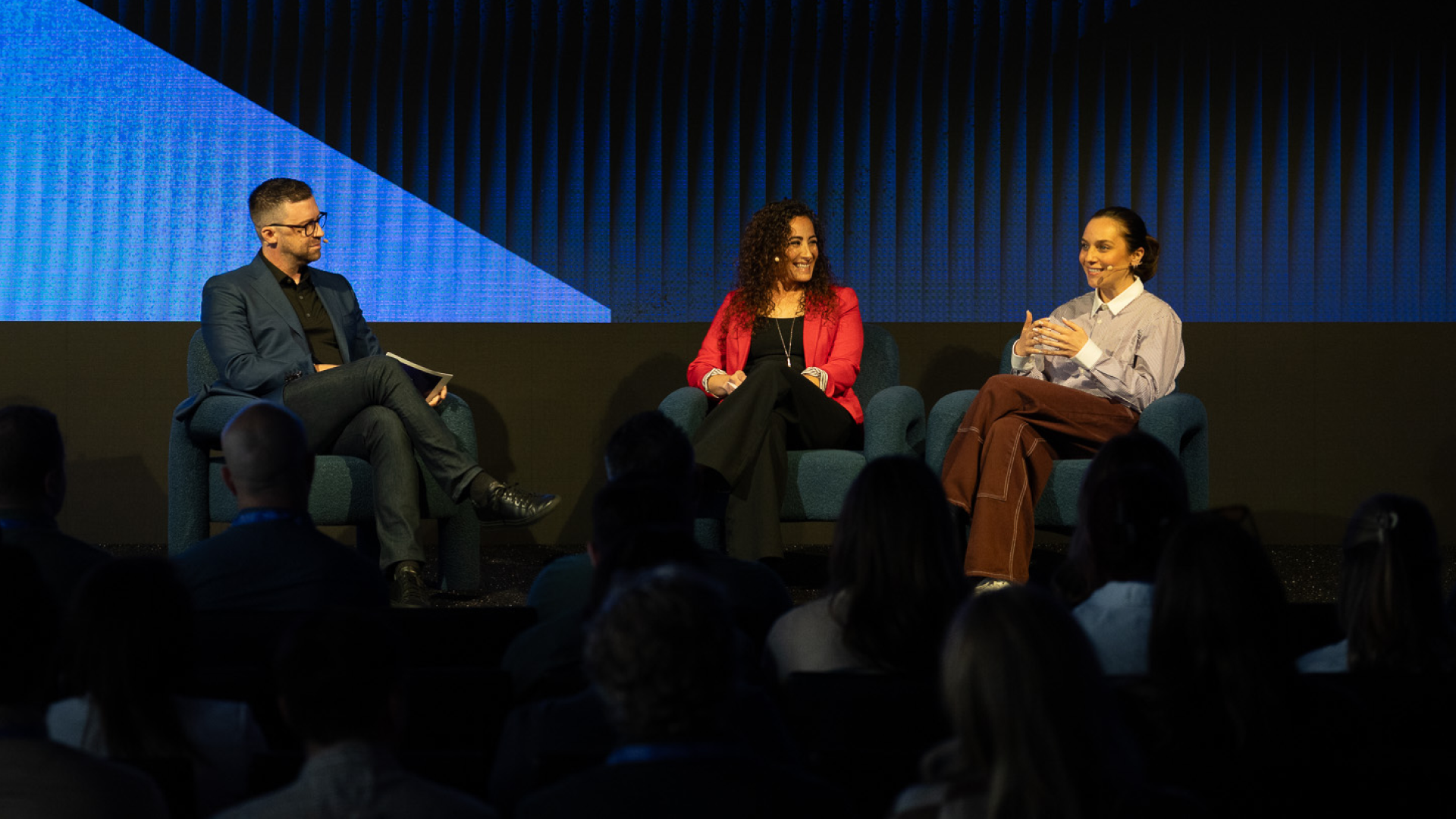
Hiring Excellence in 2025
Join executive leaders as they reflect their experiences growing talent orgs. From the increasing role of AI to the growing emphasis on Talent Ops to examining the aftermath of the hypergrowth era.
View session
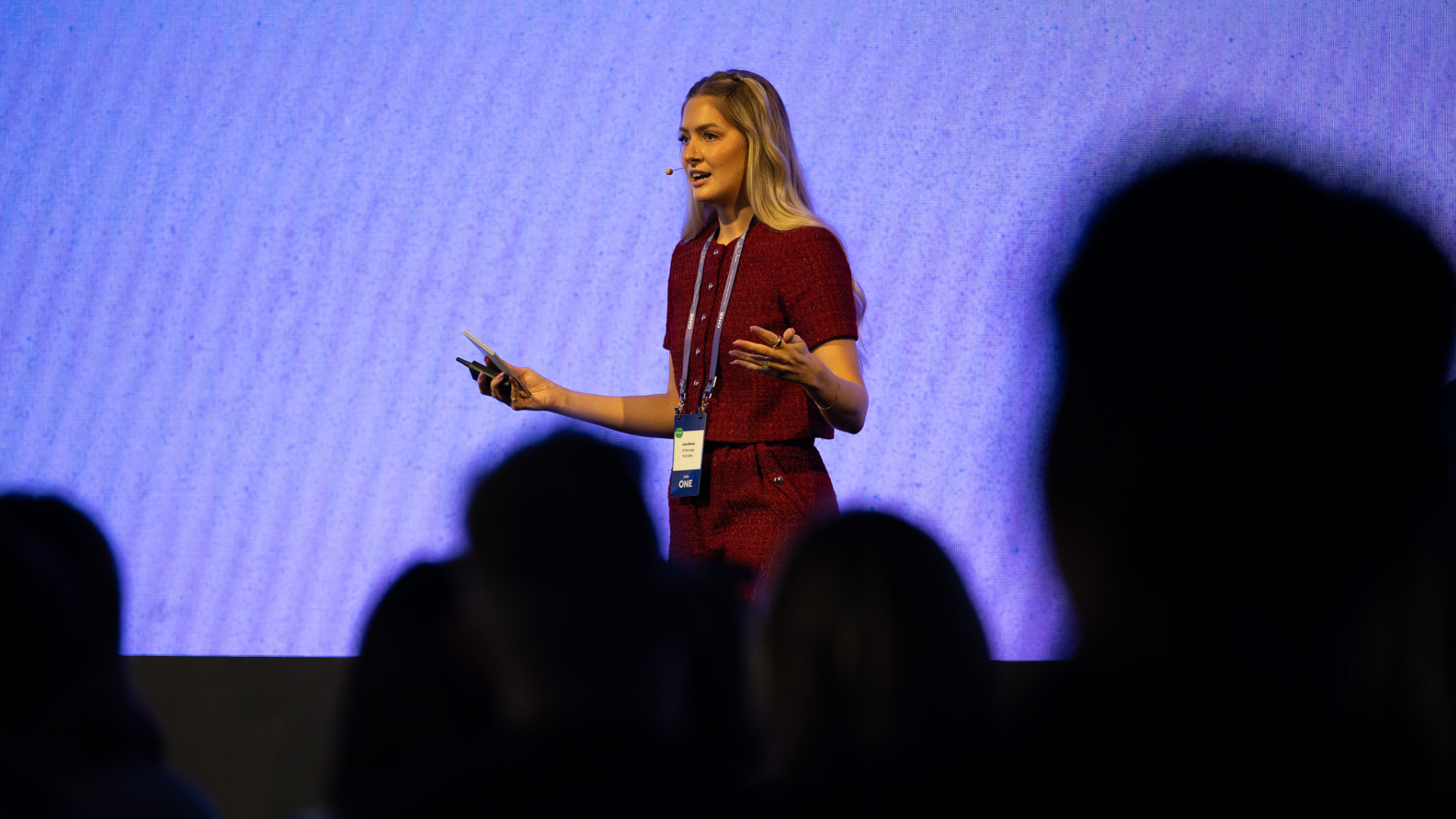
Measuring Talent Density with Quality of Hire
Join VP of Recruiting Laura Barnes as she walks through how Flock Safety went from manual tracking to a simple, automated process for measuring and actioning Quality of Hire data.
View session