Hiring for AI Skills Beyond Prompting
About this Episode
In this episode of Offer Accepted, Maksym Dziarmaga shares how Loop Earplugs brought AI fluency into hiring after the company decided to become AI first. Maksym handles TA operations and enablement at Loop and stays hands-on with recruiting. Two of the trickier parts for him were agreeing on a fair bar and helping interviewers feel comfortable giving a score that reads harsher than it is.
Maksym explains why Loop held its minimum at capable when leadership wanted to aim higher, and why he looks for critical thinking alongside prompting. He also shares how he’s caught himself skimming AI summaries, what the team learned from its own interview feedback, and how AI stewards support Loopers after they join.
Topics
This Episode's Guest


Maksym Dziarmaga
TA Enablement Lead @ Loop Earplugs
Maksym Dziarmaga handles TA operations, enablement, and recruiting at Loop Earplugs, where he joined at 30 employees and has helped the company grow to 360. Based in Brussels, he brings more than a decade of recruiting experience and also performs comedy outside of his day job.
Takeaway 1
Set a Realistic Floor for AI Fluency ✅
Loop's approach to measuring AI fluency starts when a role is first created. Each hiring manager works closely with a people business partner assigned to their department. The two spar on hiring decisions, a word Loop uses for collaborating by challenging each other's thinking. One of those conversations covers how much AI matters for the role beyond Loop's baseline. To give everyone a shared language, Loop adopted Zapier's AI fluency scale, which runs from capable at level two to adoptive at three and transformative at four. Capable became the minimum Loop hires for.
Why It Matters:
Loop's executive team initially wanted to set the minimum at adoptive. Maksym worried that a higher bar would make qualified candidates very hard to find. It would also set unrealistic expectations, especially with some current Loopers working at level two themselves. He sees fairness to candidates as part of the decision, too. Some roles don't call for adoptive, and someone eager to push AI further may not get the chance to in those roles.
Quick Tips
- Ask three AI questions at intake. Looking ahead at intake helps hiring managers scope for where a role is going. Loop asks where AI helps the role today and where it could increase quality, growth, impact, and speed in six to 12 months. Hiring managers also decide what level of AI fluency the role needs if it's more than capable.
- Reset what a two means. On many interview scorecards, a two signals a weak candidate, so interviewers may hesitate to give one. Loop put real change management into helping interviewers see that a two on this scale means capable, the minimum Loop hires for.
- Calibrate raters with sample answers. Scoring the same sample answers as a group shows how differently people read the scale. Loop's guidelines pair example questions with answers for its TA team to rate. Ratings often differed with valid reasoning behind each, so the team is looking for ways to make scoring more objective.
Takeaway 2
Test for Judgment Alongside Prompting 🍽️
As Loop started scoring AI fluency, Maksym noticed the scale didn't fully account for judgment and critical thinking. He compares what AI hands back to a plate with salad, toast, sauce, and cutlery scattered across it. The human's job is to notice the fork is on the wrong side and decide where the sauce should go. Loop looks for that judgment at three stages, starting with an AI check in the recruiter screen and continuing into the hiring manager interview. The third is the business case, a role-specific exercise where AI is assessed more indirectly.
Why It Matters:
As AI tools spread, more candidates are able to talk through an example of using them. What Maksym listens for is the moment someone questioned whether the output made sense before shipping it. He finds that's where many candidates still fall short. He's honest that the habit can slip for anyone, himself included. He has caught himself skimming AI summaries before sending them, only to hear from colleagues that they wished they were half the length. As he puts it, "We need a human critical thinking and judgment capability."
Quick Tips
- Explain how your team uses AI up front. Candidates answer AI questions more openly when they understand why those questions matter to the company. Maksym explains the role AI plays at Loop before asking candidates about their own experience. That context helps candidates whose employers haven't given them much access to AI, who can still show curiosity by describing a tool they haven't been allowed to use and what it does.
- Welcome AI in the assignment round. Telling candidates outright that AI is allowed on a take-home exercise removes the worry that using it will count against them. Loop gives candidates two hours for the business case and encourages them to use AI. The team skips the polished presentation and asks how candidates would approach the problem and what people, time, and resources it would take. Follow-up questions then show whether candidates can explain the thinking behind their work.
- Check feedback forms for AI notes. Interviewers can cover AI in conversation and still leave it out of written feedback. When Loop reviewed its feedback forms, 63% didn't mention AI at all, and most of those came from hiring managers. After some digging, Maksym found that AI had come up in at least some of those interviews and simply never made it into the notes.
Takeaway 3
Keep the Learning Going After the Hire 🌱
Maksym sees hiring as the starting point for AI fluency at Loop, with just as much attention on how it grows once people join. Much of that growth runs through AI stewards, colleagues across the company who take it on themselves to help teammates get more out of AI. Because stewards sit inside their departments, they understand what their teams work through day to day and where AI could help most.
Why It Matters:
Loop's people business partners have shown interest in understanding where current Loopers stand with AI. The goal is to learn whether new hires are coming in above, below, or in line with the team they're joining. That picture can shape hiring decisions. If everyone on a team is still fairly basic with AI, Maksym sees value in bringing in someone stronger who can help teach the rest of the team. A finding like that can also lead Loop to make AI a bigger part of the job description where needed.
Quick Tips
- Choose stewards for curiosity. In an AI champion, curiosity and knowledge of the team's work can matter more than technical expertise. Many people at Loop assume the stewards are meant to be experts. Maksym describes them as curious colleagues who work hard to improve and build new things for their departments.
- Give tool approvals a formal home. A dedicated group reviewing AI tools lets people use the approved ones with confidence. Loop's AI governance committee meets regularly to review where AI can be used safely and how to protect sensitive data. Maksym credits a thorough legal team, and once a tool is approved, Loopers can use it openly.
- Frame internal assessments as support. Employees engage more openly with skill assessments when they know the goal is development. Maksym says Loopers are used to testing that's meant to lift them up, which makes it easier to explore where the team stands with AI.
What Hiring Excellence Means to Maksym
For Maksym, hiring excellence comes down to adaptability. He's skeptical of companies that claim to only hire the best, since not every company offers the best in return. His focus on adaptability comes from growing with Loop from 30 to 360 people over four years. During that time, shifts in demand and the product roadmap have touched every team. Loop's job descriptions spell out who should apply and who shouldn't, which Maksym sees as fair to candidates who might struggle with their pace. He draws a clear line between being flexible and being adaptable. Flexibility covers small adjustments, like moving a meeting from Monday to Tuesday. Adaptability asks more of someone, like parking a project they've spent three weeks on when priorities change and moving forward without taking it personally.
Maksym's Recruiting Hot Take 🔥
Maksym is tired of LinkedIn posts declaring that recruitment is dead and AI is taking over. He's seen a version of this before with scheduling, when automation was expected to make schedulers disappear. The role evolved, and the people doing it adapted and moved into new work. He expects AI to play out similarly in recruiting. Some people will leave the field, a few because their jobs go away and more because the work is heading in a direction they don't want to follow. The recruiters who love the craft and adapt will stay, possibly under new titles like talent scientist. As AI takes on more writing and routine tasks, he sees the soft skills and human thinking behind talent decisions becoming more visible.
Timestamps
(00:00) Introduction
(00:07) Meet Maksym Dziarmaga
(01:24) Why Loop assesses AI capability during hiring
(03:14) Deciding how much AI fluency each role needs
(05:25) Creating a practical scale for AI capability
(07:34) Why critical thinking matters more than AI output
(08:06) Applying AI case studies during hiring
(13:31) How curiosity and critical thinking show in a candidate
(16:34) How AI stewards support teams at Loop
(20:02) How Loop helps employees upskill
(22:46) What Loop learned from its AI interview data
(25:28) Standardizing AI assessment as expectations evolve
(27:23) Hiring excellence: Why adaptability is important
(29:55) Recruiting hot take: AI will change recruiting rather than replace it
(31:42) Recruiting hot take 2: Holding hiring managers accountable for quality
(34:45) Early career advice: Join a startup
(39:32) Where to connect with Maksym

Other Episodes


Scaling Values Interviews
In this episode, Maggie Landers, VP of Talent Acquisition at Harvey, shares how her team built a values interview framework that supports rapid hiring without sacrificing clarity or consistency. She walks through how they used AI to generate the first draft of questions and rubrics, how real interviewer feedback shaped the final structure, and why piloting the process in parallel helped build trust across the company. Maggie also explains how one of Harvey’s own values, jobs not finished, inspired the mindset behind how they will iterate, improve, and scale the program over time.
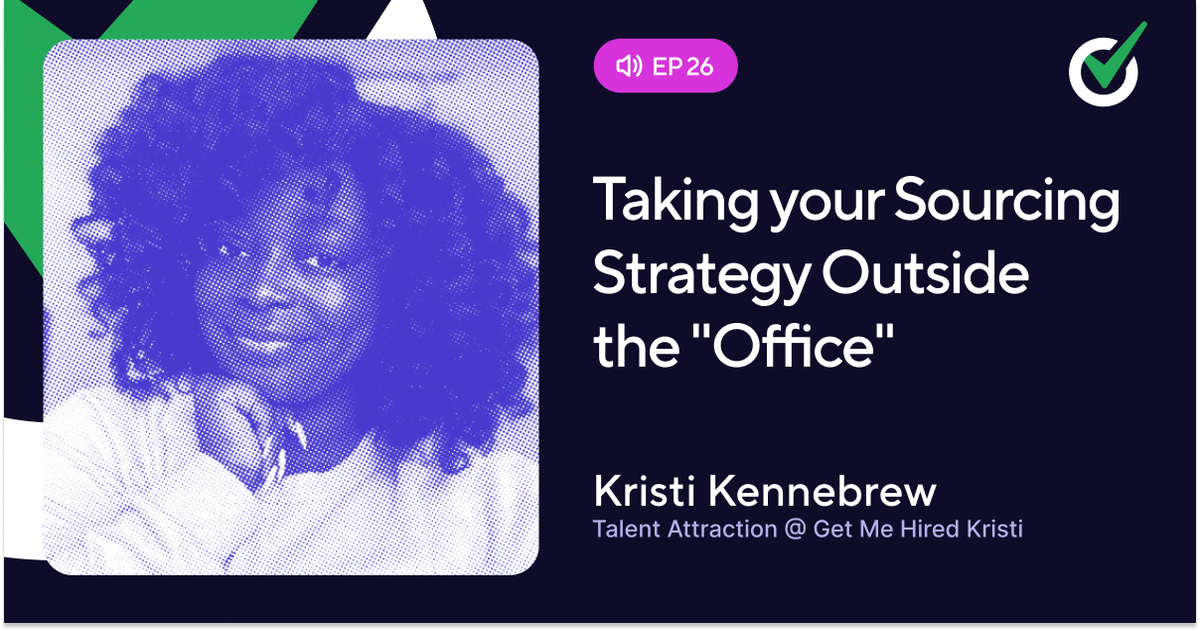
Taking your Sourcing Strategy Outside the "Office"
In this episode of Offer Accepted, Shannon Ogborn sits down with Kristi Kennebrew, Talent Attraction at Get Me Hired Kristi. The conversation focuses on how to leverage conferences, and other IRL events in your sourcing strategy.

Join the Hiring Excellence movement
New episodes every month - subscribe here so you never miss out.