Removing the Resume Gate for Better Hires
About this Episode
In this episode, Jen Ayala, Head of Talent at Clay, walks through how her team rebuilt hiring for one of their most in-demand roles after resumes stopped telling them anything useful. Facing a hiring number that had nearly tripled in a matter of weeks, Jen's team piloted a project that let candidates show what they could actually do, then built an AI evaluation system trained on their own hiring managers' judgment to keep reviews consistent at scale.
We also explore how the pilot changed who got hired, and what it took to get hiring managers and recruiters bought into a process that removed the gatekeeping they were used to.
Topics
This Episode's Guest


Jen Ayala
Head of Recruiting @ Clay
Jen Ayala is Head of Recruiting at Clay, where she leads a team working toward more than doubling headcount from roughly 300 to 700 plus in 2026. Her career sits at the intersection of SaaS and AI, from scaling the AI team at Bloomberg to doubling Bubble's headcount in a year, and now building what she calls a generational hiring function at Clay.
Takeaway 1
Screen People In, Not Out 🎯
Jen's team kept running into the same trap that shows up across many interview processes – chasing candidates who check every box instead of the ones who spike in one particular direction. At Clay, that meant asking a harder question about what a resume can actually prove and rebuilding the funnel so people got invited in rather than filtered out before they had a chance to show what Jen calls their superpowers.
Why It Matters:
A process built to filter out anyone who doesn't already look like the job also filters out people who could grow into it. What stands out to Jen is that this holds even for candidates who don't end up hired. People who complete the project but don't get the role have told her team it was good prep. It helped them understand what companies in this space are actually looking for, and it left them better equipped for other opportunities. To Jen, that's the real win. She wants everyone who goes through Clay's process to walk away having gained something, regardless of the outcome.
Quick Tips
- Put a number on what your current screen is costing you before you remove it. Jen's team was losing candidates and time to a process that reviewed every resume before a recruiter screen and a hiring manager conversation even started, and naming that cost made the case to change it.
- Give candidates something to build instead of something to describe. Clay's pilot replaced the resume gate with a three-part project completed inside the actual product, including a simulated support conversation and a customer email.
- Watch for who a traditional resume screen would have passed over. Jen pointed to hires who came through this kind of project-based approach with backgrounds a resume screen likely would have filtered out, including a former web designer and someone coming from investment banking.
Takeaway 2
Pilot Before You Rebuild the Whole Process 🔄
Clay didn't roll this idea out company-wide on impulse, even though the pull was there to do exactly that. When Jen first raised the idea with her co-founder Varun, his instinct was to go all in immediately, opening projects up across every role on the team's plate. Jen made the case to pull the scope back instead, choosing one role to test the idea properly before touching anything else about how Clay hires.
Why It Matters:
Rebuilding an entire hiring process around one new idea carries real risk, especially when a team is already behind on hiring. Testing it on a single role gave Jen's team a controlled way to learn what worked, catch what didn't, and build the credibility to expand the approach on solid footing rather than a hunch.
Quick Tips
- Start with the role where your current process is under the most strain. Jen's team chose product support specialist because it was the clearest place where volume and urgency had outpaced what the existing funnel could handle.
- Loop in the people closest to the work before you build anything. Jen's team pulled in their head of support for buy-in and a rotational program participant who had personally gone through the role's interview process to help design how projects would be evaluated. A tech recruiter managed the rollout, and the team's talent scientist helped shape how it all came together.
- Move with urgency, but let the work stay iterative. Clay leaned on its own operating principle of make it work, then make it great, treating the pilot as a first version to refine rather than a finished system to defend.
Takeaway 3
Let AI Absorb the Fatigue, Not the Judgment 🤖
Once the project pipeline was live, Clay's hiring managers ran into a different problem. Thousands of candidates went through the same creative prompt, and many landed on similar strong ideas, ones that started to blur together after enough reads. As Jen put it, reviewers can start thinking "I've seen this before, I've seen this before," even when a submission is genuinely good. To combat that, Clay trained an AI tool on scores hiring managers had already given past projects, building a system that could still flag a strong idea as strong on the hundredth read, while the final call on each candidate stayed with a human reviewer.
Why It Matters:
That drift has nothing to do with the quality of the work and everything to do with the fatigue of reading the same prompt over and over, which means a strong candidate can lose ground for reasons that have nothing to do with them. The payoff showed up directly in the numbers, with Jen's team going from a hiring backlog to fully caught up on the role, and speed to hire increasing once the AI insights became part of the process.
Quick Tips
- Score each part of a submission separately instead of grading it as a whole. Clay broke the project into segments, each with its own score and a written explanation attached, making it easier to see exactly where a candidate spiked or fell short instead of collapsing everything into one number.
- Train the model on your team's own past judgment, not a generic rubric. Hiring managers graded each segment of past submissions, and that grading fed the tool so it reflected what Clay's own team already knew good looked like.
- Keep a human looking at the actual work every time. Clay's recruiters and hiring managers still review the project itself alongside the AI evaluation, using the score to guide attention rather than to replace it.
What Hiring Excellence Means to Jen
For Jen, hiring excellence comes back to building a generational company, and she measures that on two sides. Candidates should walk away feeling like they got a fair shot and got to show what she calls their superpowers. Hiring managers should walk away feeling confident and clear eyed about the people they're bringing on. Recruiting is messy, but for Jen, those two things are what excellence still comes down to.
Watch the clip >>>
Jen's Recruiting Hot Take 🔥
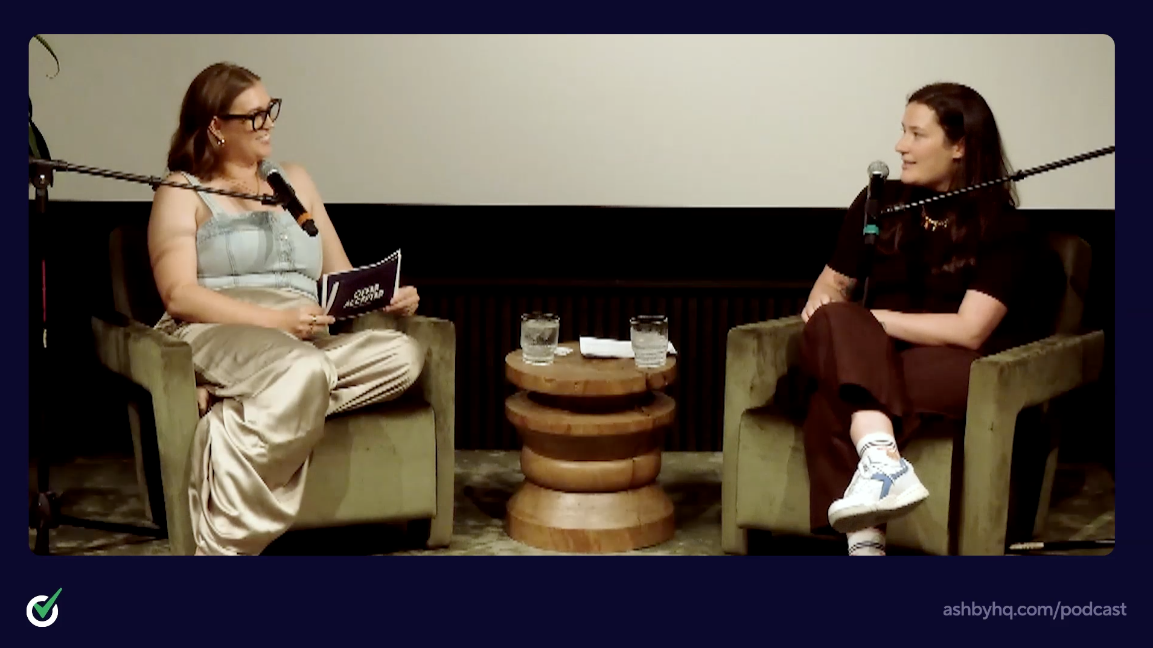
Every sourcing tool on the market is built around person metadata, meaning it's only as good as what an individual has chosen to put on their own LinkedIn profile. That model leaves out plenty of exceptional people who simply haven't built a public presence. What Jen wants instead is sourcing built around company metadata, the ability to find, for example, every engineer who was at a specific company during a major scaling period or a pricing change. This concept is then based on what actually happened at the business, not on what a candidate chose to self-report. For her, it's the same spirit as screening people in rather than out, just applied earlier in the funnel, before a recruiter even reaches out.
Timestamps
(00:00) Introduction
(02:06) Why humanizing hiring matters right now
(04:28) Where traditional resumes fall short
(04:53) The volume problem behind Clay's support hiring
(06:49) Clay's person first, not role first philosophy
(09:07) Removing the resume from the process
(10:26) Building the three part project and AI evaluation
(14:44) Giving candidates a real chance to shine
(16:34) Calibrating the scoring system
(19:40) Where recruiters fit into the new process
(20:39) How candidates have responded
(24:07) Results of the pilot so far
(25:50) What comes next for this approach
(27:44) Hiring excellence, in Jen's words
(30:09) Jen's hot take on sourcing metadata

Other Episodes

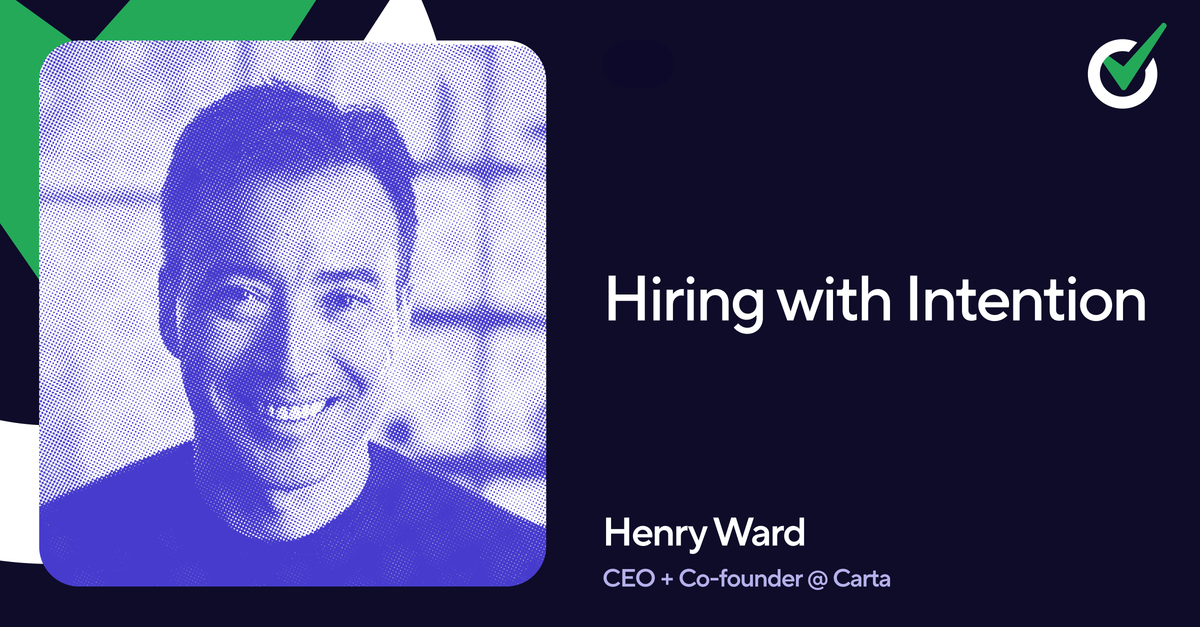
Hiring with Intention
Henry Ward shares how Carta has built a scalable hiring strategy by focusing on alignment and clarity. Discover how clear principles, team collaboration, and strategic hiring decisions can help any company grow while maintaining a strong, cohesive culture.

Upskilling with AI in TA
In this episode of Offer Accepted, Jan Tegze, Director of Talent Acquisition and a multi-time published author, shares how AI is reshaping the recruiting landscape. He explains how AI tools enable efficiency by automating repetitive tasks while highlighting the critical role of human elements like trust and empathy. Jan shares why upskilling in AI is now a core competency for recruiters and how strategic experimentation with these tools can lead to long-term success.

Join the Hiring Excellence movement
New episodes every month - subscribe here so you never miss out.