Run recurring recruiting work automatically with Scheduled Agents

Custom Agents help teams automate work they would otherwise repeat manually. Until now, someone had to remember to run the agent each time and share the results with everyone who needed them.
Today, we're introducing Scheduled Agents. You can put any Custom Agent on a recurring schedule and automatically send its results to Slack or email.
A weekly pipeline review can arrive before your team meeting. A stalled candidate check can run every morning. A monthly source analysis can show up before your reporting cycle, without someone opening Ashby, running the agent, and sharing the results manually.
Turn recurring work into a scheduled workflow
Any Custom Agent can now run on a schedule.
From the agent's settings, choose when and how often it should run using the same scheduling experience as Scheduled Dashboards.
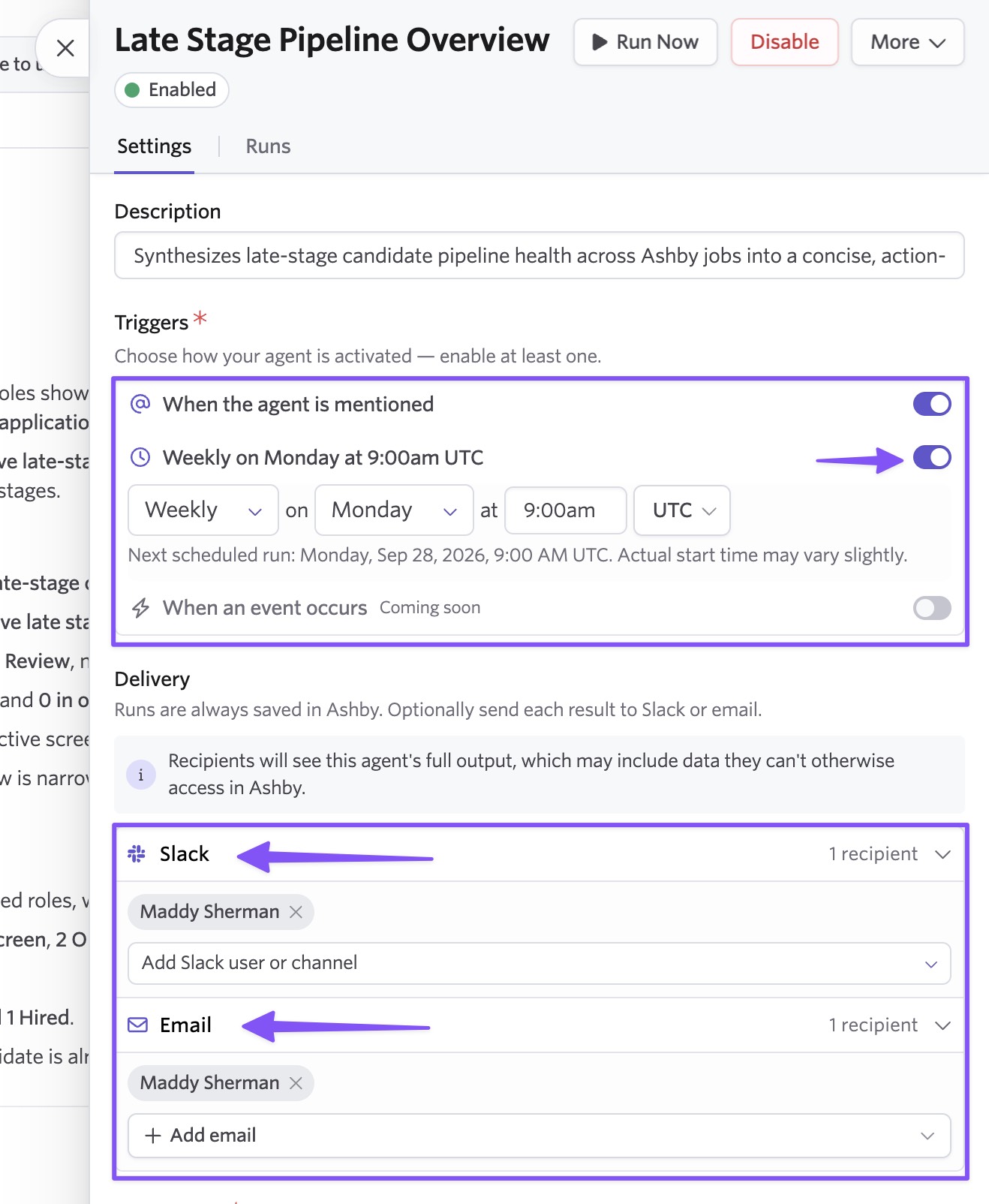
That means an agent you've already built for recurring work can become an ongoing workflow. For example:
- Run a pipeline health check every Monday before your recruiting team meets.
- Surface candidates who have been sitting in the same stage for too long each morning.
- Summarize source performance at the end of every month.
- Prepare an offer-stage review before a weekly leadership sync.
You don't need to rebuild the agent or change how it works. Add a schedule, and Ashby runs it automatically.
Send results to Slack or email
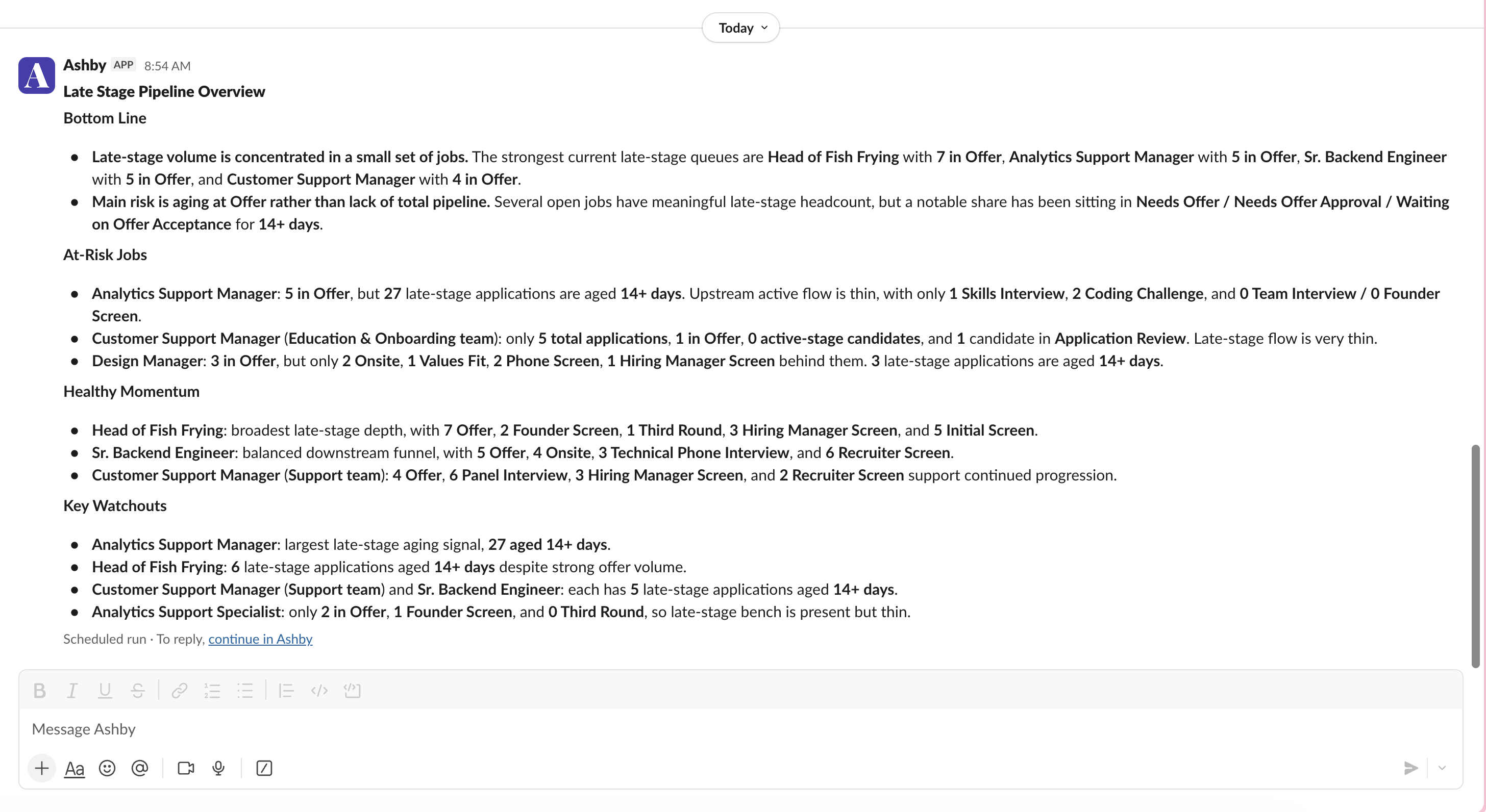
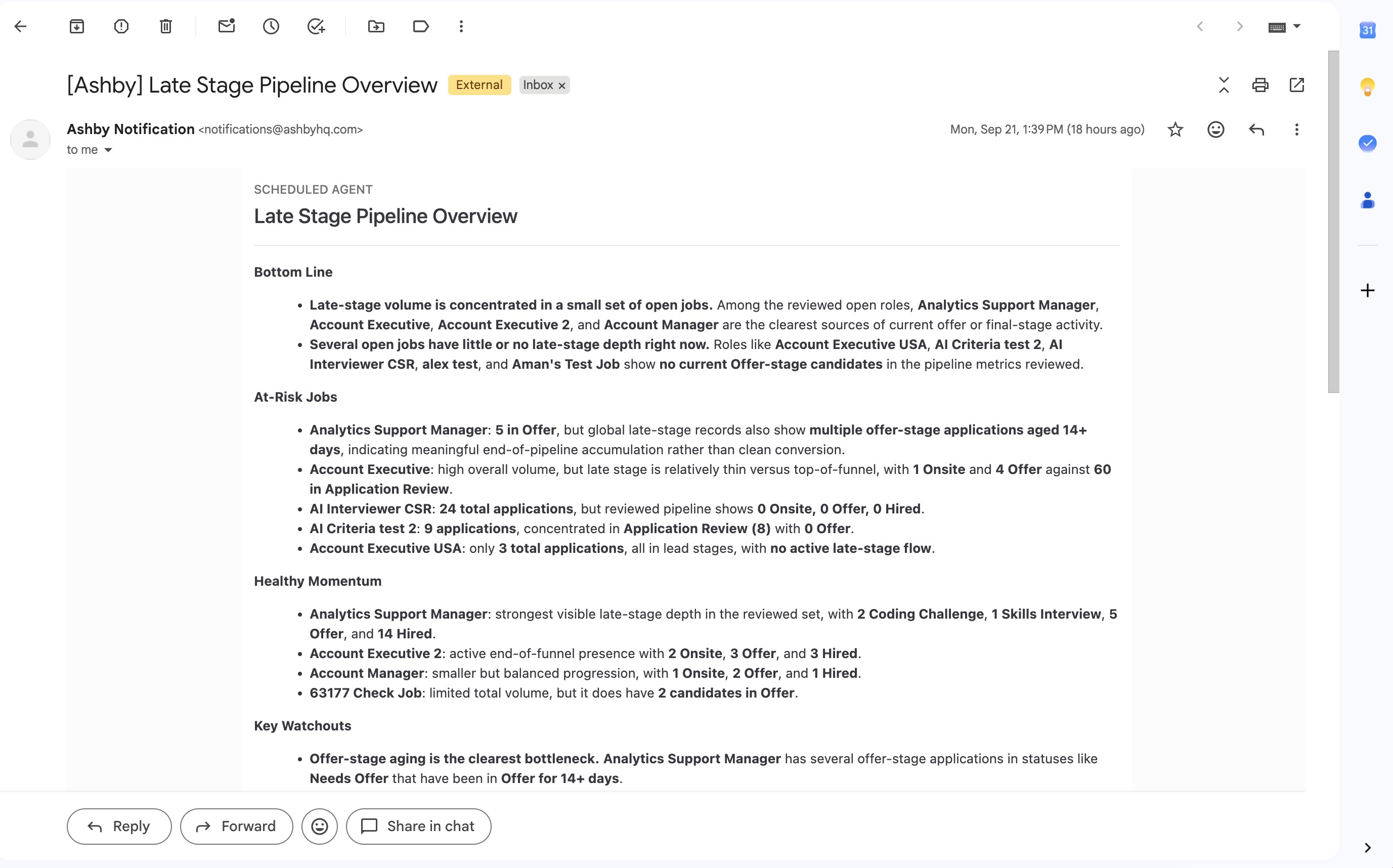
Scheduled Agents can automatically deliver their results to specific Slack channels, Slack users, or email addresses.
Instead of running an agent and copying its output into Slack, you can have the results arrive directly where your team already works.
This makes Custom Agents useful beyond the person who created them. Recruiting Operations can build an agent once and automatically distribute its findings to recruiters, hiring managers, or leadership on the cadence that matches the team's process.
How it looks in Slack:
How it looks in email:
Test a Scheduled Agent before it runs
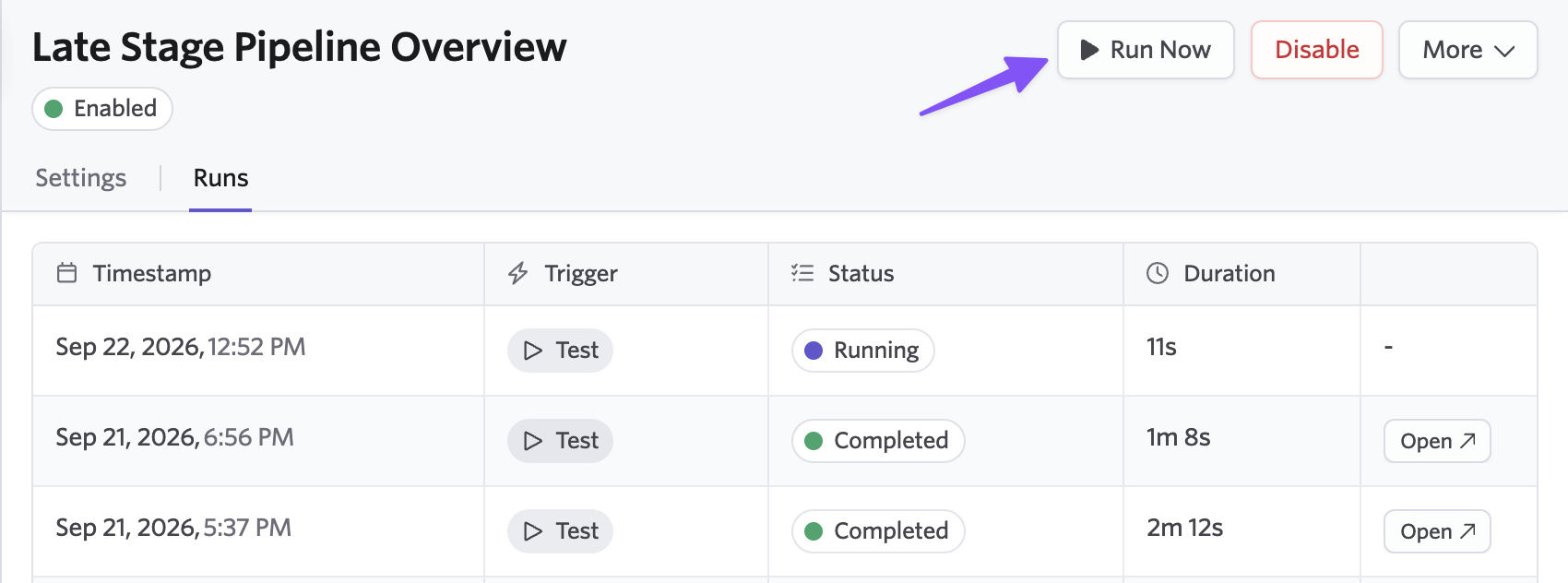
Use Run Now to trigger the agent immediately and test the workflow before its first scheduled run.
You can see what the agent produces and confirm how the output appears to recipients, then refine the agent or its destinations before relying on it as a recurring workflow.
Continue any run in Ashby
A scheduled result doesn't have to be the end of the analysis.
Results delivered through Slack or email include continue in Ashby.
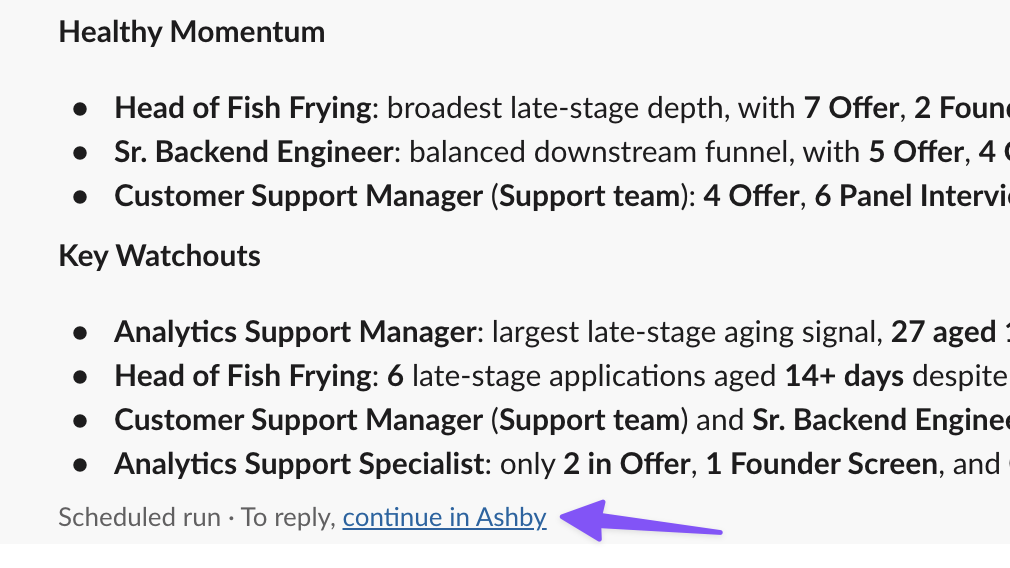
Author of agent only: Once you have the run open in Ashby, you can open that conversation and send follow-up messages and dig deeper into the results without changing the original run or what other recipients received. Recipients who are not authors can click the link to open the conversation in Ashby, but can't continue the conversation.
How permissions work
Scheduled Agents run using the agent author's permissions, because there isn't a user actively triggering each scheduled run.
A few things to keep in mind:
- Only the author can edit a Scheduled Agent or change its schedule and output destinations.
- Only the author can ask follow-up questions after clicking continue in Ashby.
- Results may contain information that recipients would not otherwise have permission to view directly in Ashby. Ashby warns the author about this when output destinations are configured, so authors should choose recipients accordingly.
- Scheduled Agents are read-only in this release. They can analyze information and report results, but they cannot make changes in Ashby.
- Recipients cannot reply directly to the agent from Slack or email.
Getting started
Scheduled Agents are available in open public beta on all plans. Custom Agents and Scheduled Agents are free during the beta period. Once generally available, they will consume your existing allotment of AI Credits.
Open any Custom Agent and add a schedule from its settings. Choose when it should run, select where the results should go, and use Run Now to test it before the first scheduled run.
Learn more in our Help Article.