The New Blueprint for Building Talent Teams
Reece Batchelor, Talent Acquisition Manager at Wayve, explains three assumptions about AI and lean teams that didn't hold up, and the team structure he built once he saw the real cost of getting them wrong.
Speaker

Key Takeaways
- Adding more human contact earlier in the hiring process can lift offer acceptance meaningfully on its own, without new tooling: Reece Batchelor saw rates rise from around 60% to above 90% after making that change.
- A hiring framework built on aptitude, attitude and agency weighs the latter two most heavily, since the work candidates will do keeps changing and a person's approach to ambiguity matters more than their current skill set.
- AI fluency for talent teams means staying curious enough about how AI is reshaping the roles a company hires for next to actually act on it, the bar Reece set for Dust's talent team.
- As the best candidates get flooded with outreach, talent teams that build relationships and networks in advance, closer to how an executive search firm operates, will out-compete teams that just increase sourcing volume, the shift Reece says the best talent teams need to make now.
Session Overview
Reece Batchelor built Dust's talent function from a team of one, testing three assumptions about what AI would let a lean team do: that AI meant a team of one could handle much more hiring, that ROI from AI investment would follow automatically, and that a dedicated RecOps role could wait. Batchelor, now Talent Acquisition Manager at Wayve, walks through where each assumption broke and what he'd build differently starting over.
AI took real work off recruiters' plates, but the capacity it freed didn't disappear: interview hours per hire kept climbing as roles got more competitive, and new roles kept emerging that needed more human attention. The clearest gap showed up in candidate experience. Once Dust's talent team put more human time back into the process, coaching candidates and giving them room to ask questions, offer acceptance rose sharply.
Two AI projects taught the same lesson from different angles. An agent meant to give referrers pipeline visibility failed because the ATS data feeding it was unreliable, a sign that AI adoption needs the underlying process fixed first. A pipeline-forecasting agent worked well at organizing data but broke down once it was pushed to predict outcomes and explain delays, work Reece now leaves to human judgment even when it's technically buildable.
Those lessons pushed Reece to hire for RecOps earlier than the roughly 300-employee benchmark he'd been using, and to split a talent function into three areas of accountability: recruiting, RecOps, and an AI operator. He closes on the two behaviors he thinks matter most right now: AI fluency, meaning real curiosity about how AI is reshaping the roles a company hires for next, and relationships built ahead of need, closer to how an executive search firm operates, rather than competing purely on sourcing volume.
Chapters
- (00:03) Introduction: building a talent function from scratch
- (00:58) Three assumptions about AI and lean teams
- (02:02) Why human connection lifted offer acceptance above 90%
- (03:14) Behavior change over tooling, and the celiac-diagnosis analogy
- (04:18) Not everything worth building: the pipeline-forecasting agent
- (05:23) Hiring RecOps earlier and splitting into three areas of accountability
- (06:41) AI fluency, the aptitude/attitude/agency framework, and relationships over volume
Q&A
Q: When should a talent team hire dedicated RecOps instead of splitting the work across generalists?
A: The real signal for hiring dedicated RecOps is system complexity rather than headcount. At Dust, Reece Batchelor decided to hire for RecOps earlier than the roughly 300-employee benchmark once the number of tools and processes needing an owner outgrew what recruiters could split their time on.
Reece Batchelor, Talent Acquisition Manager at Wayve: "And I thought everyone could just split their time versus build and run, but it just ended up spreading Dust way too thin. And that's why we decided to hire for ops earlier than the conventional benchmarks. And the thing is, the business case wasn't just talent needs more support. It's that with better systems, we're going to create operational leverage for the entire business." (06:03)
Q: How do you decide whether an AI recruiting tool is worth building further?
A: Judge an AI build by whether it organizes existing signals or tries to replace human judgment; the first is usually worth it, the second usually isn't. Reece Batchelor's team at Dust built a pipeline-forecasting agent that worked well at organizing data, but pushing it to predict outcomes meant constant manual correction.
Reece Batchelor, Talent Acquisition Manager at Wayve: "And the V1 worked really, really well for us because what it did was it organized the data and helped us connect talent with the business. But when we pushed it further to help explain why a role was off-tracked and predict the future for us, we spent too much time going back and forth with the agent constantly to correct it." (04:44)
Q: What roles does a talent team need to add as AI takes on more of the work?
A: Recruiting, RecOps, and AI ownership are three distinct areas of accountability. Reece Batchelor argues a modern talent team needs someone owning candidate relationships, someone owning systems and data, and someone owning the AI itself, even before that becomes three separate hires.
Reece Batchelor, Talent Acquisition Manager at Wayve: "And that led me to think about the talent function in three different areas. Recruiting owns the search, candidate relationships, and the hiring manager partnerships. Rec ops owns the systems, data, process, and governance. And an AI operator owns the AI. And it doesn't necessarily mean three separate hires from day one, but it does mean three areas of accountability." (06:26)
Reece Batchelor — Talent Acquisition Manager, Wayve
I joined my previous company, Dust, as a first talent person, a blank canvas with no playbook. I came into that role with a lot of assumptions about how AI and the product we were building at Dust would change the way that we build talent acquisition. And over time, I realized that many of those assumptions were incorrect.
And I've recently just started a new role at Wayve, and whilst the scale of the company is much bigger, what I've realized is that we're all trying to solve the same challenges. So the lessons I learned at Dust ring true in this next chapter. So I want to share with you the assumptions that I had when joining Dust, what challenged them, and how I'm approaching this challenge differently with Wayve. Now the truth is that you don't know what you don't know, and in a world where AI is changing how we work so rapidly, what we've done in the past will be so different to what we do in the future.
But looking back, there are three assumptions that had the biggest impact on how I approached building the function, and those assumptions were: AI means we could build a lean team; if we build with AI, the ROI will naturally follow; and lastly, we can hire for rec ops later. Now, as a team of one, I thought that I could handle significantly more hiring whilst outsourcing a lot of the work to agents through sourcing tools and other agents that we were building.
I was partly right. The ground-level repetitive work was really good when it came to AI, but I misunderstood what it meant in practice. The capacity didn't just disappear as a whole, it just shifted elsewhere. For example, interview hours per hire are climbing, and this is due to the competitive landscape that we're in right now.
Also, roles are changing and new roles are emerging, and this requires more human hours, not less. The other reality check is that human connections cannot be automated. When I joined Dust, we had an offer acceptance rate of around about sixty percent. And when I dived into the data, the candidate feedback, and looking at the systems that we had, it was really clear what was missing, which was humans in the loop.
So we made a change. We went back to the basics. Talent took ownership of the full candidate journey. We spent more time with candidates, preparing them for interviews, giving them a space to ask questions outside of an interview setting that they might not feel comfortable asking otherwise. And what probably seems like such a basic change for most of us in here, it had a significant impact, and our offer acceptance rate increased to above ninety percent.
The lesson I learned here was that AI can absolutely increase the output and the quality of our work, but it does not remove the need for human capacity to hire well. Now growing up, I got constantly unwell. I was in and out of hospital, one antibiotic after another. And it wasn't until one doctor stopped and asked, "Why do you keep getting ill in the first place?" that I found out I was celiac. And after reluctantly changing my diet to gluten-free bread, the symptoms disappeared. Now I know you're probably all thinking, what the hell has this got to do with AI? But here's the thing. A lot of us feel we need AI to fix our problems when actually we need a behavior change.
Without the behavior change, AI is useless. And I saw this when we tried to fix a problem with our referral process. Referrals wanted more visibility into what was happening in the process. So we built an agent to do that. And what happened was the agent didn't work as we were expecting. And when we looked into the reason as to why, it's because the pipelines were not being updated correctly and the quality of the feedback within the ATS was not good enough.
Until we fixed that, the AI was never going to work. And that leads me to another lesson, which is there is no adoption without enablement. Everyone's at different stages on this AI journey, and just because you can spin up an agent and understand how it works doesn't mean that everyone else is going to follow you.
You need to take a step back, meet people where they are, and take them on the journey with you and help them understand how it fits into their process as well. And the final lesson for me here is that not everything you can build is actually worth building. And I saw this when we created an agent to do pipeline management and forecasting.
The V1 worked really, really well for us because what it did was it organized the data and helped us connect talent with the business. But then when we pushed it further to help explain why a role was off-tracked and predict the future for us, we spent so much time going back and forth with the agent constantly to correct it.
What I learned was that AI can organize the signals, but it cannot replace strong human judgment. So being more intentional about what you're building with AI is how you move from lots of individual experiments to an infrastructure that actually makes a team more efficient and effective. And this leads me to my third assumption that we can hire for rec ops later.
The more I thought about it, the more I realized that we needed someone to own the build work much sooner. And the benchmarks I had previously used were based on Ashby's customer guidance, which is around about three hundred employees. But the truth is that the number of employees doesn't tell you how mature your talent function actually is.
The systems that you need to connect, the infrastructure that you need to build, and even consolidating your tools in a platform like Ashby, there's still so much happening that someone needs to own this. We were tripling the team at Dust, but we're also trying to build a scalable function for the future.
I thought everyone could just split their time versus build and run, but it just ended up spreading Dust way too thin. And that's why we decided to hire for ops earlier than the conventional benchmarks. And the thing is, the business case wasn't just talent needs more support. It's that with better systems, we're going to create operational leverage for the entire business.
And that led me to think about the talent function in three different areas. Recruiting owns the search, candidate relationships, and the hiring manager partnerships. Rec ops owns the systems, data, process, and governance. And an AI operator owns the AI. And it doesn't necessarily mean three separate hires from day one, but it does mean three areas of accountability.
And that to me is how you build a leaner team. Not by asking everyone to do everything, but by giving the right people ownership of the right work. Now, as we know, talent is changing so quickly, and the behaviors I believe matter the most right now are AI fluency and relationships over volume. Now, AI fluency is such a taboo, and what the hell does this even mean?
Well, for me, it's not just about whether someone knows how to build on Claude. It's about whether you can actually help the business change with the work that needs to happen next. We have this unique position in talent where we have this view of the company, we can see all of the roles that are being hired for and what's emerging and what's coming next.
What I want to know is how curious are you about how AI is changing the work and the roles that you're hiring for? Are you staying up to date with what's actually happening? Are you influencing teams and roles that are going to be designed around that? And that's what AI fluency means to me. Talent shouldn't just be adapting to the future of work, we should be helping shape this.
At Dust, beyond that, we use the same framework to measure success for every single candidate we hired and every single employee, which was aptitude, attitude, and agency. Now aptitude is simply can this person do the work at the level that we need them to? Attitude was does this person make the people and the team around them better by being in it?
How they approach change, ambiguity, collaboration and feedback. And then lastly is agency, which is about does this person make progress without having to be told? Do they take ownership and do they find problems without people having to surface it to them? Now all three matter, but attitude and agency were the biggest things for us.
That prioritization matters so much in this world right now because the work that you did in the past is changing, and the people that are going to be successful in this environment will not just be able to do the work as it exists today, they're going to be able to do it as it exists tomorrow. And then lastly, relationships over volume.
Now, I've always been a big believer of sourcing, and I still am. For a long time, the maths was simple for me. If we reached out to more people, more people would respond and the hires would follow. But the market has changed massively. Everyone's fishing from the same small pond. So I wanted to understand what we could learn from the best agencies right now and how they're attacking the market.
So I reached out to the guys at Sequoia, and they gave me an analogy that really stuck with me, which was when you are buying a very expensive house, you don't go searching on Zoopla and Rightmove. You find one estate agent that has access to the right houses. You give them your requirements, and you trust them to filter the market for you.
And this is exactly what's happening in the hiring market right now. The best candidates are receiving so much noise that they need people to filter the opportunities for them. So the question for talent teams is: how do we create this same level of access and trust with candidates? And for me, the best talent teams will start to operate like executive search firms.
They'll be building relationships before you need them, understanding the networks around your roles that you're hiring for, and making it easier for the right people to introduce the right candidates to you, and that's not just internally, that's externally as well. So to come full circle, I would encourage you all to do this exercise.
Map your talent function across three areas: recruiting, rec ops, and AI operator. Ask yourself who owns each of these areas, where should humans stay in the loop, and what should be outsourced to AI? AI is exciting. It's going to change the way that we operate. It's 100% going to make us more efficient and increase the output of our work.
But it won't remove the need for judgment, ownership, and human relationships, and in many ways, it's going to make these things even more important. And for me, the teams that win will not be the teams that automate the most. They will be the teams that are deliberate about where AI creates leverage and where humans create trust.
Thank you.
Recommended Sessions
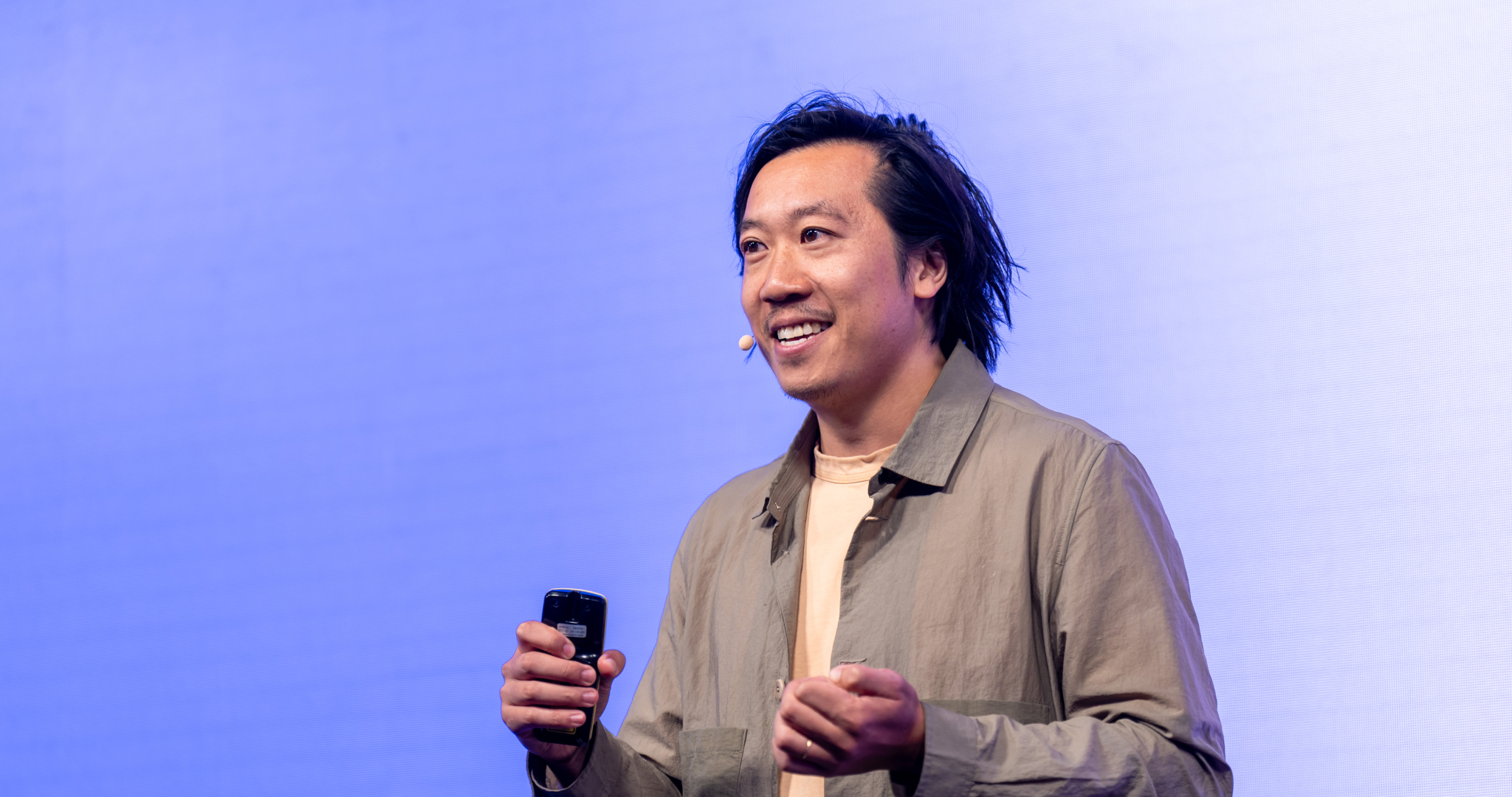
Debunking the Speed vs. Quality Myth
Tim Duong leads engineering, product, and design recruiting at Lovable. He walks through the two problems he had to solve in his first two weeks on the job: engineering leaders spending 60% of their week interviewing, and no shared definition of what "senior engineer" meant. He explains how pass-through-rate data found the exact stage costing the process candidates, and how the time that data saved got reinvested in the kind of candidate experience that gets people to say yes.
View session
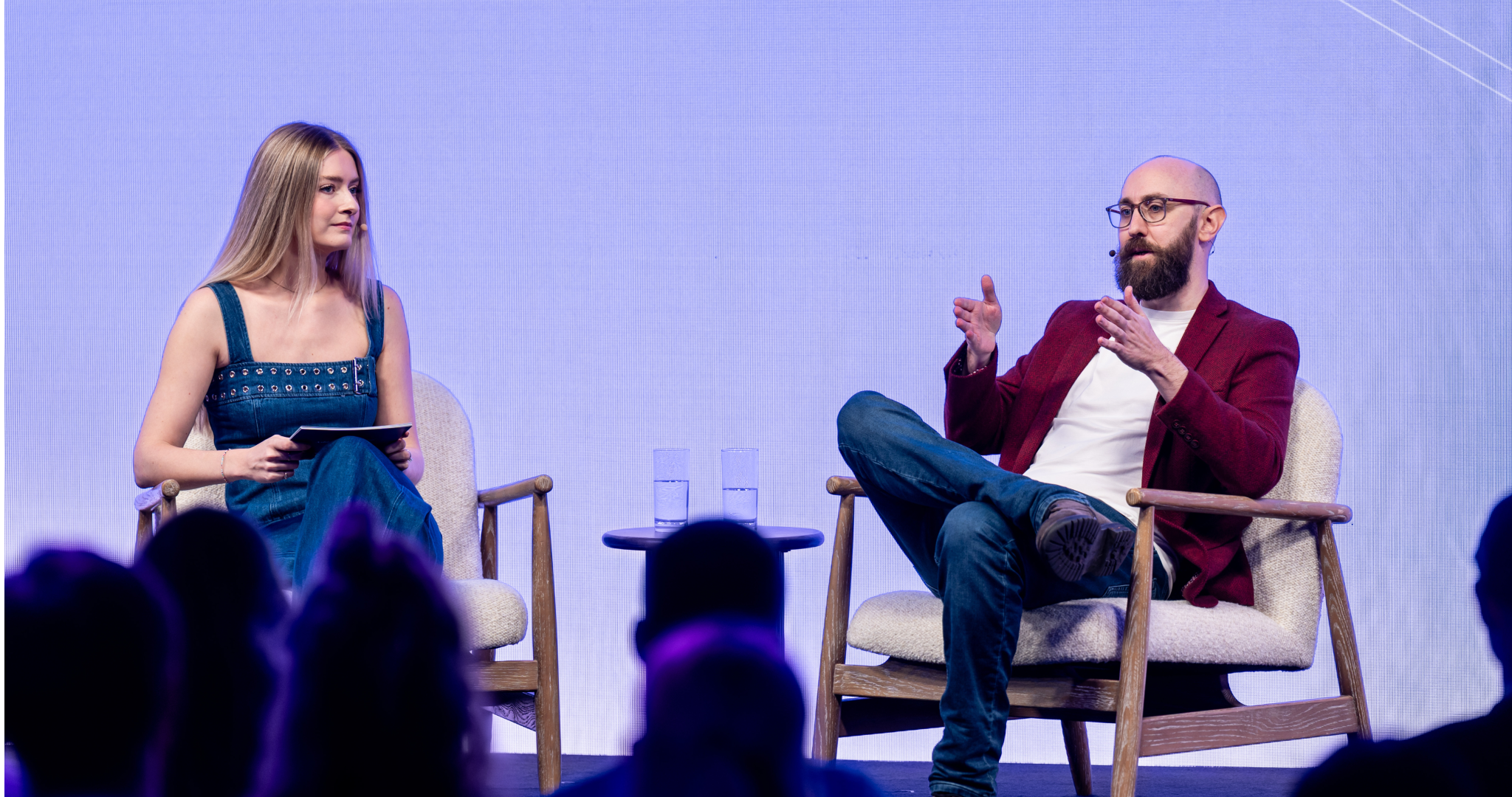
Quality of Hire at Enterprise Scale
Tim Chattaway of Sony Sports Technology and Laura Barnes of Flock compare how their teams measure Quality of Hire at scale: rebuilding scorecards around justified conviction instead of middle-of-the-road ratings, catching a struggling new hire inside the first 30 days, and feeding the data back into how the next role gets written.
View session