Cutting a 5-Round Sales Interview Process Down to 3
About this Episode
In this episode, Mike Clapson, VP of Sales at Ashby, makes the case that a sales forecast leans on two pipelines, and that the one built from hiring is just as critical as the one built from deals. Mike has treated building his team as part of the revenue plan since he joined Ashby, and over the past couple of years that focus has reshaped how the company interviews account executives.
As the team grew and more hiring managers joined the process, he and his leaders started holding each interview round to a simple standard, surfacing signals they couldn't find anywhere else. That standard took Ashby's AE process from five rounds down to three, and led the team to add a few things along the way that any company hiring salespeople can borrow.
Topics
This Episode's Guest


Mike Clapson
VP of Sales @ Ashby
Mike Clapson is VP of Sales at Ashby, where he joined when the company had fewer than 30 people and has since grown the sales team from three to 90 while customers grew from a couple hundred to more than 5,000. Before Ashby, he was the third salesperson and 70th employee at Slack, after cutting his teeth in enterprise sales at SAP and standing up partnerships programs at Mobify.
Takeaway 1
Build a Sales Bench That Lasts 🌱
Part of Mike's job as VP of Sales is looking past this quarter's number to the quarters and years ahead, and when he does, the people on the bench matter just as much as the deals. Hiring has been one of his biggest priorities since his first day at Ashby. Building that bench well comes down to who you bring in, how your interviewers stay aligned as the team grows, and what keeps great sellers around long after they've ramped.
Why It Matters:
When a sales team falls behind on headcount, Mike points out that the revenue number gets much harder to hit, which puts hiring squarely inside the revenue conversation. With Ashby's sales and RevOps team now sitting at around 90 people, keeping the bench strong has meant bringing on more sellers and more hiring managers without letting the bar drift along the way.
Quick Tips
- Widen the backgrounds you consider for AE roles. Look at the combination of skills and experience a candidate brings alongside their B2B SaaS sales background. Some of Ashby's strongest AEs came from solutions engineering and consulting, and some started their careers as recruiters, which gives them a deep understanding of the buyer.
- Build calibration hours into interviewer onboarding. Pair each new interviewer with an experienced one for a set number of shadows and reverse shadows, with a short debrief after each session. As Ashby grew from three sales hiring managers to roughly 14, Mike landed on three of each session, the minimum needed to stay well calibrated.
- Run a return on tenure analysis. Group your sellers into tenure cohorts and compare performance across them. Ashby looked at zero to six months, six to 12, 12 to 18, and 18 plus, and found that longer-tenured sellers tend to be, on average, high performers, which gives the team a clear reason to invest in keeping them.
Takeaway 2
Make Each Interview Earn Its Place 🎯
Ashby has held a high hiring bar from its earliest days, set by CEO Benji Encz, and the sales team spent its first year or so calibrating on what an excellent hire looks like. With that foundation in place, Mike and his leaders began reviewing each round of their five-step process to see whether it produced high-fidelity signal they couldn't get from another stage. When a round fell short, they treated removing it as an experiment and watched whether they could still reach high-confidence decisions.
Why It Matters:
Mike sees clarity of process as what candidates care about first, with speed as a close second. Strong sellers tend to have several opportunities in front of them, and moving someone from application to offer in 21 days compared to 30 or 40 gives a company a real advantage. A shorter process also hands time back to the sales team, whose hours in interviews come directly out of time spent on calls and demos.
Quick Tips
- Cut rounds where candidates all score the same. When an interview returns nearly identical scores from one candidate to the next, it gives you very little to tell them apart. Ashby's cross-functional culture fit interview came back as a three almost every time, so the team cut it and found they could still assess alignment with Ashby's operating principles in earlier rounds.
- Learn why a step exists before removing it. Mike points new sales and hiring managers to the parable of Chesterton's Fence, which asks you to understand why a fence was built before tearing it down. He encourages people joining Ashby to get curious about the reasoning behind the current process before recommending what worked at their last company.
- Track how many final round candidates reach an offer. When a lot of candidates are ruled out in the last round, the earlier interviews may miss signals they could have caught. Mike sees three rounds as the minimum for Ashby's AE process, so his next focus is on tightening the earlier rounds until a high share of candidates who reach the final challenge round move on to an offer.
Takeaway 3
Design Interviews Around How Sellers Think 🧠
Cutting rounds was only part of the evolution. As the process shortened, Ashby also rethought what the remaining interviews ask of candidates, placing heavier emphasis on critical thinking and problem-solving. Mike describes these as traits Ashby's top AEs have in spades, since no two deals look alike.
Why It Matters:
Giving every candidate the same product, the same materials, and the same challenge lets the team compare people apples to apples, something Mike has found hard to do when candidates demo a product of their own choosing. The challenge round also gives candidates a real feel for how Ashby works. They get hands-on with the product, have a human-to-human conversation with the team, and experience how Ashby gives feedback, which helps them decide whether Ashby is the right fit for them too.
Quick Tips
- Trade some "tell me about a time" questions for "what would you do." Depending on their role and how their company is set up, a candidate may not have faced a particular situation yet, and a scenario shows whether they have the problem-solving skills to handle it. Ashby's scenarios work like a lightweight consulting case, where candidates can ask questions and piece together a solution.
- Give candidates a second run at the demo. Build a short moment of self-reflection and feedback between two attempts at the same role play. Ashby's mid-market and enterprise candidates demo once, reflect and hear feedback, then go again, which shows how they take coaching in real time.
- Scope prep to a defined slice of the product. Point candidates to a narrow topic, a set of materials, and a clear cap on prep time. Ashby asks candidates to learn its hiring speed analytics and recruiting planner using recorded videos and help center docs, and is explicit that preparation shouldn't take more than about two hours, since independent learning is a signal the team values.
What Hiring Excellence Means to Mike
For Mike, hiring excellence comes down to threading the needle between two goals that can pull against each other, in this case, holding Ashby's high standards for the quality of each hire while keeping pace with the hiring plan. Being responsible for the revenue number means he needs both, making sure the organization brings in the right caliber and the right number of people at the same time.
Mike's Recruiting Hot Take 🔥
Mike believes that time spent up front on intake and role clarity returns at least 10 times what it costs. That includes wringing your hands over the language in the job description, and at Ashby, hiring managers handwrite each JD themselves. When a team skips that step and jumps straight into interviews hoping to learn from the market, Mike has seen it almost never result in a hire. After dozens of interview hours, that 30 to 60 minutes of alignment with three or four people could have saved.
Timestamps
(00:00) Introduction
(00:31) Meet Mike Clapson
(01:57) Why hiring gets the same attention as the sales pipeline
(02:47) Collapsing a 5-round AE process down to 3
(04:39) The problem statement that shortened the hiring process
(06:26) Evaluating which part of the hiring process to remove
(09:22) Scenario questions that show how candidates think
(14:04) What candidates want most from a hiring process
(15:40) Challenge rounds: demo role plays
(18:29) Leveling candidates' playing field
(19:32) Expanding from 3 to 14 hiring managers
(20:37) Shadows and reverse shadows for new hiring managers
(23:32) Lower attrition and the return on tenure analysis
(26:20) How Ashby's clients grow up and through the company
(29:37) Next evolution of continuous improvements
(32:18) Hiring excellence: Balance the quality bar against the hiring plan
(33:33) Recruiting hot take: Spend the time upfront on role clarity
(35:32) Early career advice: Play the long game and pick your people
(39:16) Where to connect with Mike

Other Episodes

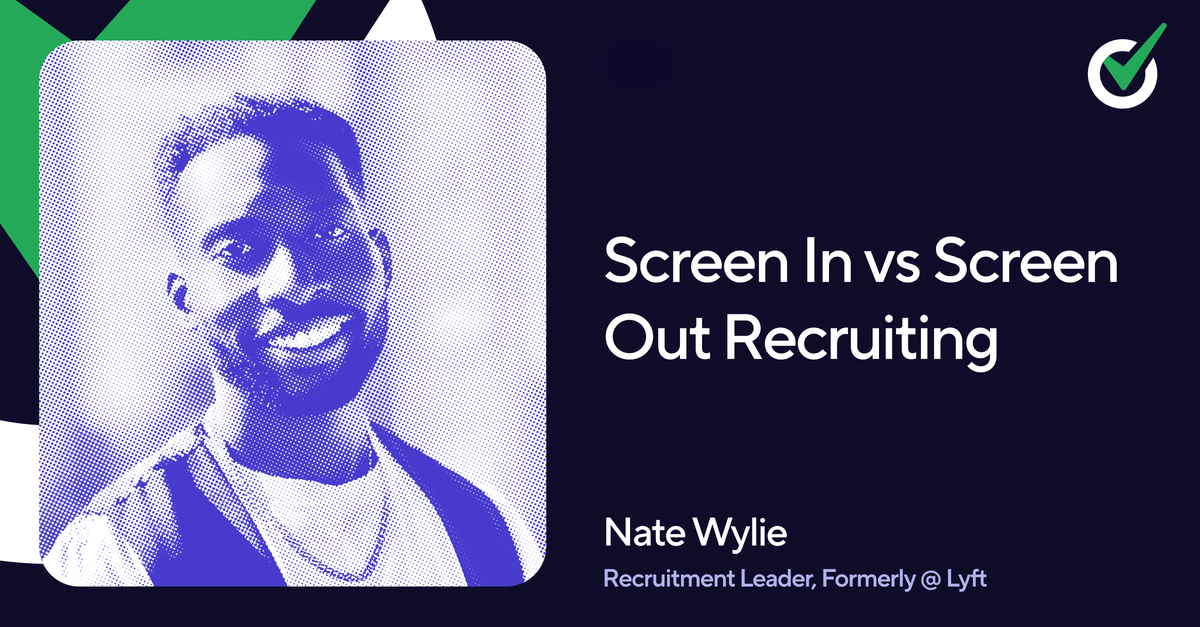
Screen In vs Screen Out Recruiting
In this episode of Offer Accepted, Nate Wylie, a Talent Acquisition consultant with experience in start-ups and Big Tech, shares his expertise on scaling teams through strategic recruiting processes. He highlights the importance of trust, collaboration, and aligning expectations to streamline hiring in today’s competitive talent market.
Establishing an Authentic Personal Brand as A Recruiting Professional
In this episode of Offer Accepted, Jermaine Murray, the Founder of JupiterHR, returns to discuss establishing an authentic personal brand with host Shannon Ogborn. Known as “the Jobfather," Jermaine's mission is to increase the representation of black talent within the tech industry. JupiterHR offers a wide range of services, from career coaching and recruitment to HR advisory consultation.

Join the Hiring Excellence movement
New episodes every month - subscribe here so you never miss out.