What Recruiting Teams Can Learn From Customer Support
About this Episode
In this episode of Offer Accepted, Natalie Mercuri, Recruiting Operations Program Manager at Plaid, unpacks how her team took what she'd learned in customer engineering and support and applied it to recruiting. Natalie joined Plaid's talent team this year right as the company was in the middle of a major ATS migration and a wave of new recruiting hires, and she recognized a familiar problem from her old world of customer support: people across the company needed answers fast, and the system they had could benefit from impactful support principles to sharpen a system that already had a foundation in place.
Natalie's team built a ticketing system to catch every incoming question, trained an AI agent on Plaid's own documentation to handle first responses, and got employees across the company comfortable troubleshooting on their own before writing in. The early results are already showing up in how quickly and how confidently people across Plaid get answers.
Topics
This Episode's Guest


Natalie Mercuri
Recruiting Operations Program Manager @ Plaid
Natalie Mercuri is the Recruiting Operations Program Manager at Plaid, where she spent most of her five years at the company in customer engineering and support before moving into recruiting operations in 2026. She started her career as an elementary school teacher before a decade in SaaS and tech, and she currently co-leads Plaid's women's organization.
Takeaway 1
Bring a Support Mindset to Recruiting Operations ⏱️
Natalie joined Plaid's talent team in January, right as the company was migrating to a new ATS and welcoming a wave of new recruiters. She'd spent most of her five years at Plaid in customer engineering and support, and now runs recruiting operations through that lens.
Why It Matters:
At Plaid, nearly 70% of the company conducts interviews, which means a broken tool or an unanswered question can slow hiring across the whole business, not just recruiting. Treating those requests with the same urgency and structure that a support team gives paying customers is what lets a two-person operations team keep pace with a company hiring aggressively.
Quick Tips
- Set clear response-time expectations. Telling people how quickly they can expect an answer and then holding that line does more for trust than being fast once and inconsistent after.
- Make follow-through visible. When 17 new recruiters joined in Q1, Natalie's team pointed back to specific changes made because of feedback they'd received, so the team they were serving could see where their input went.
- Match your response speed to what's actually at stake. A broken tool blocking a candidate mid-interview needs an immediate fix. A request touching someone's personal information needs a careful review first. Knowing the difference keeps both types of issues moving at the right speed.
Takeaway 2
Let AI Handle the First Reply 🤖
At scale, a two-person team's ability to personally research and reply to every question breaks down fast, especially inside a company where most employees interview. Natalie's team saw that pain point and built a system where automation could handle the first response. They trained an AI agent on Plaid's own documentation to reply directly in the ticket thread, which frees the team to validate those answers and step in on the questions that needed a person.
Why It Matters:
Coming from customer support, first reply resolution, meaning how often that very first automated response is enough to close the loop, is one of the clearest signals a system is actually working and not just generating noise and delayed resolution. Natalie's team puts that metric at roughly 85%, a number that would turn heads in any support org. But there is an equal win in time saved. Validating an answer the agent already posted takes her about a minute, compared with the roughly 12 minutes it could take to research and write one from scratch.
Quick Tips
- Log every question as a ticket automatically. Plaid layered Linear onto one Slack channel, so a message becomes a trackable, assignable ticket without anyone leaving the chat. The RecOps team sees incoming volume, and the person who submitted the request can see where things stand.
- Let the agent reply first, automatically. Glean posts a response directly in the ticket thread, pulling straight from Plaid's documentation, without waiting on a person to draft or approve it. About 9 times out of 10, Natalie still follows up with a quick note confirming a human is looking and that the answer holds up. The reply goes out on its own, but the quality oversight stays in place.
- Spot check and course correct. AI doesn't always get it right, and Natalie and her manager treat that as expected rather than a failure. They spot check answers and correct the source material so the same wrong answer doesn't repeat.
Takeaway 3
Make Self-Serve a Team Habit 🎣
An AI agent can only work with what it's given, and Natalie has found that a little added context from the requester makes a real difference. Getting there took real change management. New hires picked up the habit quickly since they had nothing to unlearn. Longer-tenured employees needed more repetition, and Natalie credits her manager Sarah for asking the same clarifying question until it stuck.
Why It Matters:
A ticket that already includes what someone has checked and what didn't work gives the operations team a more complete starting point, which speeds up resolution for both sides.
Quick Tips
- Encourage the behavior that moves the needle. When a recruiter recently checked their own permissions before flagging a bug, Natalie called it out as exactly the kind of effort that speeds things up for everyone, even though she still had to dig further. Plaid ties this instinct back to its Championship Team value of pitching in to solve problems together.
- Redirect DMs back to the shared channel. Unless sensitive data is involved, Natalie and her manager ask people to repost privately sent questions, which tracks the issue and lets other teammates learn by watching it get solved.
- Turn common questions into training. The same pattern recognition is also shaping what Plaid teaches next. Recurring questions pointed the team toward its upcoming Interviewer 101 program, built less around cutting down repeat tickets for its own sake and more around giving recruiters the enablement to feel confident handling things themselves.
What Hiring Excellence Means to Natalie
For Natalie, hiring excellence means looking outside the traditional talent pool. Earlier in her career, she saw companies hire support staff from military and teaching backgrounds with no tech experience, and those hires became some of the strongest on the team. Skills like querying an API can be taught, but patience, empathy, and knowing when to ask one more question before moving on are harder to build from scratch.
Natalie's Recruiting Hot Take 🔥
Cover letters rarely earn the time candidates put into them. Natalie would rather see a short, specific note to the hiring manager about who you are and why the role matters to you than a rehash of your resume with extra adjectives. Better still, put that same effort into a company's actual application questions, which she says too many candidates answer in one word when given the chance to stand out.
Timestamps
(00:00) Introduction
(00:47) Meet Natalie Mercuri
(02:31) Why strong recruiting operations start with trust
(04:46) Migrating to a new ATS while keeping hiring on pace
(07:48) Centralizing every recruiting question in one channel
(09:32) Choosing the right tools for ticket intake
(11:47) Balancing AI automation with human follow up
(15:35) Teaching recruiters and hiring managers to self-serve
(21:12) Borrowing lessons from customer support and engineering
(28:34) The results behind an 85% first reply rate
(33:53) Hiring excellence: Looking beyond the traditional resume
(36:23) Recruiting hot take: Cover letters are a waste of time
(40:37) Early career advice: Nothing goes as planned, and that is fine
(43:31) Where to connect with Natalie

Other Episodes

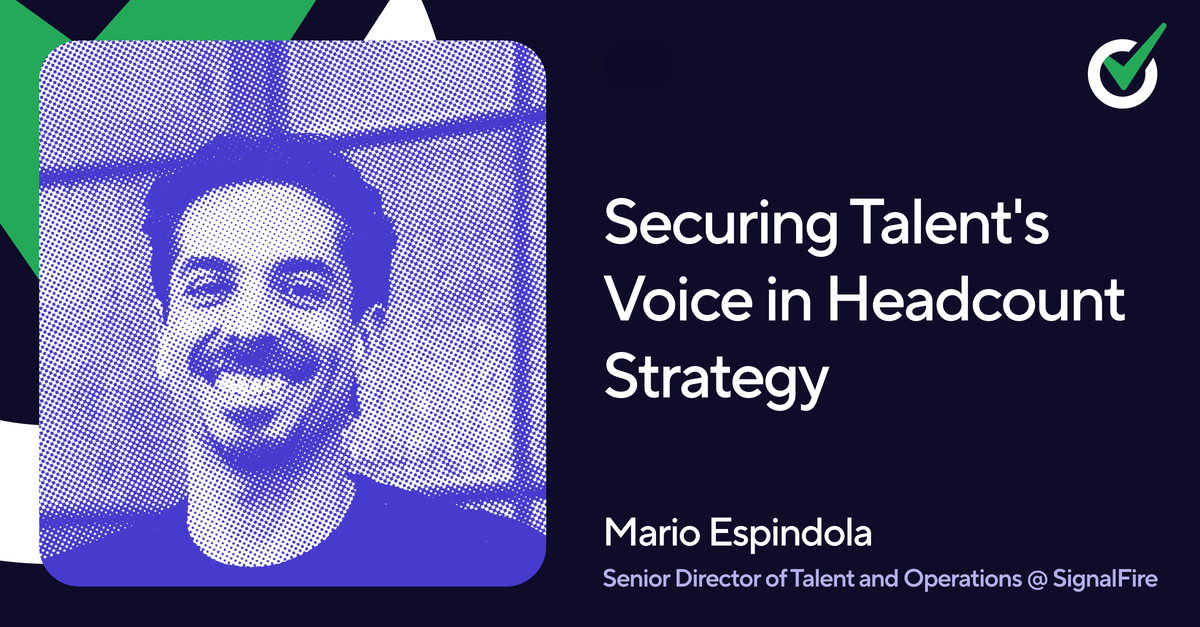
Securing Talent's Voice in Headcount Strategy
In this episode of Offer Accepted, Mario Espindola, Senior Director of Talent and Operations at SignalFire, shares how talent acquisition leaders can secure a seat at the headcount planning table and use it to drive real business outcomes. Shannon and Mario discuss how to bring credibility with data, clarify ownership using RACI frameworks, and connect hiring plans to revenue and growth metrics. Whether you’re leading your first planning cycle or looking to step into a more strategic role, this episode offers tactical advice to shift from execution to influence.
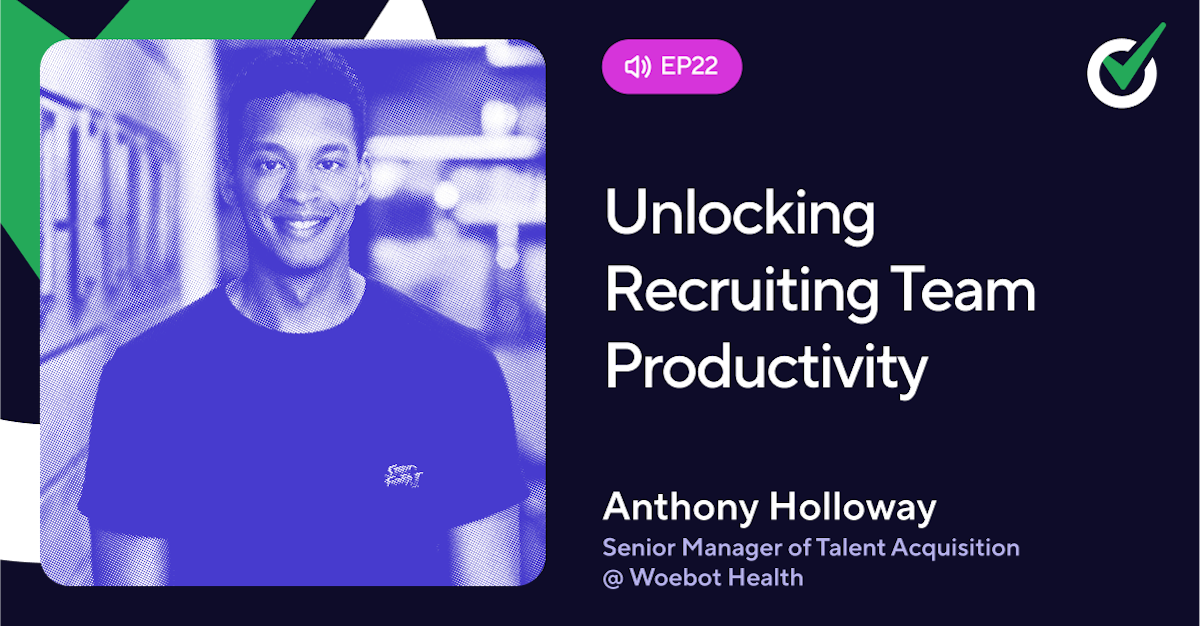
Unlocking Recruiting Team Productivity
In this episode of Offer Accepted, Shannon Ogborn sits down with Anthony Holloway, Senior Manager of TA at Woebot Health. The conversation focuses on how to increase productivity amongst your recruiting team while reducing burnout.

Join the Hiring Excellence movement
New episodes every month - subscribe here so you never miss out.