Hiring Excellence in 2026: Capacity Planning & Quality Bar
Legora's Fritz Singer and poolside's Beatriz Lourenço join Ashby's Jim Miller to unpack how enterprise talent leaders plan hiring capacity with finance, protect the quality bar under pressure, and weigh building AI tools against buying them.
Speakers



Key Takeaways
- A capacity plan built jointly with finance keeps org design tied to real business demand rather than a copied playbook, as Legora's TA team found while scaling from 40 to over 1,000 employees in about two years.
- When a role won't close, the honest fix is usually to loosen budget, location, or skill scope rather than the quality bar, a discipline poolside leans on to protect its hiring standards under pressure.
- Deploying talent partners inside individual departments, rather than centralizing generalist recruiters, can build deeper technical fluency and trust with hiring teams over time, as poolside's embedded model has shown since its earliest days.
- Assuming you've never regretted a hiring trade-off is itself a warning sign: even a decision backed by 30 debriefs, as poolside once ran on a single hire, can still turn out wrong in hindsight, and treating that as a lesson rather than a failure keeps a team's judgment sharp.
- Building an AI capability in-house carries real costs in token spend and compliance risk beyond the time it takes to build it, and poolside weighs both before choosing to build instead of buy.
Session Overview
Scaling a talent function without just adding headcount means rebuilding org design around what the business actually needs next, not a playbook copied from somewhere else. In this panel, Fritz Singer (VP TA, Legora) and Beatriz Lourenço (Head of People, poolside) join Ashby's Jim Miller to walk through how they structure their teams, coach hiring managers through trade-offs, and decide where AI belongs in their hiring process.
Singer has scaled talent functions across eighty countries and inherited a team at Legora that was structured more like generalist people operations than a dedicated TA function. Rather than lifting a structure from a past employer, he audited what Legora's growth actually demanded and rebuilt around it, then kept that structure current by partnering directly with finance on capacity planning. This is the organizational agility pillar of Ashby's Hiring Excellence framework in practice: a TA function's shape should flex with the business rather than stay fixed.
Lourenço took a different structural bet at poolside, deploying talent partners inside individual departments so each one develops the technical fluency to sell the role and the relationships to know what the team actually needs. Both leaders describe a market where out-hiring the biggest spenders isn't an option, so competing comes down to sharper positioning: leaning into culture and transparency rather than trying to win on compensation alone.
On trade-offs, Lourenço holds one line firm: budget, location, and skill scope can all flex when a role stalls, but the quality bar never does. Singer applies a related discipline to candidate attraction, using transparent job descriptions and interviews to screen for people who buy into Legora's demanding pace rather than promising something gentler just to close them faster.
The conversation closes on AI. Both panelists describe leaning on their existing tools before building anything new, treating in-house AI builds as a real cost (in engineering time, in compliance risk, and in token spend) rather than a free alternative to buying.
Chapters
- (00:41) Introduction and panelist backgrounds
- (03:08) Designing TA org structure as the business scales
- (08:10) poolside's embedded talent-partner model
- (12:04) Capacity planning and partnering with finance
- (13:13) Competing for talent without outspending rivals
- (15:23) Coaching hiring managers through trade-offs
- (26:19) Where AI fits in hiring excellence
- (33:08) Build vs. buy decisions and compliance guardrails
Q&A
Q: How do you build a hiring capacity plan that finance will actually support?
A: A capacity plan holds up with finance when it's built together rather than handed over. Fritz Singer, VP TA at Legora, partners directly with Legora's finance team to build a plan that stays consistent with the business, then uses that alignment to bring org design decisions to the table.
Fritz Singer, VP TA at Legora: "Everything from a capacity plan, like I kind of partner with my finance team to build a capacity plan that aligns in a consistent way. And then that kind of brings the org design discussion a bit more front and center." (13:01)
Q: How do you coach hiring managers to make trade-offs without lowering the quality bar?
A: The quality bar stays fixed while everything else flexes. When a role sits open for months, Beatriz Lourenço, Head of People at poolside, has hiring managers loosen budget, location, or skill scope first, using pipeline data to identify which lever is actually stalling the search.
Beatriz Lourenço, Head of People at poolside: "The one thing we never drop is the quality bar. So the quality bar can never go down no matter what you do. But when you find yourself in a position where I'm looking for this role for three months and I cannot close, you have to drop something." (15:54)
Q: How do talent leaders stay aligned with the business as it scales?
A: Staying aligned starts with treating finance and business leaders as a primary audience, not an afterthought. Fritz Singer, VP TA at Legora, makes a habit of understanding a company's strategy and timeline directly from its business and finance leads, so TA decisions track what the business actually needs next.
Fritz Singer, VP TA at Legora: "I think, I would urge everybody to, first of all, really ingrain yourself with the business, whether that's finance or business leaders, to understand, again, what is the future of the company?" (06:22)
Q: What's the hidden cost of building AI tools in-house instead of buying them?
A: Token spend is a cost that's easy to miss. Beatriz Lourenço, Head of People at poolside, says a big in-house AI build can rack up token costs that rival or exceed the price of an existing vendor tool, so poolside factors that spend into its team's budget before deciding to build.
Beatriz Lourenço, Head of People at poolside: "But [building AI in-house] also costs money, right? If your project is big, you're going to spend a lot of tokens, and those tokens also cost money. It's very easy to lose sight of how much it can cost you to build something in-house versus just enabling a feature or getting a tool that's in market that uses AI themselves and will be more cost efficient." (35:16)
Jim Miller — VP People & Talent, Ashby (00:38):
Hello, London. It's so amazing to be here at home on stage, talking about hiring excellence, and I've got a couple of fantastic panelists that I'll introduce in a moment. Take a seat, please. Oh, welcome to our session on hiring excellence. Ashby thinks about hiring excellence as a framework that pushes businesses forward at every growth stage. We've spent hundreds of hours talking to talent leaders, really trying to understand their teams, their work, the challenges that they're tackling every day, and we've distilled the how behind their work into three distinct pillars.
You can see on screen here: continuous improvement, how your system gets better over time; operational efficiency, so you can hire and move with speed and clarity; and organizational agility, so hiring can adapt as your business evolves. And then we dug even deeper, and we got into mapping four core competencies that TA teams need to break down their processes and focus on to really highlight what's most urgent for reaching their recruiting goals.
Those are strategy and planning, candidate attraction, candidate evaluation, and stakeholder engagement. And our conversation today is about what this operating model actually looks like in practice, and we're going to spend our time discussing how to design your talent org to keep pace with your business, how to win talent when you can't outspend the competition, and where AI fits into hiring excellence.
And I'm delighted to be joined by these two here, two talent leaders who are tackling these questions head-on. So I'd like to introduce you to Fritz Singer and Beatriz Lourenço. Fritz is the VP of Talent Acquisition at Legora. He's worked extensively with global scaling organizations, including five VC-backed unicorns.
He's led hiring in eighty different countries. He splits his career between San Francisco and Amsterdam, and when not recruiting, Fritz travels the world with his wife, who you met earlier, and three amazing children. Beatriz is the head of People at Poolside, an AI lab building frontier foundation models.
She joined the team as employee number four to build the hiring engine and the operating model, and startups have been her bread and butter throughout her career. She has a special love for talent acquisition, and on a personal level, she's a certified yoga teacher, a big enthusiast for sports, HYROX, and running, and the outdoors, and there's a reason why she lives in Switzerland.
Thank you both for joining us today. So when a company is scaling fast, the TA team can't simply expand to meet the needs of the business, right? The team has to keep changing shape and evolving, and TA org design falls under our organizational agility pillar. And it's a true balancing act that TA leaders need to do to build teams that can meet today's goals whilst also keeping an eye on the future.
So we're going to dig into this, with both of you. How do you determine what your TA org should look like as your business scales? So Fritz, to you first. You've scaled talent functions in 80 countries. You've built Uber's org from 400 to 24,000 people, and now at Legora you're seeing rapid growth. Rapid growth.
The numbers you told me were impressive. You've got new market hubs, you've got a large-scale US build-out. But what you told me is you don't love lifting a playbook from your past experiences. Instead, you analyze where you are, what you need to do in the moment, and your reporting structure is part of that.
Can you tell us about what you've lifted from what's worked before and what you've built out from scratch at Legora, please?
Fritz Singer — VP TA, Legora (04:05):
Yeah, of course. Hi, everyone. So I think the challenge with lifting and shifting a playbook that you've maybe seen from a previous organization is, the assumption that you know what is best for the organization that you're stepping into.
And I think what is on any new talent leader, is to come into an organization, do a bit of auditing and reflection as to what the business needs at the time and where they're going, and figure out how to actually set your team up for success in line with what the business demands are.
And so there are fundamentals that I try to kind of replicate from other teams and other organizations I've been in. But at Legora, as an example, I stepped into a team that was called People Enablement. This was basically core TA plus a bit of HRVP work and some other people work.
So we were owning the first six months of the employee life cycle up through ER cases, performance, salary reviews. And so it was something that made sense at the time of a smaller, scrappier company. We were about 40 people at the start of last year, about 400 when I joined in April, and I quickly realized that was not going to scale, as we are going to over 1000 by the end of this year.
And so I was shifting to more of a traditional TA function and structure that I've seen before because I knew that was going to help us to get to that next level. And so I've replicated a bit of my org design, to align our teams functionally to EPD as a recruiting team, to go to market and to our G&A functions to really deeply embed the recruiters into those organizations and those teams, and I'm also building out talent operations specifically and executive recruiting.
But what I'm trying to intentionally do is around the level split and the type of roles I'm hiring within those teams. I'm trying to really make sure I understand kind of where we're going as a company in the next three, six, even 12 months, which is hard to do in Legora's world, to make sure that I'm not just replicating something I've done in the past because I saw it work elsewhere.
So I'm trying to be, a bit specific as to what we need, in the future.
Jim Miller — VP People & Talent, Ashby (06:07):
How do you... What's your thought process when you're deciding what playbook to go back to and what to build from fresh?
Fritz Singer — VP TA, Legora (06:19):
Yeah. I think, I would urge everybody to, first of all, really ingrain yourself with the business, whether that's finance or business leaders, to understand, again, what is the future of the company?
What's the strategy? What is going to be important in the long term? Because, as long as we, as talent leaders, are very connected to the rest of the business, the decisions that we're making are going to line up with the business goals and the impact that the business expects from us. And so using some of that alignment as well as the data that we've historically seen work, in the organization and where there may be gaps, then I kind of look back as to what I saw success look like in the past.
And then I can try to kind of pull from some of those experiences. So I think it starts with the business, starts with finance, and then is driven by data.
Jim Miller — VP People & Talent, Ashby (07:03):
And we've heard you've been involved in so many unicorns. What's that signal that you're looking out for that you realize, "Okay, it's happened.
This is that moment. I now need to change TA's org structure"?
Fritz Singer — VP TA, Legora (07:29):
It's a hard one. I think oftentimes, and through my experience and even times at Legora, I'm on my back foot kind of reacting, and, a lot of either things are breaking, and so it's like trying to course-correct very quickly, or you're starting to see signals that the data is maybe deviating how your team is executing and kind of what you're expecting to go well.
I think it's like having a pulse on the data and trying to get ahead of some of the inefficiencies before they become a little bit more, real and painful is the best approach. But, I think that as long as you are staying close to the data, constantly reporting and driving some insights, then you can have that real conversation with the business to see what needs to change, before it's a bit too late.
Jim Miller — VP People & Talent, Ashby (08:07):
Yeah. And Beatriz, you've got a really interesting model for this. You deploy talent acquisition managers to departments and then basically give them the autonomy to run their own business. Can you tell us more about how that works for you?
Beatriz Lourenço — Head of People, poolside (08:13):
Sure. Hi, everyone. Glad to be here. Yes, the first disclaimer I would make is that we are a startup and we are a small company, so I was employee four.
We are now on 170 people mark, and so we can still do this type of play around. But we really wanted to build a team in a way that people could have the ownership end to end of the hiring process.
And when I say this is from the sourcing and from looking for talent, from like defining the needs so that all of the pre-hiring until actually closing the roles. But more importantly than that, the people could actually be almost embedded into the teams, and they really understood what the teams did, what their personalities are like, what are the dynamics in the team on the day-to-day, what type of personality and a type of fit could really make sense in that specific role.
And so what we did was we hired people that were senior enough, of course, that can take this type of capacity and ownership, and we explored the concept of deploying them into departments/teams, a little bit of the concept of the deployment engineers that is very popular in the AI space right now. And so they started with like, okay, this department or sub-department is yours, and you are responsible for building that as if it's your baby.
As in you go there, and you really need to explore what are the hiring needs with them. You can go to even daily calls. You can go to technical discussions if you want. You really kind of become an extensive part of that technical team, and you really build a trusted relationship, per se. And then you follow through all the way until the end.
Jim Miller — VP People & Talent, Ashby (09:39):
It's a pretty unique model, but what's it really unlocking for you?
Beatriz Lourenço — Head of People, poolside (10:04):
I would say two main things come top of mind. One of them is clarity and alignment, especially in a talent team. It's much easier to report back because they really have a well-rounded understanding of that department, of that team. And so when we are discussing what's going on in the TA world, in different teams, it's so much easier to actually discuss that versus when you have multiple people working on the same roles and you have mixed signals from all over the place.
But I would say the biggest added value is how technical you become. You really understood what people do, and this really translates to hiring, not only understanding your talent, but you understand better what moves them. You can sell the company much better on a deeper level.
Jim Miller — VP People & Talent, Ashby (10:25):
And overall as a company, you've got a really interesting model where the work decides the org construct rather than the hierarchy.
How have you, operationalized that within TA?
Beatriz Lourenço — Head of People, poolside (10:42):
Yeah, so this is an important one because even though we have this structure, this is not set in stone. And structure does not necessarily mean hierarchy, and this is something we really like to anchor ourselves on. We love the structure. We love the full ownership.
We love that you really... It's your thing and you go and you run it. But if you have a TA that is with another team or another department and they are very good in a specific role, or they have a great relationship with that hiring manager, there is no reason why you wouldn't jump around and help each other.
So this flexibility, this elasticity in the team is incredibly important even if you explore a deployment structure.
Jim Miller — VP People & Talent, Ashby (11:14):
And for both of you, when was the last time you looked at your orgs and realized, "Hey, this doesn't fit the work anymore"? What told you that? What did you do to rectify it? Beatriz?
Beatriz Lourenço — Head of People, poolside (11:23):
I would say very often, to be honest, especially in the period that we are, that we are hiring so much and the org is in need of a change constantly.
There was a period that even on a monthly basis almost we were looking into teams and structures sometimes more on a quarterly basis on a more general term. But really looking into the org and the way that we did it is, okay, considering what we have to achieve as a business today, is this the org that is going to serve that need?
If yes, that's great. Let's just move on from this topic. If not, why? Are there people that need to be moved around? Are there gaps to be filled? And so on.
Fritz Singer — VP TA, Legora (12:01):
Yeah, regularly. I think the, again, the challenge with our organization is our headcount plan just keeps going up and up, and so we need to kind of stay nimble but also react to what the business needs.
I think the thing I would urge, again, any talent leader to think about is if you have either a backfill or a new role to hire for, have a think about how that fits into the future state of your team and not just assume that it's a like for like replacement, or that you know the direction that you are taking that position because I think that's the opportunity to potentially pivot in terms of the org design or how it's structured.
The other thing I would say is, again, coming back to the connection with finance if you're doing rebudgeting or headcount planning once a year, hopefully more regularly, that's also a point in time for you to really align with what the business demands are and then bring that back into your org design to make sure it all fits in.
Everything from a capacity plan, like I partner with my finance team to build a capacity plan that aligns in a consistent way. And then that kind of brings the org design discussion a bit more front and center.
Jim Miller — VP People & Talent, Ashby (13:10):
And everything that we've talked about there is the scale of your business driving the organizational construct, but it's not just the scale of or how you're scaling your business that's driving that.
It's also the market pressures. And at the moment we're entering into this, war for talent again. Multiple times in our careers we've faced this situation. And if you're hiring for AI talent these days, there's a good chance that you've lost candidates to companies who can pay more money, folks that can outspend you, and it's never a fun experience when that happens.
That margin on winning great talent, it has never been finer than it is today. That's how it feels from all the folks that I get to talk to. As we think about our candidate attraction competency, what are the other plays that you folks have deployed that really differentiate, your teams when going toe-to-toe with these big spenders?
Beatriz, you talked a lot about location strategy when we met, and that intentionalization of where to place the people in your organization seems to be paying off for you and it's a very deliberate bet. Can you tell us about that decision?
Beatriz Lourenço — Head of People, poolside (14:15):
Yes, sure. Yeah, we were very intentional about where we wanted to place our org.
When we went into hiring, we always had the motto that it's always better to hire less people that are incredible at their jobs versus a lot of people just to fill in the gaps. And so we really wanted to go with the motto of as well, if it's not a strong yes, it's a no. And so this was the biggest thing that we have said ourselves from the beginning in hiring.
But most importantly, we wanted to stay authentic, and we wanted to make sure that people can make informed decisions, and whenever someone comes into Poolside, they are, they know what they're coming into, and they are making an informed decision based on the truth and what we have told them. And this is really about us being truthful about our culture, about our working hours, about how we work, about what you can expect on your day-to-day, and really let them make that choice and say, "Well, maybe this is for me, maybe this is not for me."
Jim Miller — VP People & Talent, Ashby (15:20):
And you very much empowered your hiring managers to make decisions about trade-offs, be they profile, seniority, location, cost. You can't have everything. How are you coaching hiring managers in this market to change their approaches?
Beatriz Lourenço — Head of People, poolside (15:28):
Yeah, so this, we like to say that we have the budget, we have the location, we have the cost, we have multiple pillars that you will look into people.
The one thing we never drop is the quality bar. So the quality bar can never go down no matter what you do. But when you find yourself in a position where I'm looking for this role for three months and I cannot close, you have to drop something. And this is when you really need to sit down with them and look into the data and saying, "Look, according to our pipelines, something is off and we need to understand what it is."
But very likely in my experience, one of this will have to drop. Either that's the budget, we have to increase it. Maybe it's the location flexibility we have to play around. It depends on what might is. It might be simply the skills. You are being too narrow-minded specifically for that role, but you have to drop one of them, and then we see how it plays out.
Of course, it cannot affect your quality, but it needs to be done.
Jim Miller — VP People & Talent, Ashby (16:35):
It's really interesting how location strategy has evolved. And I remember when I first joined Google, they were so intentional about where they placed their offices. Either they were around a human that would attract people within that market, or they were close to a competitor, or even in Zurich where you live, because of a great university.
And now with either in-office versus companies that are fully remote like Ashby, there's all these different trade-offs and challenges. And you have an in-office mandate at Legora, right, Fritz?
Fritz Singer — VP TA, Legora (16:46):
Yep.
Jim Miller — VP People & Talent, Ashby (16:53):
How do you tackle this problem when you, in effect, have much smaller talent pools to go after?
What are you doing to differentiate Legora for candidates?
Fritz Singer — VP TA, Legora (17:10):
Yeah, I think, and back to the original question, if anybody's figured out how to compete with the big spenders in the AI space, please let me know, because we are still figuring it out. I think if you can outspend Anthropic or Open AI, then that might be an issue.
But we are five days in office, as mentioned. It is something that we think historically and now is a bit of a competitive differentiator, and that's something we lean into, right? As was already mentioned by Beatriz, the fact is we lean into our values, our culture, the impact that we can make, the collaboration that we expect from people that join Legora, and we think that's a certain individual that wants to join our company.
And so we try to bring that to life. We try to really, emulate that through our hiring process, and a lot of people will be filtered out early on, and that's fine. They're not for us. They might be great for another organization, and we're okay with that. And so it's really bringing to life the culture that we have and what we have to offer for those individuals.
And we're doing that through a number of different areas like, whether it's guerrilla marketing or different, employer brand initiatives. For those, that might have time in the next 24 hours or so, go to King's Cross. We have a free coffee on us. Legora is doing something in King's Cross.
So we're trying to be playful. We're trying to kind of bring this stuff front and center so that people kind of see what our culture is and start to get excited about, what we have to offer, not just the money that we're trying to throw at people.
Jim Miller — VP People & Talent, Ashby (18:31):
It sounds almost like TA leaders are having to become marketeers, and building out an entirely new skill set.
So, it's fascinating the approaches that some folks are taking. And you've gone down this pathway of this guerrilla marketing piece that you've just talked about. There's out of home campaigns, food trucks. How do you decide, how do you, as the TA leader who's not necessarily got this background, how do you decide where to spend your time and the money?
Fritz Singer — VP TA, Legora (19:11):
Yeah, it's... We are trying to target our biggest strategic markets, strategic, kind of roles that we're hiring for. So as we think about engineering, our go-to-market talent, also the US, London, Stockholm, these are our main markets when it comes to just volume and the competitive landscape.
And so if we can do something a little bit different to differentiate ourselves or just get in front of people, we think that's a valuable use of money and time. And so we have a lot of engagement internally for people that want to take part in these events or be partnering with TA on these strategies, and that's amazing.
So we lean into that. We really help to, yeah, just surface those internally and we have a lot of campaigns and events kind of ongoing. ROI is not always there, and it's hard to measure, especially immediately. But we think as we spend more and more time potentially doing something that our competitors aren't doing, it might be the difference hiring one engineer in London that we might not have otherwise got.
So we think over time that's going to be a valuable effort.
Jim Miller — VP People & Talent, Ashby (20:07):
And the key question that everyone in the audience is especially interested in: Which food truck does the best job of attracting AI engineers?
Fritz Singer — VP TA, Legora (20:16):
Yeah. I'm a sucker for Mexican food, so I'm always going to go taco truck. Maybe a little bit biased, but I think that's the winner.
Jim Miller — VP People & Talent, Ashby (20:18):
Beatriz?
Beatriz Lourenço — Head of People, poolside (20:24):
I would go for something more like Lebanese or something.
Jim Miller — VP People & Talent, Ashby (20:24):
Really?
Beatriz Lourenço — Head of People, poolside (20:24):
I don't have a huge opinion on this.
Jim Miller — VP People & Talent, Ashby (20:35):
Any opinions from the audience? Has anyone tried food trucks to attract engineers? Anything working for you? The greasy breakfast sandwich perhaps? I don't know why I'm looking at you, Marcus.
It's just- love it. So w- tell me about that painful moment, the candidate that you really regret passing up on because the trade-offs just weren't there. Is there one that you've regretted? And in hindsight, what would you have done differently? Fritz, do you have one of those?
Fritz Singer — VP TA, Legora (20:59):
It's hard to say one.
Think if we, if you've been through it, enough in your career, there are plenty of candidates that you either regret or you wish you went back and kind of did something differently or kind of, approached in a different manner. I think the, I think the thing is as long as you're intentional in the moment, you're making decisions based on data you have, based on something that informed that decision in the hiring process, you can be confident in your decision.
You might regret it. You also might regret certain hires you make in the organization. And so I think it's hard to pinpoint one because you do the best with the information that you have at hand.
Jim Miller — VP People & Talent, Ashby (21:38):
Yeah. Any trade-offs you've made that you would do differently in the past?
Beatriz Lourenço — Head of People, poolside (21:45):
I'd say for sure I think that anyone that is in our positions that have said they didn't, they are simply lying.
I think we have all been in that position where we made a decision, like Fritz said, based on information you had at the time, and it felt like the right decision. Everyone felt strongly about it. We did 30 debriefs on the topic, and then at the end of the day it was kind of the wrong decision. We only realized later.
One thing that really paid off for us, like back to your intentional point before we move on, was our location. We initially were, when we started the company, and because I joined so early, we wanted to hire out of the US, most likely going to the West Coast. It's where there is the highest density for AI talent.
But we really... We were scared of it, of course, and we were worried that there were so many giants there and how are we going to compete? We are so small. We have a small seat comparing to all of them. How can we do it? And so we ran a whole report on the European market to see what's out here, and bear in mind that the AI market three years ago was a different animal, right?
So it was very different than now. And we found that there was a considerable pool of talent in Europe that was not being so explored, especially out of the locations of the big hubs. And it's when we made the big decision of actually we are going to go full on, and we are going to go full Europe, and we're going to go remote first.
This is a trade-off that particularly worked very well for us, mostly because we were able to access pockets of talent that some of the big companies were not. In another way it didn't work so well because there is also a lot of talent that nowadays want to go back a bit to the office, and so then it's like a two-edged sword.
Jim Miller — VP People & Talent, Ashby (23:43):
And Fritz, going back to you talking about what it feels like to work at Legora as part of the talent attraction element. We've kind of become famous for the transparency in our job descriptions. For example, why you wouldn't want this job, is a key part of all of our JDs. How do you communicate that what it's like to work there, transparently and authentically, to your audience?
What are your methods? What are your mediums?
Fritz Singer — VP TA, Legora (23:58):
Yeah, I think it starts from the beginning from how we market ourselves as the pace that we're moving at. As I mentioned, we were 40 people at the beginning of last year. We'll be 12, 1,300 by the end of the year, something like that.
Well over 2,000 next year. And we are... It is a chaotic, crazy environment. It's part of the fun, but it's also not for everybody. And so being very intentional as to, the good and the maybe not so good, through that initial touch point is important because I think again, being authentic, being transparent as to the reality of what they're stepping into is going to set everybody up for a bit more success.
And so we are very clear that, if you don't like that chaos, if you can't handle the kind of pace and a bit more of a demanding environment, then it's not for you. And so we try to emulate that through our job descriptions, but more importantly through our interview process as we have a culture interview, that we do, for every single person.
They go through an executive at the end of our process, and we really try to lean into the right characteristics, the right work ethic and perseverance that it takes to thrive at Legora. And we see people opt out, of course, through the process as we're a bit more authentic through that process.
But I think that's just the right kind of thing to do for everybody to have eyes wide open as they come into the organization.
Jim Miller — VP People & Talent, Ashby (25:15):
What about you, Beatriz? How are you communicating what it's like to work at Poolside?
Beatriz Lourenço — Head of People, poolside (25:23):
We love to say that we treat people like adults at Poolside. And it goes back to the point of we really make sure that we are transparent about it.
But we try to do it a lot through the hiring process, like in all stages of interviewing. And for example, one thing that we feel like made a huge difference was our intro calls are actually not done with talent. Talent does the call much later in the process, so they really get the first-hand of experience of speaking to our researchers and understand how they work.
They get to ask all of the juicy questions. They ask all of the questions about what's your research culture like? Am I allowed to publish? Am I allowed to do X, Y, and Z? And it's really helped getting them very engaged on the process and really understand the actual working culture that doesn't come only from us, right?
So then when they come to us, they ask a lot of things, but they're more on a higher level, are more related to our values, are more about how the founders see the vision of the company. And so they are able to get a three-sixty view of it.
Jim Miller — VP People & Talent, Ashby (26:16):
Yeah. But brand and tacos only gets you so far in this current market.
And we heard from Tim earlier in the lightning talks where he was talking about the balance of speed and quality and how you need both now, and it's AI and automation that gets you there. And that brings us to our final topic. So, what does hiring excellence look like in the age of AI? And talent leaders and people leaders, we sit in this unique position at the moment.
We see every function. We see what's working. We see the opportunities. Then there's a whole bunch of compliance and everything else that we need to take into consideration. And we've got a vantage point. We can see where AI is truly making a difference and how we can string it together. My favorite session has been Abby's session this morning, where she took you through the journey of a day in the life of the recruiter.
And this — it's a key element of the organizational agility pillar that we have in the hiring excellence framework. Very few people in a business have this overview that we get, from running the TA and people teams. So the decision-making about AI adoption runs through our organizations quite often.
And for the first time, we can now build without waiting for engineering. We've got the ability to leverage the agentic AI functionality. The build versus buy debate has often existed. How is your talent team adopting AI now, and what's your vision for it?
Fritz Singer — VP TA, Legora (27:42):
Yeah, I think that, I kind of look at it as in two different ways.
I think, one, I'm in this journey where we are really trying to invest and prioritize the tooling that we have, so Ashby, being the center of that, to ensure that our team is adopting all the AI capabilities that exist there because I think we are barely scratching the surface.
I think probably most TA teams are not getting the most out of Ashby that they can. And so I'm really trying to make sure that our team is enabled effectively, and that our entire end-to-end process is as efficient as it could be with the tools that we have. So Ashby continues to roll out a lot of features.
But I think the ability for us to adopt those is what can really drive more efficiencies properly. The other thing is looking at other vendors or tools that can really help us to innovate. So we just started a pilot with Juicebox, another, AI-enabled, tool for us from a sourcing perspective.
And so I would much rather invest a lot of our time in our core products that are going to continue to innovate for us, rather than having 40 different people go off and do scrappy work that might not... That might actually take them away from delivering or executing on a day-to-day basis.
I'm all for this scrappy approach, and I want to empower that within my team. But as I've seen recruiters in the team do things that they think are maybe moving the needle, I identify areas where I'm like, "Did you know Ashby actually can do this for you?" And they're like, "Oh, maybe I didn't."
Or they try to roll out some great new agent that they've done, that they've created, that they think the entire TA team is going to get value from. And I'm like, "Okay, it might work for your specific role, but you have to think more broadly and globally." And so I'm trying to find that balance of enabling the team and empowering the team, but also thinking a bit more holistically and globally.
And so that's where I think leaning into our vendors, and our tools that we have is a bit more scalable for us. And it's a fine line and it's a tough balance for us to thread, but that's kind of how I think about it. A bit of the empowerment, but really prioritizing the vendors that we use.
Jim Miller — VP People & Talent, Ashby (29:59):
Thank you very much for the soundbite earlier, by the way. That's what I'm here for. I'll get you a taco later for that one.
Fritz Singer — VP TA, Legora (30:00):
Yeah, of course.
Jim Miller — VP People & Talent, Ashby (30:11):
How are you also looking at the compliance element of this? Because, like you say, you've got 40 different recruiters building something. Yeah. Yes, Ashby could do some of that, but there's a compliance element to this.
Fritz Singer — VP TA, Legora (30:42):
Yes. Don't quote me on anything I say here. We are an AI native organization. We are all about being like we want to empower our entire company to be using AI in a very forward-thinking, innovative way. And so we currently are taking the stance of being a little bit more risk-averse as we are kind of doing a bit more of the due diligence and as our legal team's getting built out and assessing some of the, risk tolerance that we maybe will have in the future.
And so we are erring on the side of over-empowerment. We just released the MCP for the whole company in Ashby, which is a fun thing to manage. But we are right now on the side of, maybe not as compliant as we need to be, and we will kind of slowly move to a direction that's a little bit more controlled.
Jim Miller — VP People & Talent, Ashby (31:14):
And as a company, you're passionate about the build piece, naturally. How is this shaping the build versus buy thought process at Legora as a whole?
Fritz Singer — VP TA, Legora (31:23):
Yeah, it's funny because, as my CEO will kind of identify things, it's like, "Oh, we can just build this in Lovable or somewhere else."
It's great to have that mindset and that approach, and I've seen this from other talent, people, leaders even in my organization. I think that is a very shortsighted way of doing things because there are a lot of built-in capabilities and features that vendors and tools have, and both from a compliance standpoint, but also, again, a global mindset that you're not going to get by just vibe coding something overnight.
And so there's a time and a place for maybe something like build, where it might be okay, look at an intake process, right? How you are creating an intake doc and turning conversation and turning that into an entire interview process, as an example. There are moments where you can do this a bit more organically, and then there's more scalable, maybe riskier or, yeah, I guess, just higher, impact items that I would rather buy.
And so I think it's finding that balance of impact, cost, and time, and figuring out how you can be scrappy but also provide the right experience and impact for candidates and hiring teams. Because at the end of the day, I want to make sure our quality in everything we do is a certain level. And if you are just building or kind of vibe coding something, it might break or it might not be the quality that you'd expect.
Jim Miller — VP People & Talent, Ashby (33:05):
I like that and also that principled approach you've got there that everybody in the business understands, "No, this is what we're aiming for, so whatever we decide to do has to fit this." And Beatriz, Poolside, as an AI company, you're building your own models, you're building your own agents. How does being an AI company shape the way that you personally decide what gets built with AI and what doesn't?
Beatriz Lourenço — Head of People, poolside (33:30):
So we are in a very privileged position on this because we don't really have to convince leadership we should use AI because we are an AI company ourselves, right? So that battle is already won, and it's very helpful to, I think, many of us. But we are... Especially because we are an AI company, we also try to be very sensitive of the idea of just throwing AI to fix problems, echoing a bit what Reese said in his lightning talk earlier today.
So the way that we like to think about it is this a quick fix, or is this a process thing that we have to fix that is like a bigger issue than the surface, or is this something that we should actually use AI for to create something on top of it? And so we, what we did is that as a team, we did the brainstorming on this.
It was like, what are all of the pains we are currently struggling with in talent? Could be a big range of things. Could be our own experience as a recruiters, could be candidate experience, could be process, anything. And then we went through it and was like, "Oh, actually this is just a quick fix on Ashby.
We have just been too busy to fix it for some reason, or we just did not enable this feature. That's a process thing. This is the one thing that we should, could create something with Claude Skills, for example, and make our lives much easier, but we just have time to, have to spend time doing that." Or it simply might be something that there is already a tool in the market, or there is already a feature in one of our tools that does it, so let's not reinvent the wheel by using AI or overly using it.
So this is the framework we have been trying to use, and it's been incredibly helpful.
Jim Miller — VP People & Talent, Ashby (34:45):
We talked earlier about trade-offs when hiring, and I think it's the same with your decision-making here as well. Cost does become a factor. Can you tell us a bit more about that, please?
Beatriz Lourenço — Head of People, poolside (34:54):
Yes. Mostly because I think it's very easy to say, "Oh, we go on Lovable," or, "We just go on Claude Skills and we're going to build all of this thing."
But that also costs money, right? And if your project is big, you're going to spend a lot of tokens, and those tokens also cost money. And it's very easy to lose sight of how much it can cost you to build something in-house versus just enabling a feature or getting a tool that's in a market that uses AI themselves and it will be more cost efficient.
So even though it's not our main driver, we definitely have it into consideration because it adds up and it should be taken into account in your team's budget.
Jim Miller — VP People & Talent, Ashby (35:30):
Can you give me an example of something where you've been like, "Right, we're going to do this with AI," and then you've talked yourself out of it as you've gone into an assessment process?
Beatriz Lourenço — Head of People, poolside (35:51):
I would say it's mostly around integrations. For example, let's say that we wanted to... We had this big thing with AI note-taking, for example, oh, we want to use, we use Granola, and we love Granola, and we just want to use Granola, so we are just going to integrate this whole thing, and we are going to make sure that this agent can pull the data into Ashby, pa-ti-pa-ta.
Then, of course, the, this raised other issues around compliance. So this is pulling all of the interviewing data into Ashby. It's not going to be deleted afterwards, like Ashby currently has that feature. So that's one. And we, of course, had no control over it. But also then we realized it was much more complex than we thought.
So maybe it's actually worth using Ashby AI note-taker for some of these things. So this is an example of that.
Jim Miller — VP People & Talent, Ashby (36:31):
Got you. And we talked about at the intro to this section, this view that TA has across the business. What role are you playing in your company's overall adoption of AI? Do you have a role in that?
Are you kind of part of the steering group for those decisions at the company level?
Fritz Singer — VP TA, Legora (36:56):
I think we're kind of... We're still in this place where we are, building out our AI enablement. So we've recently hired a CIO who's driving this adoption, this change across the company. And so as part of that process, we have change agents or AI, subject matter experts that we're really, building into each of our departments so that we can have some of that, collective or consistent, yeah, individuals that are as part of a steering group.
And so, we'll have somebody for... A couple people actually from our people team. And then each department will have some as well. So we're looking at it to kind of drive a collective approach even though obviously the use cases are quite different, in different departments. But I think that collective group is helping to make sure that the company's moving in a consistent direction but at the same pace.
Jim Miller — VP People & Talent, Ashby (37:31):
Yeah. What about you, Beatriz?
Beatriz Lourenço — Head of People, poolside (37:52):
A lot in talent, but also from the perspective of what are we as a company allowing, like across the company, and can be simple things like note-taking, but can be things like — URI is going to have access to all of your code, for example. So what we actually allow, especially given we are an AI company, we are training our own models.
So there is a lot about this, and then we really have to make the effort and the work to make sure that every leader in the organization is echoing the same things to their teams so everyone stays compliant, but everyone understands the reason why we are doing it. But it's more on a like high level, per se.
Jim Miller — VP People & Talent, Ashby (38:28):
Yeah. Makes sense. Well, with that, we've come to the end of our time today. 40 minutes flies by, especially when you lose the end of your microphone two minutes in. It's gone somewhere. Sorry, folks. A big thank you to you two for opening up and sharing, everything that we've talked about today. We've only scratched the surface here of hiring excellence, so please let us know what we missed.
All the way through the year, we can do future content pieces and webinars and we love sharing this stuff across the community as Willem talked about earlier. Find us for a chat. We'd love to keep the conversation going, but now I'll hand it back to Kayla. Thank you very much, you two.
Beatriz Lourenço — Head of People, poolside (39:11):
Cool. One last round of applause for our hiring excellence panel, please.
Thank you so much. So one thing that really strikes me about these discussions is... Well, I guess three things. It's the using data to look forward and not back, making trade-offs very deliberately, and then being able to explain and articulate why to the rest of the business. Okay. Up next on this stage, we have Ashby's legal counsel, Kelly, with the talent leaders from Tourlane and Hyperexponential for a candid discussion on AI regulation and risk.
If the EU AI Act is keeping you up at night, among other things, this session is great for you. So I will see you back here at 3:40 sharp. You've got about 25 minutes. It's a full session, so get back a little early to get a good seat
Recommended Sessions
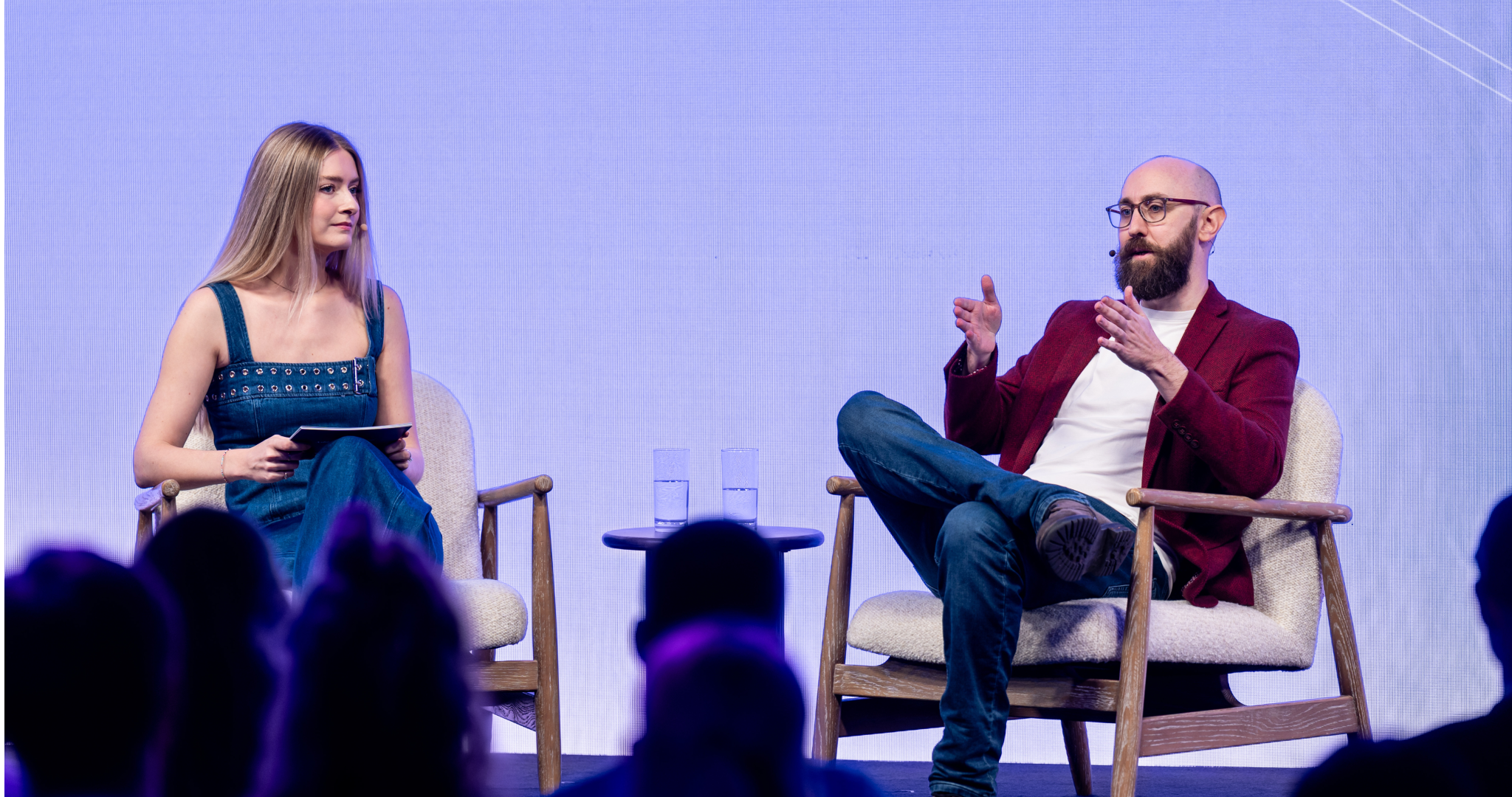
Quality of Hire at Enterprise Scale
Tim Chattaway of Sony Sports Technology and Laura Barnes of Flock compare how their teams measure Quality of Hire at scale: rebuilding scorecards around justified conviction instead of middle-of-the-road ratings, catching a struggling new hire inside the first 30 days, and feeding the data back into how the next role gets written.
View session
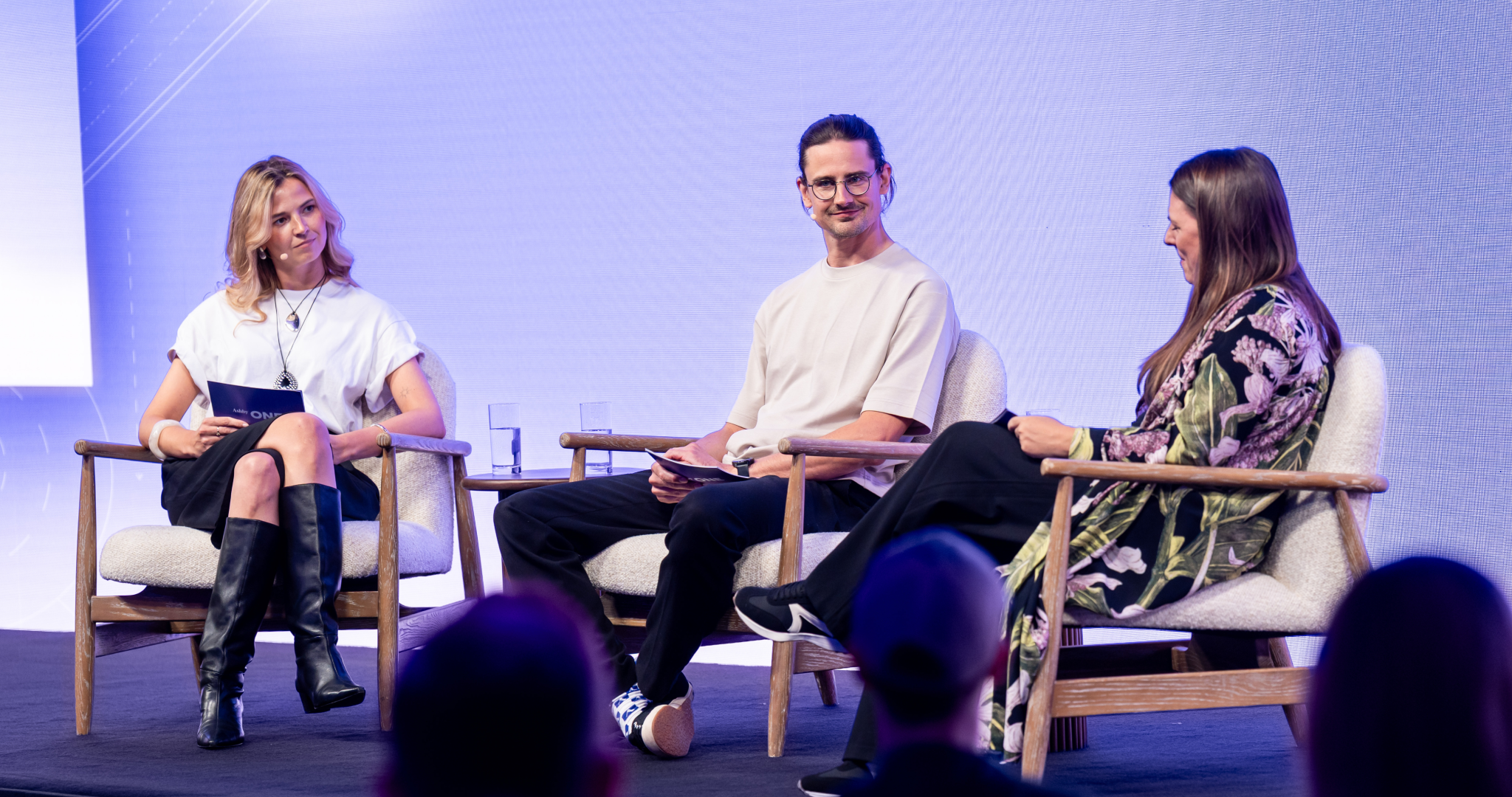
Building with Confidence: AI Risk and Regulation in Recruiting
Ashby Senior Legal Counsel Kelly Fish walks through how the EU AI Act's risk-based framework applies to recruiting tools, and Tourlane's Max Rauschen and hyperexponential's Lucy Szypula show how they turn that framework into vendor questions and day-to-day AI guardrails.
View session