Blurring the Lines Between Talent and People
Superhuman's Chief People Officer Kenny Mendes and Head of HR Brady Donaldson explain how they run an ongoing "re-enrollment" motion across recruiting and HR, and the voluntary salary-for-equity program that reshaped how the company thinks about compensation.
Speakers


Key Takeaways
- A simple lens for auditing whether incentives are aligned: are people acting like they’re competing for the biggest slice of a fixed pond, or trying to grow the whole pond? Superhuman’s leadership uses this fish-thinking-versus-pond-thinking frame, borrowed from lessons at Coda and YouTube, to check whether comp and promotion structures reward individual status over collective growth.
- Letting employees voluntarily trade salary for equity, rather than mandating a split, can turn skepticism about equity into a company-wide conversation about ownership. When Superhuman opened this choice to every employee, more than 40% opted in, and its sales team’s participation topped 50%.
- When managers control their own team’s pay and equity budgets, the incentive structure ends up rewarding people for pursuing management titles rather than doing exceptional individual work. Moving that budget ownership into a centralized people team, the way Superhuman did, can correct for this inversion without requiring anyone to become a manager who doesn’t want to.
- Treating recruiting and HR as one continuous relationship with a candidate, rather than a handoff between hire and retention, keeps signals about employee sentiment flowing sooner. Superhuman built an ongoing re-enrollment process where HR business partners and recruiters both check in regularly on existing employees, not just candidates.
- Shipping a compensation cycle on schedule isn’t always worth more than shipping it correctly. Superhuman’s people team paused the release of a company-wide equity and salary refresh mid-cycle after the underlying budget math didn’t hold up, choosing to delay the numbers rather than ship a distribution employees would later feel was wrong.
Session Overview
When Grammarly acquired Coda in early 2025 to form Superhuman, its talent and HR teams had to decide whether recruiters and HR business partners stayed separate, with a handoff, or became one team owning the entire employee lifecycle. Chief People Officer Kenny Mendes and Head of HR Brady Donaldson rebuilt compensation, promotion, and retention around one throughline: keep employees thinking like owners, rather than competitors.
Mendes traces the thinking to Coda founder Shishir Mehrotra’s time running YouTube’s product org at Google: fish thinking, measuring yourself against titles and headcount, versus pond thinking, growing the whole organization. Superhuman used that frame while integrating 200-person Coda into a 1,500-person company, questioning which structures fit a large pond rather than a small one still trying to grow.
That thinking led to Superhuman’s most unconventional move: letting employees voluntarily trade salary for equity. Mendes brought pictures of fish and ponds into three board meetings, and outside lawyers said nothing like it had been tried. Assuming employees outside the US would care least about equity, Mendes and Donaldson held an open fireside chat with the Berlin team instead of guessing.
Donaldson led a parallel shift inside the people team: recruiters and HR business partners took shared responsibility for re-enrollment, regular check-ins with existing employees, not just candidates. HR business partners watched recruiters pitch the company and borrowed their techniques; recruiters started tracking business context beyond their own requisitions.
Mendes also moved compensation and equity budgeting out of managers’ hands into the people team, since managers setting their own team’s pay rewards chasing a title over doing great work. That team faced its own test: mid-cycle, with a refresh close to release, Mendes paused it after the budget math didn’t hold up. Leadership later credited the team for getting it right rather than shipping on schedule.
Chapters
- (00:02) Introductions
- (01:04) Forming Superhuman: the Grammarly-Coda merger
- (02:54) Fish thinking vs. pond thinking
- (08:46) Designing the salary-for-equity swap
- (19:44) Moving compensation ownership from managers to the people team
- (21:50) What a re-enrollment conversation actually covers
- (26:50) Where talent and HR can learn from each other
- (33:59) Getting compensation right vs. moving fast
Q&A
Q: How do you get HR business partners and recruiters to work together more closely?
A: Superhuman’s Head of HR, Brady Donaldson, had HR business partners watch top recruiters pitch the company, then gave both groups a shared “re-enrollment” process: checking in on employees after they’re hired, not just before. Recruiters started tracking business context beyond their own reqs; HR business partners became company evangelists.
Brady Donaldson, Head of HR at Superhuman: “We would literally sit there and watch some of our most talented recruiters do their pitch and walk through how they talk about the company. And you saw the HR business partners light up in that moment and say, ‘Yeah, that’s really cool, I want to do that too.’” (27:45)
Q: What is “re-enrollment,” and how does it work in practice?
A: Superhuman’s Head of HR, Brady Donaldson, defines re-enrollment as intentional, ongoing conversations with existing team members, not just candidates: checking in on how things are going, naming what they’ve delivered, and walking through their compensation and ownership stake. HR business partners and recruiters both run these conversations on a regular cadence, not only when someone is at risk of leaving.
Brady Donaldson, Head of HR at Superhuman: “Re-enrollment and having those intentional conversations with team members is something that we’ve enabled our HR business partners and our recruiters to be able to do: to sit with team members, and to first of all just talk to them about how things are going. That conversation is really different when you’re talking to someone from the people team versus when you’re talking to your manager, who’s in the trenches with you every day. It just has a different kind of flavor. So, asking folks to get really curious in understanding what’s really going on for this person in this moment, and then pulling that into talking about our appreciation for you as a member of this team and what you’ve delivered, and then that gets into the compensation offer.” (21:50)
Q: Should companies let employees trade salary for equity?
A: Superhuman’s Chief People Officer, Kenny Mendes, let employees voluntarily trade a portion of salary for equity, betting that giving people more ownership would build motivation cash alone hadn’t. More than 40% of the company opted in despite board skepticism about dilution, including over half of its sales team.
Kenny Mendes, Chief People Officer at Superhuman: “I think we netted out with over 40% of the company choosing to do this program, which was a much higher rate. Our European offices had some of the highest participation rates. Our sales team participated over 50%, which was ridiculously exciting, they saw the future of the roadmap and they wanted to be more owners in it.” (19:44)
Q: Should managers or the people team control compensation decisions?
A: Superhuman moved compensation and equity budgeting out of managers’ hands and into the people team, reasoning that managers setting their own team’s pay incentivizes people to chase promotions and management titles instead of doing their best individual work. Chief People Officer Kenny Mendes calls this correcting for “inversions”: rewarding scope over impact.
Kenny Mendes, Chief People Officer at Superhuman: “You shouldn’t feel like, if you’re a phenomenal engineer, phenomenal designer, phenomenal recruiter, that the best thing that you can do for the company is to go become a manager. Maybe the best thing for you to do is ship that amazing product or close that amazing candidate, but when your compensation incentives are skewed towards ‘go get promoted, go increase your scope’ in that way, you get the wrong kind of behavior.” (20:12)
Q: How do you keep highly-vested employees from checking out before they leave?
A: Superhuman’s Chief People Officer, Kenny Mendes, re-evaluates compensation based on an employee’s forward-looking pay rather than what they’ve already vested. Staying never feels like a worse deal than leaving and re-interviewing elsewhere. Mendes built this after a phenomenal engineer nearly left once he was 85% vested and stopped weighing what Superhuman could still offer him.
Kenny Mendes, Chief People Officer at Superhuman: “We had this really phenomenal engineer, and he was leaving. He was going to leave to go start a company, had this amazing thing lined up, and I sat down with him and asked why. He said, ‘Well, I’m 85% vested. I’ve got most of my equity, no big deal. I’m going to go work on this next thing.’ … So we look at their equity and we say whatever is vested is theirs — what’s their forward-looking comp? … And our forward-looking comp has to be more compelling than that other peer opportunity.” (25:53)
Mike Clapson (00:02): I have the pleasure of Kenny and Brady joining me on stage today. I'll start with a couple of quick intros here.
Brady Donaldson has spent eight years building the people function at what is now Superhuman, formerly Grammarly. She joined Grammarly as its first HR business partner when the team was 150 strong, and she scaled alongside Superhuman's growth to over 1,500 employees globally. Kenny is the chief people officer at Superhuman, where he leads the company's global people and workplace experience teams. (00:24)
Before Superhuman, Kenny served as chief operating officer at Coda, overseeing people, legal, ops, and finance functions. And prior to Coda, Kenny was the first recruiting hire at Box, where he built the recruiting function from the ground up. Let's get a welcome round of applause for Brady and Kenny. (00:48)
Alright, so Kenny, take us back to around January of 2025. I know it was an interesting year — Grammarly has just acquired Coda. Can you set a little bit of context for the folks in the room? (01:00)
Kenny Mendes (01:04): Yeah. First off, hi everyone. Thank you all for being here at 4:45. I know it's been a long day, so you are all the troopers. We're going to finish with good energy before we all get to drinks.
So yeah, the last year and a half has been super, super interesting. Coda was about 200 people, and there was this really interesting thing going on in the world with this AI revolution. The founders of Coda and the founders of Grammarly came together and realized the market is going to go somewhere very, very special, and we both have similar visions — do we go about it alone, or should we go do this together? And it was a very fast decision to go make this really interesting combination of teams, culture, strategy, and product. And most people know Grammarly — it's one of the most loved products out there, used by 40 million folks daily. (01:52)
It's been really, really fascinating to see this experiment of bringing, so far, three companies together under this umbrella. But I'd say a lot of learning for us. How do you get a company oriented around shipping product quickly in a fast-moving environment? How do you integrate cultures and decision-making and different processes around how you think about hiring and compensation — all of that? So it's been a fun experience. Brady has been an amazing sidekick. We've gone through a lot of learning and listening.
For me, I think the first phase of that acquisition was all about observing. What is going on in the world today? How is our team doing? What are the situations going on as a head of people? What's preventing us from getting the top talent we're looking for? If someone is leaving the company, what's causing them to leave? And a lot of digestion through that phase. (02:43)
Mike Clapson (02:43): Yep. So you're in the CPO seat of this newly formed entity. You're starting to go through this observation phase. What were some of the things you were seeing — the good, the bad, and the ugly? (02:54)
Kenny Mendes (02:54): Yeah, it was very different, right? Coda was much smaller, and Shishir — he was the founder of Coda. Previously, he came from YouTube — actually, it was Google. He ran the YouTube products, a 1,500-person company. So a lot of our people philosophies at Coda were inspired by things Shishir did a little bit differently at YouTube, to inspire the right level of execution and excitement with his team.
And the analogy that we use a lot — we call this fish thinking and pond thinking. So I'm going to start with a little bit of a visual for everyone. If you're at Google, for example, a really, really large organization, the impact that one individual person can have on changing the size of Google, the trajectory of Google, is pretty small. So what you need to build in that sort of environment is a lot of structure and process and hierarchy, to make that system work well. So a lot of times when you're in that environment, you have to measure yourself by things like your title, your role, your level, how many people you manage — and those are the sorts of things that lead to the right level of career progression and rewards. (03:58)
The opposite of Google is maybe like a five- or ten-person startup. Like, think about that world where no one really cares: are you a senior engineer, are you a junior engineer? Everyone is thinking, "We've got this small pond, and we want to be the next Google. We want to turn it into a really, really large pond." So we talk a lot about the incentives and programs we're putting in place driving fish thinking, where you're at Google and you're kind of worrying about, "Hey, how big of a fish am I compared to the fish next to me?" Or are you driving pond thinking, where everyone looks around and says, "We've got to grow the heck out of this pond as quickly as possible"? And at the very earliest phases of that acquisition —
I looked at Grammarly, a 1,500-person company, working really hard on scaling, growing, getting ready for all of those big things. They'd put in the type of structures that work well probably when you're a large pond, but the state of the business needed us to really be focused much more on small pond to big pond. Get everyone to think like an owner, to feel like they can go move the needle in the company. And you have to really start to unpack, okay — what are the incentives that are driving pond thinking versus fish thinking in our company? So apologies in advance — there's going to be a lot of pond and fish analogies as we go through the day. (05:22)
Mike Clapson (05:22): Got it. So Brady, this one's for you. It sounds like you're starting to see how incentives are shaping behavior and decision-making. What did you perceive? What did you see as some of the issues? (05:34)
Brady Donaldson (05:34): Yeah. When we were bringing all of these organizations together, they definitely had different starting points. Kenny mentioned, you know, I came from Grammarly, and we had been growing really quickly, and I think we had been sort of on the growth conveyor belt of like we were like, "We're going to the moon, baby." And so we were really trying to think about how we structure things to have a 5,000-plus person team.
And I think we had this moment of realization that that's not where we're at right now, in this moment, especially when we were joining with a smaller organization like Coda. And it really pushed the question for us of like, what is our intention here? What are we trying to achieve as a team? And it really stood out to the folks who were joining from Coda that a lot of folks in the organization were really promotion-focused. And so —
We took the step back and looked at the systems and said, "You know, we've really inadvertently incentivized that behavior." Promotions were the fastest way to make significant compensation increases. We had titles that meant a certain thing in the organization that people assigned a lot of value to. And we were thinking about this fish-versus-pond world, and seeing that all of this was really reinforcing the fish thinking — and what's in this for me, rather than what's in this for the collective, what's in it for the group, and how do I do what I'm doing to help this. We always say "grow the pond." I don't know if ponds actually grow, but it's what we talk about. So how do we grow the pond and really push forward the goals of the organization? (07:18)
So we started to have a lot of conversations about what team members were focused on and where we wanted to shift their attention — that being really on impact, bringing together the team, so no longer thinking as Codans and Grammarlians, but thinking as folks who had this shared vision, this shared mission that we are now striving toward. (07:38)
Kenny Mendes (07:38): We had some situations early on where, you know, a really talented employee was going to leave. And the number one question I had was, "Okay, what's their comp situation? How's their equity? How do they feel about their stock? Are they excited?" And we'd hear back responses like, "They don't care about it, they don't value it, they don't really have that much, it's not that big of a deal." And if your well-being, your compensation, doesn't really change that much if the company grows 100x or doesn't — that's kind of a problem.
And we heard lots of variations of this, and it caused us to step back and say, "Okay, what were the frameworks and structures that led us to this current compensation paradigm?" I think we were paying really well on the cash side, people were well rewarded, but folks were kind of much lighter than we would have liked on equity. And equity is really that thing that connects you, as an employee, to feel like an owner in the organization. So lots of these little things — we started to say, "Okay, how can we start to unpack this and make some changes there?" (08:39)
Mike Clapson (08:39): Yep. So trying to prioritize impact-oriented thinking, what was the shape of the creative solution that you guys came up with? (08:46)
Kenny Mendes (08:46): Yeah, you had to go approach it in lots of different ways. But the wildest thing that we did is we looked at the data, we looked at everyone's kind of average composition — how much goes into cash, how much goes into equity — and said, "We've got a balance issue, and we need to really move it to where we're driving way more equity into our team." And equity is a really, you know, complicated concept. It's not super well understood by employees. Boards are often trying to hold onto it, prevent this concept of dilution — they want to minimize the number of shares that are getting split apart. But for us, we wanted to activate the culture, and to do that, it was catalyzing this feeling of ownership throughout the company.
So the bold, wacky idea that we had was: what if we could go to our employees and say, "Do you want to voluntarily trade your salary for equity?" In a time when confidence in equity might not have been super high — people didn't really have a lot of it, they didn't think about it a lot, they weren't talking about it — so when we first started to socialize this idea, we got a lot of pushback. "No one is going to want to do this. This seems nuts. Why would you give up something that is so certain for something that's unpredictable? We don't know how it's going to do." But we tried to structure the program in a way where it was a pretty compelling, in our opinion, deal for our employees, right? Make it as much of a great decision where you feel like you could radically change your ownership. And yeah, a lot of surprising results, like pretty, pretty impactful progress along the way. (10:27)
Mike Clapson (10:27): Yep. You mentioned, you know, typically boards are concerned with dilution and things like that. How did you end up taking this to the rest of the leadership team and the board? What did that approval process for such an idea look like? (10:40)
Kenny Mendes (10:40): Yeah, first off I'm very grateful that our CEO, Shishir, is incredibly employee-centric. Like, for the entire journey, he was trying to push in this direction — that the number one thing we can do to maximize success is to have an employee base that's super motivated, excited, vested in the interest of the company. So it never felt like me having to convince him to do this. It was a great, great partnership. I think I had three straight board meetings where I had pictures of this pond and fish, and I had to get the board to start thinking about this, of like, what happens if you change?
And I had to give examples of, "Look, we're trying to close really, really top engineers in the market, and we're really great on cash, but look at this equity — is this going to be meaningful? Is this going to be what draws that person in, compared to what they're going to get at, you know, a hot AI startup over here down the street?" Look at why these people are leaving. Look at the incentives — people are worried they're not getting promoted fast enough.
And the board was similarly skeptical. They said, "We're probably not going to get people to do this, but okay, if you want to do it, you can find it." We had to go work really closely with legal and finance, and we talked to so many outside lawyers that said, "No one's ever done something like this. This seems nuts, it's probably not possible" — but sure enough it is, and we kind of pushed our way through it.
And everyone was just shocked by the kind of participation. I think the main thing that it did, when we announced it to the company, is it created this moment where suddenly it was all everyone could talk about. Are you going to do it or not, and why? And for the first time ever, equity was the number one thing people were asking about. They were not asking about, you know, what's the next path to getting promoted. They were saying, "Is this a good thing for me to do for myself?" Or, "How are you thinking about it for yourself?" And it just started this, like, momentum that we've continued to build on in lots of different ways. (12:34)
Mike Clapson (12:34): Yep. And so Brady, for the practitioners, operationally, how did talent and people teams need to show up differently? You know, there's this whole new paradigm where impact and equity are important. What's different day to day? (12:56)
Brady Donaldson (12:56): Yeah. We asked our people team, the entire team, both talent and HR sides, to really think about how they play a role in re-enrolling our team on an ongoing basis. So companies obviously, and a lot of people in this room, put a lot of time and effort into getting folks in the door, but you don't necessarily have those intentional checkpoints throughout that person's time in the organization. And so we started to establish this idea of re-enrolling folks and having those conversations on a consistent basis. And it really pushed, I think, everyone a little bit out of their comfort zone.
So for our folks on the talent side, it was really sitting with what's happening in the organization in a way that they might not see and experience day-to-day, and understanding where team members are at mentally, what's happening within the org, and their concerns. And then for our HR business partners, on the HR side, I think they were pretty skittish that they were going to sit down and talk about comp with people. Like, usually that happens through recruiters or through the manager.
And so it was a really interesting process of bringing those two groups together and sharing a bit of what each of them was comfortable with and what they knew as their world, and asking everyone to think about, like, what's the best way that we can, when our powers combine, bring to the people a really compelling story and a really compelling vision that feels super authentic and is something that we all believe in as well. I'll say that this program — you know, I've done a lot of equity education in my career, trying to get employees to understand their equity — and this was by far the most effective thing, because, you know, you're investing in your organization, the organization you work for every day, whether or not you're thinking about it, right? So I think it's really passive for a lot of us, of like, "Okay, I'm showing up here every day and putting time and energy into this." But this was this really explicit ask of people to sit down and think about, you know, from an investor's perspective — what do you want to put into the equity? What do you want to invest there? And what could that look like for you in various outcomes? (14:58)
And so, you know, all of a sudden we're getting lots more questions about the strategy, and how is this going to work, and how are we thinking about, you know, all these different components of the product? And it really pushed, I think, folks who otherwise would sort of sit on the sidelines to really engage with what we're trying to build collectively as Superhuman. (15:12)
Kenny Mendes (15:12): Yeah. I think one of the big lessons that I've observed is most candidates and employees at companies, they're not often trained to think like investors and really value the equity and think about, you know, there's a hundred different scenarios that can happen — it can go up this way and go down this way. Most people think about it just as a lotto ticket of, maybe it's going to be worth a lot, or maybe not, but I'm just going to focus on my salary. But, as Brady was talking about, we had to work a lot on enablement, like enabling ourselves and then going out and enabling our employees to think about it a little bit differently. And then you got to see the gears turning.
And one of my favorite stories — one of our product leads came to me and she said, "You know, Kenny, you put out this really silly, wacky thing, and I was pretty skeptical. And then I started thinking about it, talked to my husband, went back and forth, and finally decided to do it. I decided to do it, and I came to work on Monday, and something was different. I suddenly felt way more motivated" — and she literally said she wanted to go yell at those engineers to ship that feature, because, hey, now a lot of things are riding on it. And I've had people, you know, in the recruiting team who opted in and said, "Wow, I feel like this opportunity gave me the type of equity that I only saw going to engineers in the company. And now I feel like way more of an owner." And something flips with people when you give them an opportunity to think like that.
So one of the things we've tried to do is get people to vote with their feet many, many times during an employee's life cycle. So at the recruiting stage, we don't go to a candidate and say, "Here's your offer." We actually go to them and say, "Hey, you have three choices. You can choose high, medium, low salary, high, medium, low equity, and you can think about — here's the economics and the impact, and I don't know what the future's going to hold, you don't know. Do you want to make a bet in some way or another?" And it gets them on this process where they're starting to think like owners. Then they go out and they get, you know, an employee refresh, they get an award, and we go to them with the same thing — here's your refresh, congratulations. But by the way, how much do you want to skew one way with equity, and not? And the more you get employees to vote with their feet, the more they suddenly say, "Wow, this is the thing that can really move the economics for me, and I don't care as much about what my title is." I want to make the company successful. I want to grow the pond. (17:56)
Mike Clapson (17:56): Yep. Awesome. You shared an anecdote about one employee really leaning into it. Any other surprises from the kind of employee-based reaction to the program? How did it go overall? What do you think? (18:20)
Kenny Mendes (18:20): Oh yeah, some funny stories.
Brady Donaldson (18:20): Yeah. There was so much skepticism, and actually that product leader that you're speaking about is in our Berlin hub. And so one of the things that we heard was nobody in the international team was going to participate in this, because folks outside of the US didn't care as much about equity. And so once we actually started to get into this program, it was this aha moment of — oh, they care, they just don't understand it, and they're not sitting in the Valley, where people talk about valuations and all these things all the time, right?
And so actually at one point Kenny and I were in Berlin and [we] sat down and did a fireside chat with the team there, just to say, "No stupid questions, let's talk about it, let's get it out." And we actually saw really strong participation from those groups that everyone were the most skeptical about participating — folks who were early in their career, folks who were in those international locations — and all of that was really surprising and exciting to see. (19:14)
Kenny Mendes (19:14): Yeah, I think we netted out with over 40% of the company choosing to do this program, which was a much higher rate. Our European offices had some of the highest participation rates. Our sales team participated over 50%, which was like ridiculously exciting — they saw the future of the roadmap and they wanted to be more owners in it.
And what I mentioned earlier — this was like one of many things that I think we had to operationalize to go switch the incentives over, kind of what Brady was saying, like, you know, fish thinking, promotions, titles. One kind of other funky thing that we've done is: when you think about compensation structures in companies, usually they're driven by managers, right? A manager on a team is the person that's setting the cash budgets, the equity budgets for that team. And whether this is explicitly or implicitly understood, everyone realizes that manager is probably making more than everyone else on that team — they're leading it.
And something important to Shishir and I is the idea of inversions. Like, you shouldn't feel like, if you're a phenomenal engineer, phenomenal designer, phenomenal recruiter, that the best thing that you can do for the company is to go become a manager. Maybe the best thing for you to do is ship that amazing product or close that amazing candidate, but when your compensation incentives are skewed towards "go get promoted, go increase your scope" in that way, you get the wrong kind of behavior. So what we had to do is take that responsibility away from managers and move it back into the people team. You're centralizing things that are typically decentralized, which — enabling that in a 1,500-person org is tough — but it put all the pressure within the people team. (20:41)
Suddenly we're looking at this and saying we've got to operationalize getting these conversations out to our entire team. And how do you upskill everyone? How do you train your recruiters to act like a people partner, to sit down and understand how's a person doing? What are they excited about? Walk them through what the future means for them. How do you train a people partner to re-enroll and sell the way our best recruiters can? One of the hallmarks we try to shoot for within the people team is to have as many people in our organization be as skilled at selling the vision as our CEO. Understand the product strategy, the financial metrics, like — be an owner in that, so that you can get that candidate, that employee that you're influencing, to be really excited about that vision. And it's hard. I will say it puts a big toll on our team carrying that load. But on the flip side, the transformation of our team, where people are saying, "I don't have to do anything other than the thing that is most impactful for growing the pond" — been totally worth it. (21:37)
Mike Clapson (21:37): Nice. You've each mentioned this concept of re-enrolling the existing team — hoping we spend just a little bit more time on that. What was the kind of core idea there? Who's responsible for what? Talk to this audience about that concept. (21:49)
Brady Donaldson (21:50): Yeah. Well, re-enrollment — having those intentional conversations with team members. So it's something that we've enabled our HR business partners and our recruiters to be able to go do, to sit with team members, and to first of all just talk to them about how things are going. And that conversation is really different when you're talking to someone from the people team versus when you're talking to your manager, who's like in the trenches with you every day, right? It just has a different kind of flavor to it. And so asking folks to get really curious of understanding, like, what's really going on for this person in this moment — and then pulling that into, okay, like, we want to talk about our appreciation for you as a member of this team, and what you've delivered.
And so that gets into, like, the compensation offer. And we even talk about it as offers, right? Because everyone's voting with their feet every day, whether or not they're showing up and whether or not they're engaged, right? And so walking them through that offer, hopefully getting them really excited about the ownership stake that they have, what that potential upside looks like for them, and taking the time to really talk through their compensation. And also pulling back the curtain a little bit of, like, how we set compensation. So often in these conversations, people have a lot of questions about that, and how we think about it and do it as a structure across the organization, right? So being able to talk to folks about that and have them feel comfortable with it — it's really hard to get them totally in the weeds of all the details, but if you can give them the sketch of, like, "Here's how it works, and here's how we see you and your impact," that tends to feel really good for folks and makes them really motivated. (23:32)
So trying to get that reinforcing loop of, like, you're driving really great impact for the organization. We also really care and want to know what's going on for you in this moment. Something I think about a lot is, because of how our organizations came together, almost no one in the company intended to join, you know, this company, with this mission, doing this thing and building this product and strategy, with this manager and this role. Like, all of that has changed for everyone. So re-enrollment is also talking to people about this vision that we have, talking to them about how their role has evolved in that context, and then finding out the things that are breaking or not working for them. And it equips us better, as a people team, to then be able to go and support those systematic solutions.
So we share out with the leadership some anonymized feedback of, like, "Hey, here's what's coming up, here's where we're seeing the trends," and, you know, what folks are concerned about. And then we're also able to share some, like, really specific — like, "Hey, have you talked to so-and-so about XYZ thing? That's really on their mind." And I think our leadership has found it really helpful and impactful in that way too, of getting — we call it the vibe check across the organization of where folks are at. (24:57)
Kenny Mendes (24:57): Yeah. Yeah. One thing that we've done there is — I can say, like, we've got to get in the field. Like, we had an amazing people partner team, but they really, prior, were influencing through managers. They would talk to managers and kind of coach managers on how to do that. And we kind of flipped the model to say, "No, no, no, go talk to the team, talk to every IC, understand what's going on with them." Go have recruiters not just worry about how did I get the person hired, and worry about the next hire — they actually think about, how can I think about this person's success a year in, two years in? How are they doing, as they're having those re-enrollment conversations? So that's been amazing.
And we've also had to change the math about how we've modeled compensation. And one thing that was, like, very worrying — we had this really phenomenal engineer, and he was leaving. He was going to leave to go start a company, had this amazing thing lined up, and I sat down with him and asked why. And he's like, "Well, I'm kind of like 85% vested. Like, I've got most of my equity, no big deal. I'm going to go work on this next thing." And one thing we try is to make sure that employee never feels like most of their comp is already in the past. So we look at their equity and we say whatever is vested is theirs — what's their forward-looking comp? And how do they compare their forward-looking compensation in our organization compared to what are they going to get by either starting a company, going and joining another company? And our forward-looking comp has to be more compelling than that other peer opportunity.
So it basically means every single year, or every two years, you have to re-enroll, re-top up. It should never feel like, "I can make more money in this organization by leaving and reinterviewing for a job than just staying here and doing great work." So it's been a lot of hard spreadsheet — a lot of Coda docs to go get the math right, get these out into the team — but we're definitely seeing that transformation. (26:50)
Mike Clapson (26:50): Yep, tremendous. I want to come back to this concept of kind of blurring the lines between talent and HR teams. Where do you see talent teams taking a page from HR's playbook, or vice versa? Brady, you want to start? (27:01)
Brady Donaldson (27:03): I think the concept of selling the organization was really uncomfortable for our HR business partners initially, and really pushed them out of their comfort zone. And so we had to have a lot of conversations and a lot of enablement around how you do that authentically. We would literally sit there and watch some of our most talented recruiters do their pitch and walk through how they talk about the company. And you saw the HR business partners light up in that moment and be like, "Yeah, that's really cool, I want to do that too." So I think getting them comfortable with that was really important and critical.
And I think the big shift for our talent team was — so often there's such a silo between these two worlds, and you have folks come into the organization that you recruit in, and then you don't really have a mechanism by which you keep in touch with them, unless you're just a person who's reaching out to them and keeping tabs and checking in regularly, right? And so you can kind of lose track of that person over time. And this re-enrollment process, and getting our recruiters involved in that, has enabled them to have those ongoing touch points with people, and to also hear about the organization in a way that they don't necessarily hear and get day to day, right? So it's just giving them a lot more data to work from when they're thinking about, like, what does this team need? What's going to fit and really work well for them in this moment? (28:34)
Mike Clapson (28:34): Yeah. Anything to add? (28:36)
Kenny Mendes (28:36): All the recruiters in this room probably know the amazing feeling you get when you close a candidate, right? That high, like, "Wow, you know — beat OpenAI, beat Anthropic, got this amazing hire in." And I had a people partner come to me one day and she said, "Look, I just convinced this employee that was about to leave to stay, and they're sticking around, they're so excited." And the HR side of our team never got to have that feeling of winning. And so I do feel like in the last year you're seeing a lot of cross-pollination of learning and ideas, and the recruiters are having to think broader about many teams. They're just not focused on the area that they're recruiting for. They're understanding how does the product strategy affect the engineering team, the go-to-market team, and connect that back to that employee that they're connecting with. And our HR business partners have just become amazing evangelists of, like, why what we're doing right now is amazing and why you should be pumped to be here. So it's been fun. (29:39)
Mike Clapson (29:39): Awesome. So Superhuman now 1,500-plus people, that's still a growth story. You've got these new incentive-based compensation programs. I'm curious — what have you been intentional about not over-engineering, you know, to go too far towards big-company structures? (29:52)
Brady Donaldson (29:52): Yeah, this is something I think that comes up pretty frequently. We love a spreadsheet, we love an elegant Coda solution, so sometimes walking ourselves back of, like, "Simple might work here." So I think that's definitely something we push the team on every day. (30:09)
Kenny Mendes (30:09): Yeah, I think we're always feeling this tension of the people team is trying to do something that just doesn't feel like it's what large companies do. And you can't do this, it won't scale. And I respond, "It may not work six months from now or a year from now, but the effect that it's going to do for our employees today is meaningful, it's impactful, it's driving the business forward." It's incredibly painful when our organization, you know, does not have the ability to retain someone critical to an important feature, and when you hold that back, when you get them to stay, that team can be far more successful. You won't win every single exercise like this, you will lose some people, but you're dramatically improving the odds of that team hitting its goals. On the recruiting side, as people upskill their ability to sell and to close, to understand the strategy, they are moving up hiring quality, they're getting better talent in. So it's a very reinforcing thing that as we step up our game — let's not worry about is this going to work five years from now. Let's just think about how can we serve the business and be really close to our leaders, our managers, on what will unblock them the most. (31:15)
Brady Donaldson (31:15): We're about to go out and do this re-enrollment process today, and just today I was having this conversation of like, "Are we really going to go out and have 600 one-on-ones with team members?" And I was like, "Yeah, it's going to be fun. We're going to learn a lot." So I think, you know, until it breaks, that's what we're going to do, because it drives the right outcomes, and it drives so much impact for the business, that we're going to continue to make that investment. (31:41)
Kenny Mendes (31:41): One of the first times our people partner team was kind of doing this different model — we had this reorg in one part of our engineering, and we asked one of our people partners just go check in on everyone in that team, see how they're doing, see how the reorg made them feel. And one of our awesome people partners did that. She had all these conversations, and the overwhelming positive response was, "It meant so much to me that you just reached out, that you checked in, saw how I was doing." Like, these little gestures — even if it's a 15, 30-minute conversation — matter. They matter in such a different way compared to the things that you might programmatize. It might feel like this is the right, scaled way to do it. But at the end of the day, we're working on influencing people, making sure people feel like we care about them, that their work matters, that we understand the stuff that's getting in their way, and we're working hard to unblock it. So I think that's the current MO for our people team right now. (32:29)
Brady Donaldson (32:38): I think about this a lot too, in a post-COVID world. Like, I think about how I used to be a people partner before the pandemic, when folks were mostly in the office. Like, Grammarly really was 100% in the office. And it was super easy to just see people and be like, "I don't know, that person's off. What's up with their energy?" Or run into someone in the kitchen and ask them how things are going. It was just really easy to have those sort of bump-into-you conversations.
And I think a big push for us has been having to operationalize that way more intentionally, now that we're remote, we're global, we have people in the office, but it's not required every day. You don't necessarily have those bump-into-you moments with your people partner. So it's really pushed me to think differently about that, and setting that up intentionally, even if it is awkward to be like, "Hey, I'm putting fifteen minutes on your calendar and I just want to hang out and chat." (33:38)
Kenny Mendes (33:39): HR is no longer scary. We were seen before as scary — suddenly HR puts a time on the calendar.
Mike Clapson (33:43): I wanted to draw off something you said in the green room, thinking about getting it right versus moving quickly, you know. You're at a startup, it's got to move fast. How do you think about that trade-off in, you know, the context of compensation and re-enrollment and all that? (33:59)
Kenny Mendes (33:59): Yeah, so Brady and I are in a very interesting period. So our company is going through the, you know, performance review growth cycle, and we're in this process of changing the entire underlying framework while we still have to keep the ship running to some degree. And we had designed a very thoughtful timeline on when does every single step of this have to happen.
And we kind of got to the stage where we were about to go release all of our equity numbers, our salary numbers, and we were looking at it, and we're like, "Something just feels wrong about the modeling here." And it had to do with, you know, the size of the budget. I felt like I think we need to go to the board and argue for a little bit more for our team. Had to really think about the distribution. Is it going to the right place? Is it going to drive the retentive impact that we need to? And it was a painful decision, but we decided to stop — to pause the trains for all things related to equity, and leave part of the trains out the door on things related to cash, as people really care about that, like their livelihood, their well-being. (35:16)
And it's been hard on the people team. I've had a lot of managers say, "Hey, I'm confused, what's going on?" I've had employees wonder what's going on. And I've been incredibly apologetic, but I've said it's the most important thing we can do is to get these numbers right for our team. Like, we have one shot to go make sure these awards are as meaningful, as retentive, for our team members as possible. And if the math is not right, the structure's not right, I don't feel good about shipping it. And so we made the hard call about pausing it.
And today, in one of our company leadership meetings, one of our leads said, "Look, the people team has had to make some very tough calls in the last year, but every time you do it, I see that you're doing it with the best interest of our employees. And it matters more that you're being thoughtful and getting it right. So we see you, we hear you, and we appreciate — like, at the end of the day, we feel cared for." So we just got to keep doing that in this competitive landscape. (36:10)
Brady Donaldson (36:10): That was part of our equity swap program too. Like, basically we made a last-minute decision based on feedback from the team, where they're asking if we could structure it slightly differently. And, you know, at first we were like, "No, no, no, no, we don't think that's possible." And then we went back to the lawyers — bless the lawyers — and said, like, "Are we sure? Are we sure we can't do this?" And we figured out a way to do it, but it meant that we had to pause this swap program right before we were going to lock it in, and explain to the team, like, "Hey, we're doing this because we think it's going to be a better outcome for you." So, like, we could do it on time, we could do it on the schedule, or we could do it right and get to the right outcomes for the team.
And that's a tension we feel all the time, because no one likes to — I'm a very process-oriented person, I love a schedule, and so it kills me to be like, "No." But I do think that overarching principle of "is what you're letting out the door the right thing" — that's really critical. (37:03)
Mike Clapson (37:03): Yeah. So if you're sitting in the audience today, and many of these folks are probably from talent acquisition teams, and they feel that they're maybe a degree removed from their HR business partner operations, what ideas or advice might you have if they want to try and bring TA and HR closer together? (37:15)
Brady Donaldson (37:15): Yeah. I think you can definitely start this just from a bottoms-up approach of, who are the HR business partners that are supporting the hiring managers that you're working with? And how can you all gang up on your hiring managers? How can you be on the same side of understanding what are the issues and challenges for that organization, and how do we work together to coach those managers and leaders and teams towards better outcomes? So I think when someone's hearing that unified message from multiple folks, it starts to be that reinforcing loop. So I think that's the easiest piece that you can tackle first — go find those HR business partners and start that relationship with them. Meet with them regularly, tell them about the challenges that you're having. Talk about who's a prickly manager and why they never say, like, "Yes, let's go make an offer." Like, work through that in partnership with them.
And then I think the flip side of that is looking at what are the biggest problems that you're trying to solve as a people team. And again, I think the default is to be really siloed between these teams. And we try as much as possible to push ourselves to say, like, how do we get all the perspectives in the room? And how do we think about a solution that really ties throughout the entire employee experience, going all the way through, from those first interactions that happen through the recruiting process, all the way through their lived experience in the organization? And I think that's really leading to those interesting outcomes of, you know, mixing skills, mixing focus points, and getting to better solutions. (38:49)
Mike Clapson (38:49): Tremendous. Anything to add? (38:52)
Kenny Mendes (38:53): Can I give two? Okay. First, I think the question we should always be asking is incentives, right? What are the incentives every step of our process are driving, and are those the incentives we want to drive, or not? And if not, just be willing to change them. I think incentives are very, very powerful for people.
The second point, for me: once a recruiter, always a recruiter, right? I think recruiters have one of the hardest jobs. They have to be really, really top of their game at understanding what's going on in the business. How do I tell this story in a compelling way? How can I make sure I'm one of the most thoughtful people in this company about everything that's going on? And that's a really, really powerful skill set that can be very powerful in lots of different roles across the company. So as you master that skill set and gain more and more business context, push yourself to have impact beyond just the lines of closing that candidate. And some of my favorite HRBPs that I've worked with in many places, in my career, were folks that started through talent and moved into saying, "Okay, now I want to solve the next phase of this problem" — whether that's moving into compensation, whether that's moving into the people partner world. But it's an amazing foundation, and I'm seeing now a whole new crop of heads of people that really kind of grew through the recruiting world, which I love to see. (40:12)
Mike Clapson (40:12): Awesome. So today, what we've heard isn't a story of just compensation design. It's about fundamentally rethinking the roles of HR and talent in the organization and how they can create value together. This is recruiters thinking like people partners, HR re-enrolling employees like candidates. And so if you are thinking, "Hey, maybe our talent and people teams are still going through handoff mode" — maybe they can find that forcing function. Maybe it's not M&A, but something else that's going on as a critical business outcome, and align around that problem and opportunity to come together. (40:45)
So Brady and Kenny, I want to say thank you so much for joining us on the stage today. Really appreciate your time. This has been fun. (40:52)
Kenny Mendes (40:54): Thank you, Mike. Great MC. Thanks, all.
Recommended Sessions
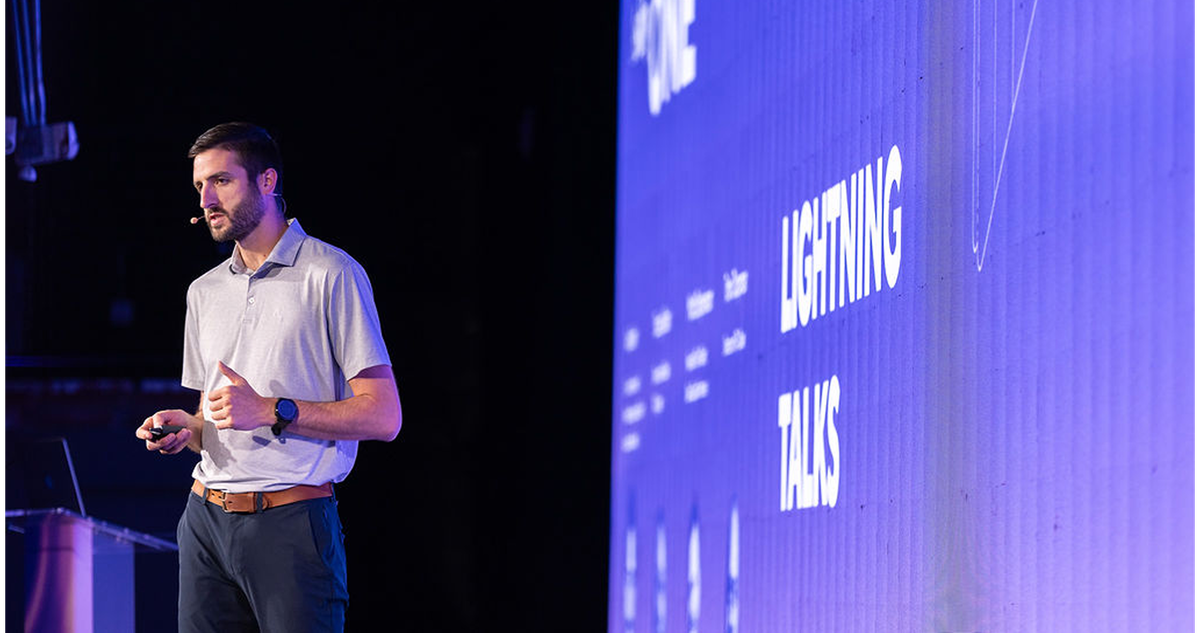
Onboarding at Scale
Abe Spahn, Sr. Director, Head of People Strategy and Talent Acquisition at Renuity, took onboarding for thousands of frontline hires from 120 emails a week, to a webhook into Airtable, to one connected flow from Ashby Recruiting through Ashby People Workflows into ADP. His test for onboarding at scale is whether the team can see a stuck candidate in time to help.
View session
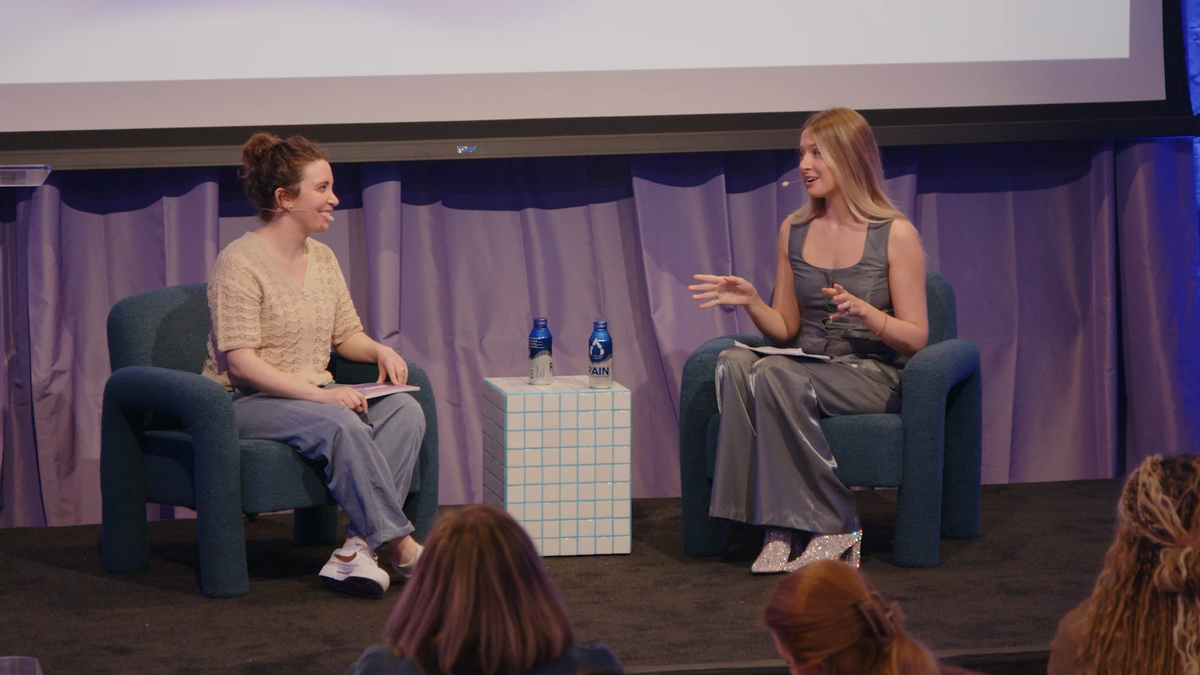
Introducing Ashby People Workflows
Melissa Bierly, Senior Product Manager at Ashby, introduces Ashby People Workflows, an engine for automating onboarding orchestration. Laura Barnes, VP of Talent at Flock, shares how her team used it to cut background checks from days to minutes and save 20 hours of manual work a week.
View session