The North Star Metric Every Hiring Team Needs
About this Episode
In this episode, Liz Woodfield, Head of Talent Acquisition at SentiLink, walks through how her team took on a hiring goal nearly double what they had ever hit, with the existing team size. Facing direct pushback from leadership on whether the math would even work, and real hesitation from her own recruiters, Liz leaned on a pattern she had seen play out across her career at other scaling companies to hold the plan steady through six uncomfortable weeks before the data caught up.
We also explore the equation she uses to turn one big number into weekly, trackable progress, and how she built a team culture around a shared goal instead of individual attribution.
Topics
This Episode's Guest


Liz Woodfield
Head of Talent Acquisition @ SentiLink
Liz Woodfield leads talent acquisition at SentiLink. She previously held talent leadership roles at Juniper Square, Brev Financial, and Goldman Sachs, building hiring organizations across every stage of company growth, from enterprise teams doing 1,500 hires a year to startups where every hire carries outsized impact.
Takeaway 1
Choose One North Star Metric ⭐
Liz's CEO has a name for the number that matters most to him, his gold metric, the one figure that tells him whether the business is on track. Liz borrowed that idea when she set out to scale hiring at SentiLink. A leader earlier in her career had once pointed out that sales teams work off a single clear number, revenue, with everything else feeding into it. Instead of asking her team to manage several metrics pulling in different directions, she used that same logic to set one clearly aligned goal: 50 hires in six months. She built it from headcount planning and forecasted attrition, and made that the number everyone worked toward.
Why It Matters:
Telling a team to move faster doesn't give them anything to hold onto, and Liz found that out early. What changed things was giving her team one concrete milestone instead of a vague push to do more. Once everyone could see the same number and understand what hitting it would look like, hiring stopped feeling like abstract pressure and started feeling like something the team was building toward together.
Quick Tips
- Build your number from real inputs, not aspiration. Liz backed into her hiring goal using headcount planning and forecasted attrition, so the number reflected the business's actual need for headcount rather than a target that sounded good in a meeting.
- Use supporting metrics to diagnose, not to compete for attention. Offer acceptance rate and time to fill still mattered at SentiLink, but Liz treated them as tools for figuring out why the main number was off track, not as separate goals her team had to hit on top of it.
- Keep the number visible outside your own team. Liz reported on it weekly to leadership, and her CEO reinforced it at company all-hands, so hiring stayed a shared goal across the business instead of a metric only talent was watching.
Takeaway 2
Trust Comes From Staying the Course 🧭
When Liz brought this plan to leadership, she got a direct question back. The team had half as many hires with the same size headcount, so how exactly was she going to double that number? Her own recruiters had the same doubt. For six weeks, candidates moved through the top of the funnel with no hires yet to show for it, and Liz started getting pressure to bring on another recruiter to close the gap. She pointed back to a pattern she had seen work across her career at other scaling companies, trusting that experience while the hiring data caught up to prove her instinct.
Why It Matters:
Conviction and hope can look similar from the outside, but they lead to very different outcomes. Liz wasn't asking her team to take things on faith, she had already seen this pattern play out at other companies and trusted the data behind her own plan. That's what let her project genuine confidence to her team during the six uncomfortable weeks instead of leaving them to sit in uncertainty while the numbers caught up. A team can tell the difference between a leader who can point to real evidence behind a plan and those who are operating on wishful thinking.
Quick Tips
- Name the lag time before anyone has to ask about it. A hiring pipeline needs real weeks between filling the top of funnel and landing hires. Liz could point to that built-in delay when pressure hit at week six instead of scrambling to explain it after the fact.
- Build the team around a shared number instead of individual attribution. Liz kept the team's focus on the collective goal rather than tracking who closed which candidate, which meant someone taking PTO didn't create a fight over credit when a teammate covered for them.
- Admit the doubt instead of managing around it. Liz told her team directly that she knew the goal felt uncomfortable. Because she'd already built trust with them, she could be honest about the skepticism instead of pretending it wasn't there.
Takeaway 3
Turn the Big Number Into a Weekly Equation 📊
A goal like 50 hires in six months can feel abstract until someone breaks it into something a team can actually act on week to week. Liz leaned on an equation another talent leader once taught her, that recruiting success comes down to volume plus velocity plus calibration, to turn her big hiring number into concrete weekly inputs like recruiter screens, response times, and sync cadences. That breakdown is what let her team stop staring at one enormous target and start focusing on what needed to happen that week to stay on pace.
Why It Matters:
Big annual goals are easy to feel disconnected from day to day, especially something as large as doubling your hiring output. Liz's approach was to break that one big number into weekly targets small enough that the team could see exactly where they stood, and what it would take to get back on track if they slipped.
Quick Tips
- Stress-test your timeline by running the weekly math at different speeds. Liz's team calculated what a goal would require at different paces before locking one in. Hitting a role in a month meant 30 recruiter screens a week per recruiter, while stretching it to six weeks brought that down to a more realistic 17. Running the numbers this way is what told her which timeline the team could actually sustain.
- Apply the same weekly framework to your most stuck roles, not just your overall goal. One engineering req had sat open for over a year and earned a reputation on the team as cursed. Liz applied the same approach there that she used for the team's broader number, setting a two month target and working backward into weekly inputs using historical data. The team hit the goal within a week of that timeline.
- Once the team hits a steady pace, look for gains at the individual level. With the team's overall numbers holding steady, Liz started using one-on-ones to dig into each recruiter's own pass-through rates, looking for where a person's pipeline was leaking so she could coach to that specific gap instead of managing to the team average alone.
What Hiring Excellence Means to Liz
For Liz, hiring excellence comes down to a simple equation, hiring exceptional talent as quickly and efficiently as possible, paired with the best possible experience for everyone involved. She calls it aiming for "10 out of 10s," a standard that applies to how a hire feels for the candidate as much as the outcome itself.
Watch the clip >>>
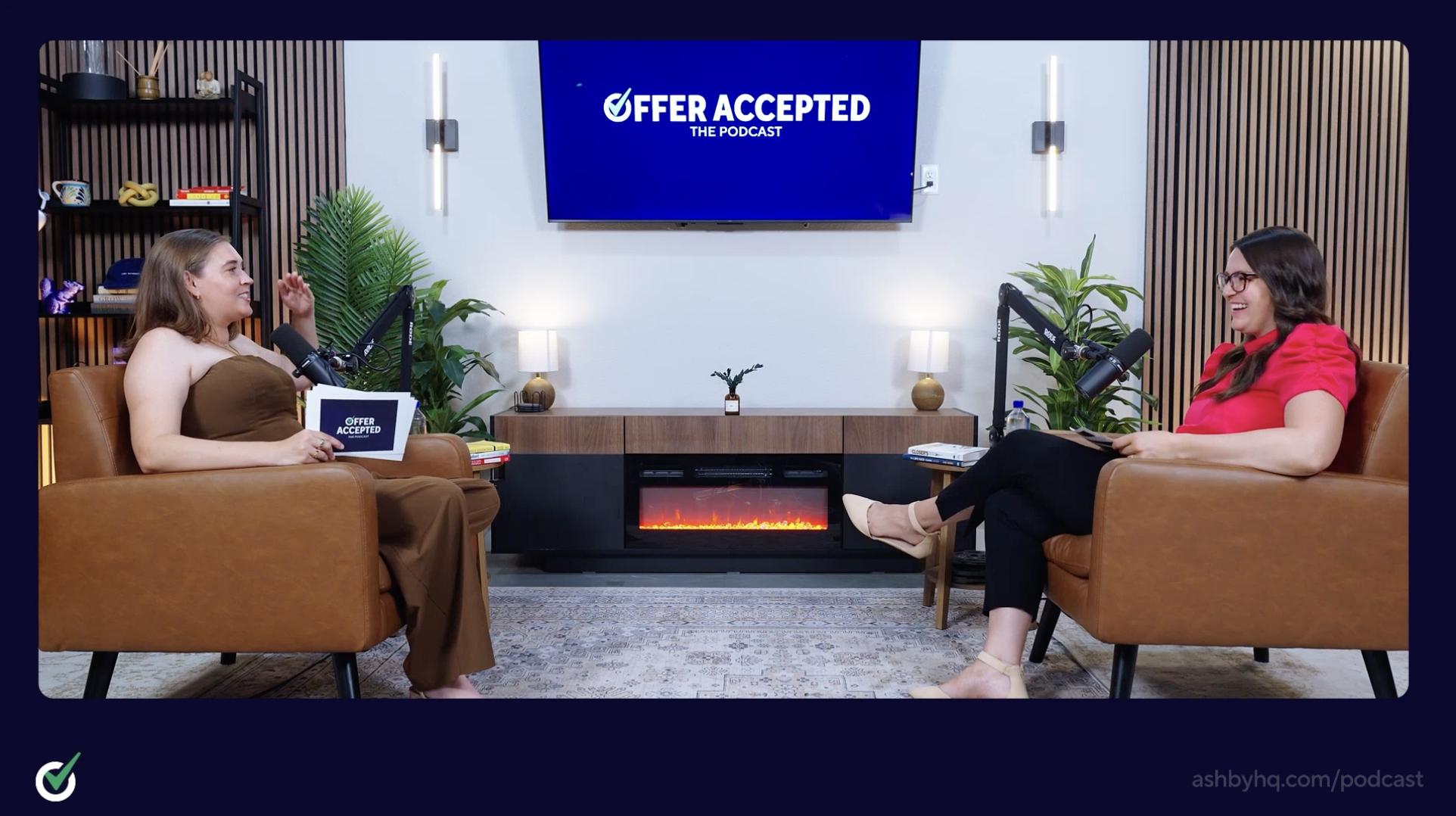
Liz's Recruiting Hot Take 🔥
Debriefs deserve a permanent place in the hiring process. Liz points to the conversations that happen live in a debrief and can't happen in a tool or over Slack. They speed up decision-making, and they surface bias and perspective that would otherwise never make it into written feedback.
Timestamps

Other Episodes

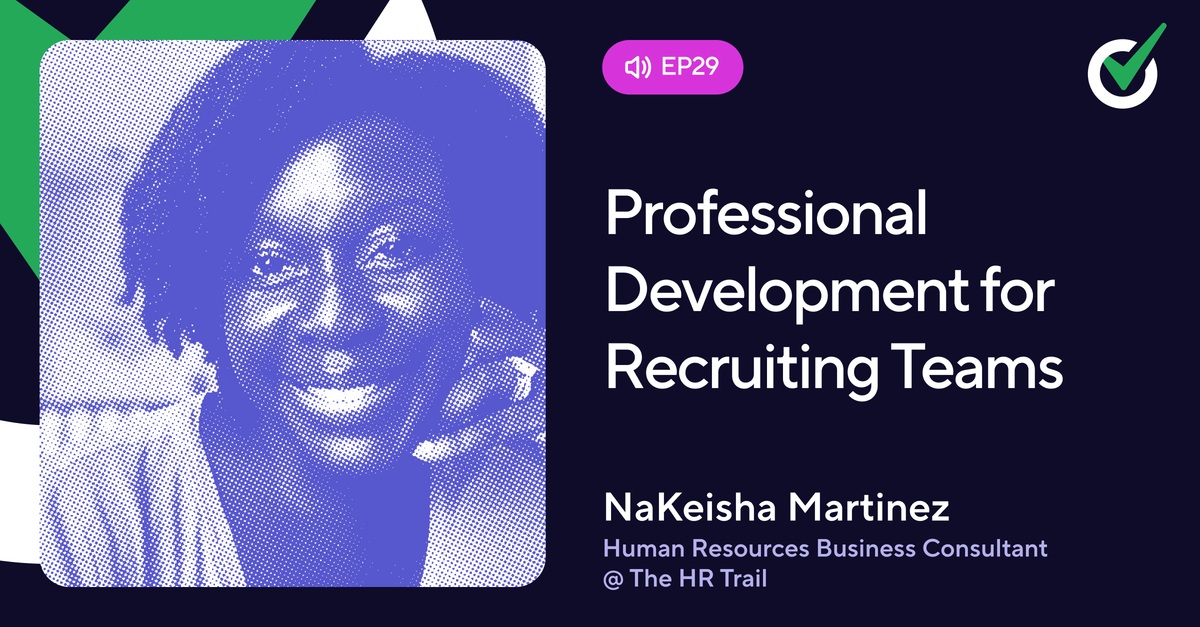
Professional Development for Recruiting Teams
In this episode of Offer Accepted, Shannon Ogborn sits down with Nakeisha Martinez, a nearly two-decade veteran in the talent space. They discuss the importance of professional development for recruiting teams, structuring 1:1s for development, and the concept of teach-backs to enhance skillsets amongst the recruiting team.

What Recruiting Teams Can Learn From Customer Support
Natalie Mercuri, Recruiting Operations Program Manager at Plaid, spent years in customer engineering and support before bringing that instinct to Plaid's Recruiting Operations team this year. In this episode, she walks through how a team of two turned a flood of Slack questions into a proper ticketing system, built an AI agent that created an 85% first reply resolution rate, and led the change management that created a culture of self-serve wherever possible.

Join the Hiring Excellence movement
New episodes every month - subscribe here so you never miss out.