Data as Healthy Friction
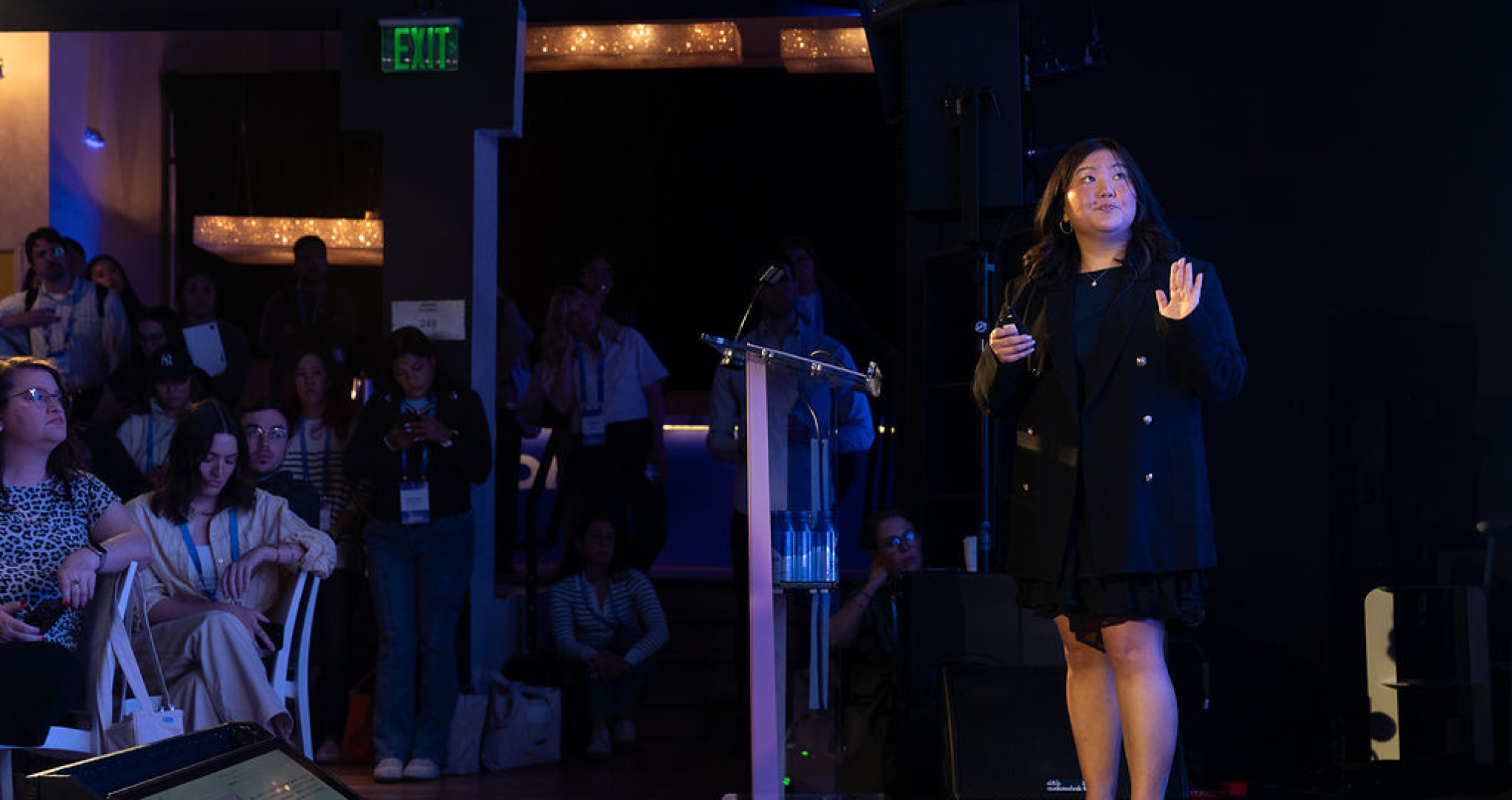
Iraj Samuel, Talent Partner at Accurx, turns hiring data into an argument stakeholders can't ignore: a calibration map that surfaces panel bias, an urgency report that unsticks a stalled stage, and a self-serve dashboard that gets Accurx's Chief People Officer challenging her own numbers instead of waiting on the talent team for them.
Speaker

Key Takeaways
- A single interviewer passing far fewer candidates than a panel's average is often a calibration problem, not a performance one; Accurx caught one interviewer clearing under half their candidates against a roughly 75% panel average, then used the gap to open a team conversation rather than a callout.
- Naming the real numbers behind a stalled hiring stage, not just the frustration behind it, can move slower stakeholders faster, as Accurx saw once a role's time in stage, scorecard SLAs and withdrawal rate reached leadership.
- Giving an executive direct, filterable access to hiring data can shift them from requesting numbers to owning and challenging their own reports, which is how Accurx's Chief People Officer now runs her board updates.
Session Overview
Recruiting data works best when it creates friction instead of just supplying proof. At Ashby One London 2026, Accurx Talent Partner Iraj Samuel shares three moments of using data to influence a hiring decision that instinct alone couldn't move.
Samuel calls himself a self-declared math kid, but his early instinct on the job was still to lead with emotion. That habit cost him a negotiation: he pushed back on a role's salary purely on feeling, and it went nowhere until his manager told him to bring solutions instead of problems. The comparison report that followed finally got a hiring manager to listen, the moment Samuel points to as where data started to feel less like proof and more like preparation. A similar gut sense about one stricter interviewer on a values interview panel became something he could show the person directly instead of leaving it as unspoken tension on the team.
Data only works as friction if people trust it, which is why Samuel had the whole talent team sign a printed data-accuracy commitment that still sits by their desks. That same discipline paid off later, when a role Accurx had called urgent sat stalled with no real movement: bringing his manager and CPO the time in stage and scorecard numbers behind that stall, rather than just the feeling of it, is what got a leadership meeting to actually act.
The clearest example belongs to Accurx's Chief People Officer. She used to come to Samuel's team every time she needed a number, which meant executives and board members were, in turn, waiting on her. Building her a personalized dashboard changed that relationship entirely: she now owns her reporting outright.
That shift, from having to ask for data to being handed the tools to find it yourself, is what Samuel points to as the real payoff: a seat in headcount planning conversations with finance, a direct line to proving return on investment with external TA suppliers, and enough data fluency to keep giving talks like this one.
Chapters
- (00:03) Intro: from gut feeling to data as friction
- (01:14) Lesson one: data forces preparation
- (02:34) The calibration gap
- (04:37) Lesson two: you can't influence with bad data
- (05:51) The waiting game and time to fill
- (07:39) Lesson three: accessible data changes behavior
- (08:22) Building the Chief People Officer's personalized dashboard
- (09:50) What data fluency has unlocked
Q&A
Q: How do you fix inconsistent interview scoring across a hiring panel?
A: Visualizing one interviewer's scores next to the rest of the panel turns a pointed conversation into a shared one. At Accurx, Talent Partner Iraj Samuel built a feedback calibration map in Ashby after noticing one panelist rejected far more candidates than average, then used it to ask where the team was misaligning rather than naming an individual as the problem.
Iraj Samuel, Talent Partner at Accurx: "I created a feedback calibration map using Ashby's templates, and this is where you could really see the power of the numbers. I was able to speak to an individual, and being able to visualize their individual metrics alongside the rest of the team is really what helped [the message] land. From there, the conversation was, "Where are we misaligning as a team? But also, how can we pick your brain to understand what your expectations are?" And that was ensuring that the conversation wasn't, "You are the problem," but it was, "How can we align?" (03:58)
Q: How do you speed up a hiring stage where candidates are stuck waiting?
A: Track average time in stage, scorecard SLAs, and candidate withdrawal rates, then bring those numbers, not just frustration, to leadership. At Accurx, Talent Partner Iraj Samuel used exactly that data to show a role marked urgent wasn't being treated like one, and scorecard submissions and stage scoping both sped up once leadership saw it.
Iraj Samuel, Talent Partner at Accurx: "I had the numbers at hand, and the point I tried to get across was, "This is being communicated as an urgent role, but not being treated like one." I left it to [my manager] to drive it in a leadership meeting with some stakeholders who were involved in this hiring process. Really quickly we started to see some change. Scorecards were being submitted quicker, stages were being scoped properly, and momentum overall increased." (06:49)
Q: How do you keep recruiting data accurate across a team?
A: Make it a signed team habit, not a one-off cleanup. At Accurx, Talent Partner Iraj Samuel had every member of the talent team sign a printed Ashby chart that sits by their desks, paired with automated alerts and the occasional Slack nudge, so accuracy stays everyone's job rather than admin nobody owns.
Iraj Samuel, Talent Partner at Accurx: "Now, the entire team is individually proactive about ensuring our data is kept up to date and as consistent as possible. A line that always sticks with me is that accuracy shouldn't be seen as admin, that it truly is the influence." (05:20)
Q: How do you build a hiring dashboard your executives will actually use?
A: Let them filter recruiting metrics themselves, by team, department, and hiring manager, instead of coming to you for every number. At Accurx, Talent Partner Iraj Samuel built Chief People Officer Chloe a personalized dashboard she now owns outright, using it to spot inefficiencies and challenge her own reports to the board.
Iraj Samuel, Talent Partner at Accurx: "I created a personalized dashboard for Chloe [the Chief People Officer], and she had the opportunity to filter by teams and departments, look into hiring performances across hiring managers and the recruiters like myself, and do all of this within specific periods of time." (08:50)
Q: How do you earn a seat in headcount planning conversations with finance?
A: Build the data fluency to bring your own numbers into the room, not just a hiring request. At Accurx, building calibration maps, urgency reports and executive dashboards gave Talent Partner Iraj Samuel the credibility to sit in headcount planning and talk directly with finance about future hiring proposals.
Iraj Samuel, Talent Partner at Accurx: "What data fluency has unlocked for me, in my short career, is that I now have the opportunity to sit in headcount planning and talk with finance about proposals for the future of hiring at Accurx." (09:50)
Iraj Samuel, Talent Partner at Accurx:
Thank you for having me. My name’s Iraj. I’m a talent partner at Accurx. And today I want to talk to you about something that sounds a bit backwards: using data as healthy friction.
Now, before I ever worked with reports or dashboards for a living, I was a self-declared math kid, and that’s where these lessons have really come from. Using something that I always loved and learning how to put it into work. So the headline before I get into it is three real moments from my time at Accurx where data got in the way, but in a good way. Let me walk you through it.
So honest confession, early on in my career, my instinct was always to lead with emotion. I’d go with my gut. It felt fast and it felt human, but it wasn’t always right. And funny enough, this is that same math kid. And back then I always loved numbers, but it was numbers for its own sake. No stories attached, no one to use them on. What’s changed since then isn’t my love for numbers specifically, but it’s understanding how to use it on people and not just problems.
And that takes me into my first lesson: data forces you to prepare. So I’m going to take you back to 2022 when I joined Accurx. I was working on a role, and the candidates I was speaking to just didn’t feel senior enough. But again, this was a gut feeling. And what I kind of said to myself is I felt like the salary offering was just too low at the time.
So I went to the hiring manager and said exactly that. No real data, just a feeling, and it didn’t land. And from that point I got frustrated. So I went and vented to my mentor and manager at the time, Rachel, and she gave me really simple advice to not just approach with problems, but always understand how you can propose with solutions.
I went back to the drawing board and I created a really basic report on how I could compare all of the stronger candidates I was speaking to and what their expectations were, and how that definitely was a lot higher than what we were offering at the time. And since then, that was the easy part. It got people to listen, and I really started to understand the power of data. It’s not approaching with less emotion, but better prepared emotion.
My first example of where data really forced me to prepare is something I like to call the calibration gap. Now, at Accurx, we conclude every hiring process with a values or cultural focus interview, and it’s always hosted by a member of our executive team. And as a talent team, we early on started to feel like some interviewers were a bit stricter and some a bit warmer. It was a real kind of tactic to learn. But again, this was all a gut feeling.
From there, the first thing I wanted to do was look at the data. And I looked at a really basic pass through report, and you could see there was a good panel average of about seventy-five percent, but it was really clear that one person stood out. Half of the candidates that they were speaking to were being turned away, and they were working on some of our more junior roles, so it felt like an easy narrative to approach, but I didn’t want to individually target that person.
Next, I tried to go into a bit more data and understand how people were being scored throughout this process. But I started preparing, not with a script, but with empathy. I thought, “What are some of the challenges that they might say to me?” Or maybe everyone else is green-lighting candidates, and they were the only one doing the role filtering. And like I said, I thought there’s a bit more work we can do here.
So I created a feedback calibration map using Ashby’s templates, and this is where you could really see the power of the numbers. So using this, I was able to speak to that individual, and being able to visualize their individual metrics alongside the rest of the team is really what helped it land. And from there, the conversation was, “Where are we misaligning as a team? But also, how can we pick your brain to understand what your expectations are?” And that was just ensuring that the conversation wasn’t, “You are the problem,” but it was, “How can we align?”
Onto my second lesson. You can’t influence with inaccurate data. Now, nothing that I’m about to talk to you about today matters if the data is wrong. The second a stakeholder sees a bad number or inconsistent metrics, the conversation’s over before it’s even began.
Now, at Accurx, we created an Ashby chart, and my job is not to police anyone, but really understanding how as a team can we force habits instead of one-off actions with how we handle data. So I printed it out, I got every member, including myself, of the talent team to sign it and it sits by our desks day by day.
And my process in approaching this was creating Ashby reports with alerts and doing the occasional Slack nudge message when I saw something that just didn’t really make sense. But now, the entire team are individually proactive about ensuring our data is kept up to date and consistent as possible. And a line that always sticks with me is that accuracy shouldn’t be seen as admin, that it truly is the influence, the power of influence.
And that brings me to my next example, the waiting game, and this one’s about speed, or maybe the lack of it. So I was working on a specific role, and we had candidates waiting in a specific stage. No communication, no action, several plus days waiting. You can kind of relate it to a striker who’s just sitting in a box receiving no service from their wingers, like Harry Kane.
So I built up a lot of frustration in this moment and I thought to myself, “It feels so, but how can I really prove it?” So I focused on three different areas. For this specific role, I wanted to look at the average time that candidates were waiting in that stage. Our scorecard SLAs and where this role was really performing alongside the rest of the company. And last but not least, the candidate withdrawal rates. And as you can see, all of them were staggering.
So from there, I vented again to my manager and CPO at this time, and it was a verbal conversation, but I had the numbers at hand. And the point I tried to get across was, “This is being communicated as an urgent role, but not being treated like one.” And I left it to them because they’re more senior than me to drive it in a leadership meeting with some stakeholders who were involved in this hiring process. And really quickly we started to see some change. Scorecards were being submitted quicker, stages were being scoped properly, and momentum overall increased. Now at Accurx, one of our principles is moving with urgency, and this was a great example where data really turned a value from something that we say into something that we do.
Now, onto my final lesson. Accessible data can change behavior. Now, this is Chloe, our chief people officer at Accurx, or as I like to call her, CP. It’s super fitting. And Chloe’s actually in the room with us right now, and I was pressured to make her stand up, but I won’t do that to you.
This example is how accessible data really changed Chloe’s behavior in hiring. And previously, Chloe would go to myself or the rest of the team if she needed a specific metric that really stood out to her. And this meant she was waiting on us consistently, and it was data that should have just been there in the first place. So this example is called chasing down the data.
Now, this wasn’t just Chloe waiting for us. This had a ripple effect on the executive members and board members who also were reliant on Chloe for that data. And there was a moment in time where Chloe came to me, and she said, “Iraj, can you get me a list of metrics and reports that I find interesting? Time to hire, time in process, your basics.” But I thought we could take it up a little notch.
So I did some research to understand how can we best balance organizational-wide reporting but also have that opportunity to go into granular-level detail. And here’s what that looked like. I created a personalized dashboard for Chloe, and she had the opportunity to filter by teams and departments, look into hiring performances across hiring managers and the recruiters like myself, and do all of this within specific periods of time.
And now, Chloe entirely owns this dashboard. So she gathers reports, and she presents it to the board and exec members. And if she spots any inefficiencies or things that just don’t look right, she challenges it. And till today, Chloe still does not allow me to touch this dashboard at all. And that’s something that I wouldn’t call self-serving, but Chloe doing the healthy friction part herself.
So a few things before I close off. What data fluency has unlocked for me, in my short career, I’ve now the opportunity to sit in headcount planning and talk with finance about proposals for the future of hiring at Accurx. I’ve also, on many occasions, had the opportunity to be the point of contact for external TA suppliers and really proving return on investment when it comes to hiring. And last but not least, like today, I have the opportunity to give back to the wider talent acquisition community.
So before you go, if there’s one thing I’d love you to pull from this, it’s that the next time data feels like friction or is making you slow down and prepare, or you’re having that uncomfortable conversation that you’ve been avoiding, that’s usually the point. And that’s how data got in my way in a good way, and it can do the same for you. Thank you.
Recommended Sessions
Using Data to Influence as a Solo TA Leader
Emily discusses her Flow, Focus, Friction framework to diagnose problems, make confident decisions, and earn a seat at the strategic table.
View session

EMEA Talent Trends: Inside the Data Shaping Hiring Today
Ashby's Ben Hubbard sits down with Amanda Johnson of DeepL and Célia Sauthier of Moss to unpack why EMEA hiring volume has doubled since 2021 without time to hire slipping, and what changed inside their recruiting processes to make that possible.
View session