Mapping Talent Intelligence
Don Fogarty, Head of Talent at Attio, shows how his team turns recruiting conversations into structured signals an AI agent can act on, from spotting outreach timing to triaging inbound applicants.
Speaker

Key Takeaways
- Talent intelligence turns informal signals, like company news mentioned in a screening call, into structured records that flag the right outreach moment later. At Attio, this kind of signal led directly to renewed outreach toward candidates already on the team's target list.
- Personalizing outbound with real context, not just a warmer subject line, can meaningfully change response rates. One agent case at Attio doubled outreach response rates by matching a candidate's own solved problems to the company's current challenges.
- Extracting insights instead of personal details, like flagging uncertainty at a company rather than a named person's complaint, is part of what keeps a growing recording culture defensible as it scales. This kind of prompt discipline is part of what let Attio build organization-wide comfort with recording conversations without losing trust internally.
Session Overview
Don Fogarty, Head of Talent at Attio, walks through how his team turns everyday recruiting conversations into a shared system for spotting the right candidate at the right moment, an approach he calls talent intelligence.
The starting point is capture. Fogarty's team records calls, screening interviews and hiring-manager intake, then mines them for context about people and the companies they've worked at. That context gets written into individual and company records so an agent can act on it later. In one case, a candidate mentioned leadership changes at their employer during a routine screening call; the agent recognized the company as one Attio had already flagged as a hiring target, and surfaced a suggestion to reach out to a specific set of targeted people while the timing looked right.
Fogarty also covers how this plays out in day-to-day recruiting work. On outreach, connecting a candidate's own past work to Attio's current challenges made cold outreach land better for one team member. On inbound review, agent-surfaced context helps recruiters start each day with a shortlist instead of a stack, a pattern that's been especially useful on high-volume roles like Attio's graduate program.
The talk closes on trust and risk. Fogarty describes the internal work of getting a team comfortable with recording their own calls, the prompt discipline required to extract insights rather than personal details, and why keeping a human in the loop on every outreach message makes the whole system more defensible. His closing case for starting now, even without company-wide buy-in: begin recording your own calls, build a personal system of record, and treat talent intelligence as a skill every recruiter should be developing.
Chapters
- (00:03) What talent intelligence means for a recruiting team
- (00:31) A signal from one conversation triggers outreach to another
- (02:22) Recording conversations and building internal documentation
- (03:03) The system of record and Attio's tool stack
- (03:43) Doubling outreach response rates with agent context
- (04:29) Prioritizing inbound applicants with agent-surfaced context
- (06:06) Building trust and protecting candidate privacy at scale
- (07:38) Keeping humans in the loop, and how to start today
Q&A
Q: How can an AI agent flag the right moment to reach out to a candidate?
A: An AI agent can flag outreach timing by watching for signals like leadership changes at a target company, then matching them against a team's existing list of people to reach. Don Fogarty, Head of Talent at Attio, describes an agent surfacing exactly this signal during a routine screening call, prompting outreach to specific candidates during a moment of uncertainty at their employer.
Don Fogarty, Head of Talent at Attio: "On a routine screening call, a person we were interviewing talked about some leadership changes at their company. The agent looked at the company and knew that it was one we wanted to hire talent from and knew that there were people that we were specifically targeting. So we received the suggestion to go and reach out to those people because the timing might just feel right during that uncertain period." (00:55)
Q: What is talent intelligence in recruiting?
A: Talent intelligence is the practice of turning informal signals from recruiting conversations, like a company's leadership changes or a candidate's past work, into structured records an agent can act on later. Don Fogarty, Head of Talent at Attio, built this into his team's process to work at what he calls an executive-search level, spotting timing and targets other recruiters would miss.
Don Fogarty, Head of Talent at Attio: "What if every conversation your business ever had was actually working for you in hiring right now?... I'm going to talk about talent intelligence and how it helps internal TA teams operate at an executive search level at scale." (00:03)
Q: What tools do you need to build a system of record for talent intelligence?
A: A working system of record for talent intelligence needs three pieces: a way to capture conversations, a documentation layer reflecting company culture, and a connected record that stores and updates context over time. At Attio, Don Fogarty's team runs Claude as the interface, Granola to record calls, Notion for documentation, and Ashby as the system of record, connected through MCP.
Don Fogarty, Head of Talent at Attio: "Our particular setup, we use Claude generally as our interface. Granola is our recorder, Notion takes care of our documentation, and then we have obviously Ashby as a system of record, which we can connect to via the MCP." (03:24)
Q: How do you protect candidate privacy when using AI to analyze hiring conversations?
A: Protecting candidate privacy starts with training AI prompts to extract insights, not personal details. An agent should flag something like uncertainty at a company rather than a named person's reason for leaving. Don Fogarty, Head of Talent at Attio, says his team put real engineering work into keeping that separation intact as recording conversations became a bigger part of how the team operates.
Don Fogarty, Head of Talent at Attio: "What we really want to do here is make sure that we're extracting insights and not personal data. It's taken a lot of work with the prompts we use to make sure that we are pulling out an insight such as there is uncertainty at X company and not X person wants to leave because they don't like this person." (06:52)
Don Fogarty
So what if every conversation your business ever had was actually working for you in hiring right now? I'm Don, I'm the head of talent at Attio. It's an AI CRM based here in London, and I'm going to talk about talent intelligence and how it helps internal TA teams operate at an executive search level at scale. This is one example that showed us talent intelligence was working for us.
So we had a hire in engineering, a senior hire. We talked to them and had a conversation about who and what products and what companies they'd worked with in the past. And we mapped that context into both individual records on people and a company record on companies. It was an agent that gave us a signal by looking at that context when something else happened.
So on a routine screening call, a person we were interviewing talked about some leadership changes at their company. And the agent looked at the company and knew that it was one we wanted to hire talent from and knew that there were people that we were specifically targeting. And so we received the suggestion to go and reach out to those people because at this time, the timing might just feel right during that uncertain period.
And for us, I think in talent, timing is so important that having any advantage or thinking about how you're going to prioritize your time can give you the decision as to whether you want to make a move on that information or not. And this worked really well for us, and we brought some really great people into the pipeline. Now, there's lots of history of us all learning how to pick up information from calls and use it to our advantage.
But now we have this AI backend that's doing a lot of that work for us. And so with the right system of record, as recruiters, we still do what we do. We're still going to find people, we're still going to have conversations, but we can focus on actually meeting with fewer people and them being higher quality because all of this context is being taken care of.
And I think this ultimately compounds to all these great conversations leading to a fuller, clearer picture of the sort of ecosystem we're trying to hire from.
You can find fully built off-the-shelf tools that will help you run talent intelligence. You can put together your own connections with other tools. I'll talk a bit about what we have in place and how it's working for us. So for me, what's really important is recording the conversations.
This allows you to have a level of focus on having a great conversation and providing a great experience. We also have internal documentation. Anything we're going to run agents on has to represent our culture, who we are, and what we really believe in. So I want it to go through the filter of what our company truly wants to come across as.
And then the system of record I mentioned. We want all this information to be stored somewhere. It needs to go in and out. It needs to be updated. So getting these things in place is when you can then start to use your agents to test what is happening, what context there is, and where you might be able to prioritize your team's actions in better ways.
Our particular setup, we use Claude generally as our interface. Granola is our recorder. Notion takes care of our documentation. And then we have obviously Ashby as a system of record, which we can connect to via the MCP.
One agent case has doubled response rates to our outreach. And what's happened here is David, who's our engineering lead on talent, was finding it really hard to get a higher than normal response rate even though he knew he was reaching out to the right people. And so the agent was able to quickly take care of a lot more context and a lot more information across our entire business rather than just what he was hearing and what he was learning.
And so he was able to get suggestions on outreach that genuinely connected the problem an engineer had solved in the past and what might match to the problems we have at our company. And we found that by telling people a bit more about this, that they were more inclined to come and talk to us because it made it really relevant.
I think we're often looking at candidates fit for our roles, but this is almost showing the candidate how our company is going to be a great fit for them from the very first message. We use an agent on inbound review as well. So this is looking at all of the internal calls we'll do with hiring managers.
It's looking at our internal documentation. It's not just creating a smoother pitch or referencing a funding round or any of these things that you might do in your outreach. Sorry, anything you might do in your inbound review of people. But what it's actually doing is trying to find the smallest number of people we can look at and prioritize our time with.
So if you have a hundred applicants overnight, you could wake up and you could go through all a hundred. And there's no doubt you would find the top ten, fifteen profiles that you wanted to look at. But if you use the AI review, you have all the agent context to build it out for you. You end up in a situation where you start with the ten to fifteen at the beginning of your day.
And that for us is grouping the most relevant people and helping us raise the bar. So we want to find then two or three people out of that, and then the rest of the applicant pool is analyzed against the very, very best. And I think if you're looking for needles in a haystack versus this grouping, you're less likely to raise the bar.
This has really helped us on a number of roles, particularly things like a graduate program where we get thousands of applications and ask for some really good written responses.
Now, I think there's still a lot of discomfort, whether it's in talent or the wider organization around the amount of context and data and AI that's being used. And I think internally you need to build a lot of trust to make this happen. So one of the things for us that's worked really well is educating the entire business around the idea that learning to hire is a skill that everyone in our company should have, and they should want to develop it.
So a good way of developing that is by recording your hiring work, your interviews, your intake calls, et cetera, and then using agents to analyze how you can improve. That's got a lot of our organization comfortable with actually doing the recording, which is generating all this context we're using in Talent Intelligence.
Permissions is extremely complex, very difficult, for us to completely manage. But what we really want to do here is make sure that we're extracting insights and not personal data. It's taken a lot of work with the prompts we use to make sure that we are pulling out an insight such as there is uncertainty at X company and not X person wants to leave because they don't like this person.
You've got to be really careful with this stuff. I know there's a deeper session today on compliance. But we've tried to push the boundaries of what you can do. And I think that's also acceptable as long as you try and do your best to look after your company's reputation at the same time as doing this.
I think for us as well, the final risk reducer is having humans in the loop on everything we do. We're not at the stage or the scale where we want agents to fully run with things. But we want them to give us the recipes, the suggestions, everything they think is going to be helpful, and we want to use it for ourself, but make sure we're the ones who's actually sending the message or doing the work.
That for us is really beneficial because it means it's more defensible if we are asked what the thinking was or why we did it. We're not just sort of hoping everything works out okay. And then in terms of getting started, I think if you haven't got this buy-in from the company at this point in time, you can do this for yourself.
So you can start recording yourself, you can start using agents, you can start analyzing the work you do. Build up some personal use cases that help you kind of get a bit more encouragement and enablement across the organization. And for me, talent intelligence is going to be pretty table stakes in the future.
I think the best recruiters will be asking if they should join your team based on the level of talent intelligence you can provide them to help them do their job. And I think if you haven't started today, I'd definitely figure out and document how you do have great conversations, because the better the conversation, the better the context, and it all does compound.
I'd definitely start recording. If it's not wider in your organization, definitely do it yourself. And then start building out this system of record, make sure it works for you, and begin running agents. Begin running tests. Keep them a little isolated at first, but when you're comfortable, you can start moving towards this future state where things happen really quickly once headcount gets approved. So I think my final thought really is that having great conversations is such a wonderful part of our job.
And if you have less of them but they're higher quality and people feel more active and more engaged, I think it makes being a recruiter a fantastic career. And I truly believe that if we get talent intelligence right, we can have the data, the context, and all the timing in place, that when we get headcount approved, we've got our list of people we're going to hire the very next day.
Thank you.
Recommended Sessions
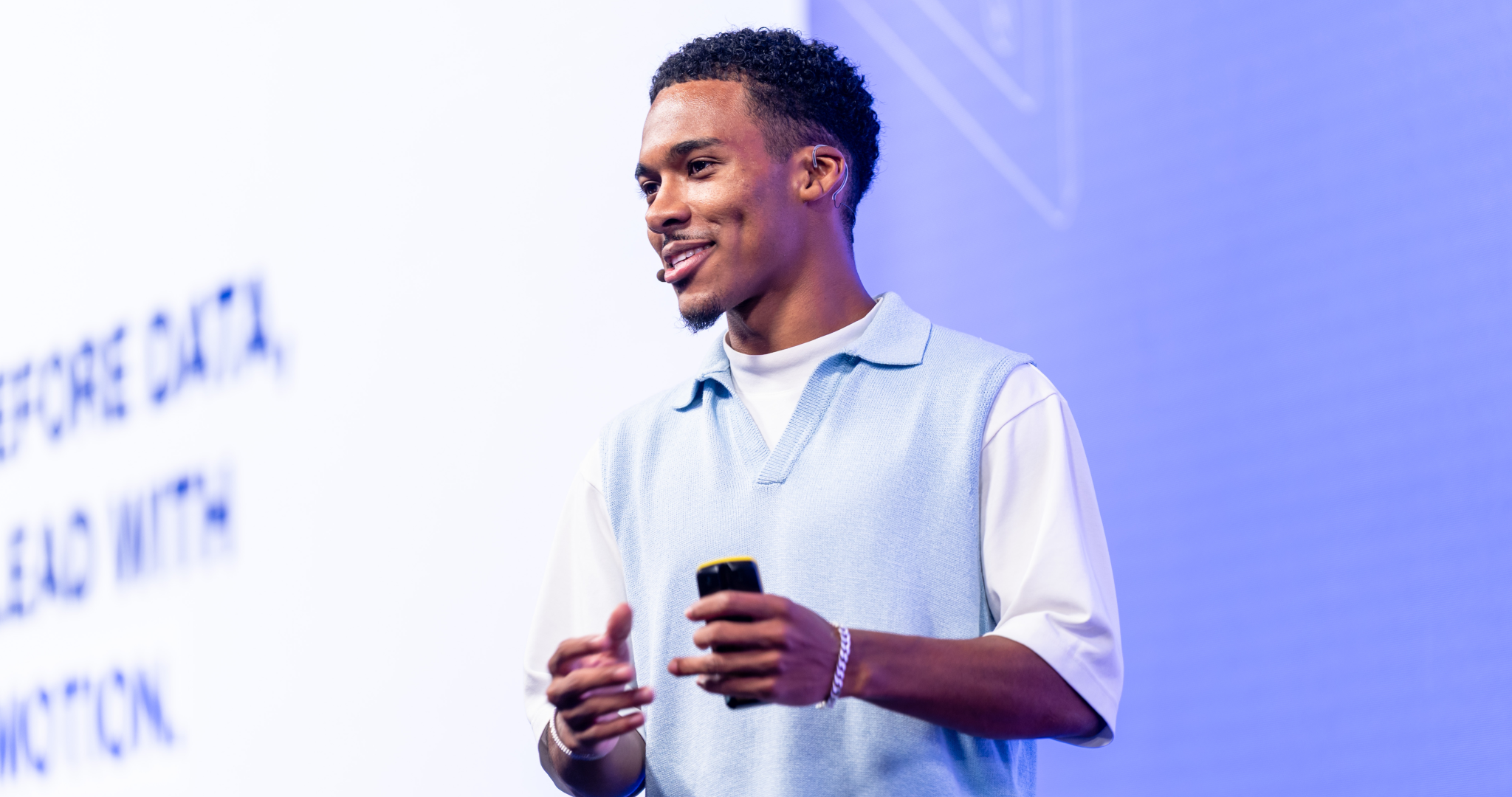
Data as Healthy Friction
Iraj Samuel, Talent Partner at Accurx, turns hiring data into an argument stakeholders can't ignore: a calibration map that surfaces panel bias, an urgency report that unsticks a stalled stage, and a self-serve dashboard that gets Accurx's Chief People Officer challenging her own numbers instead of waiting on the talent team for them.
View session
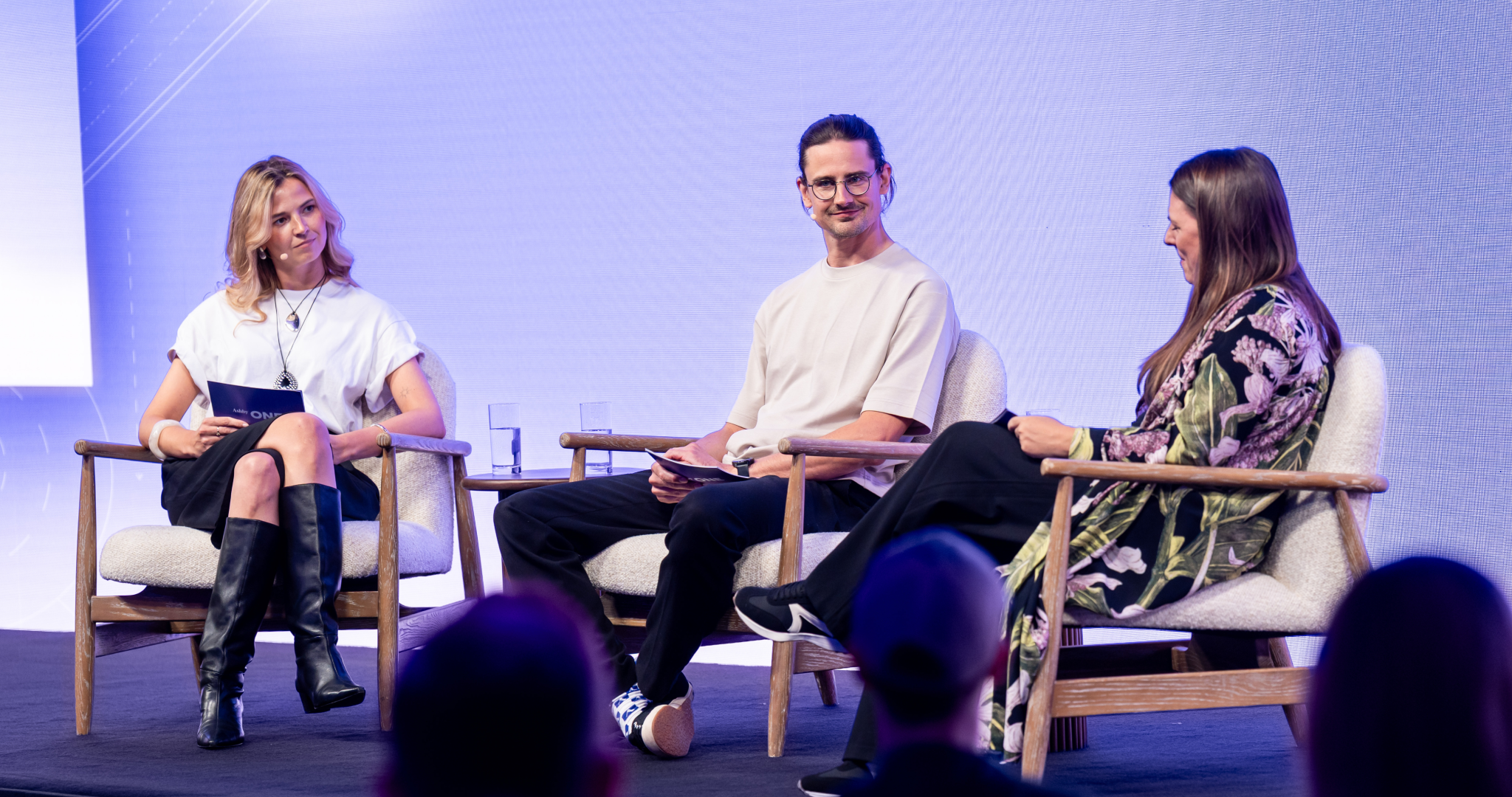
Building with Confidence: AI Risk and Regulation in Recruiting
Ashby Senior Legal Counsel Kelly Fish walks through how the EU AI Act's risk-based framework applies to recruiting tools, and Tourlane's Max Rauschen and hyperexponential's Lucy Szypula show how they turn that framework into vendor questions and day-to-day AI guardrails.
View session